Ants field guide
Argentine Ants. Why They Keep Coming and How to Stop Them
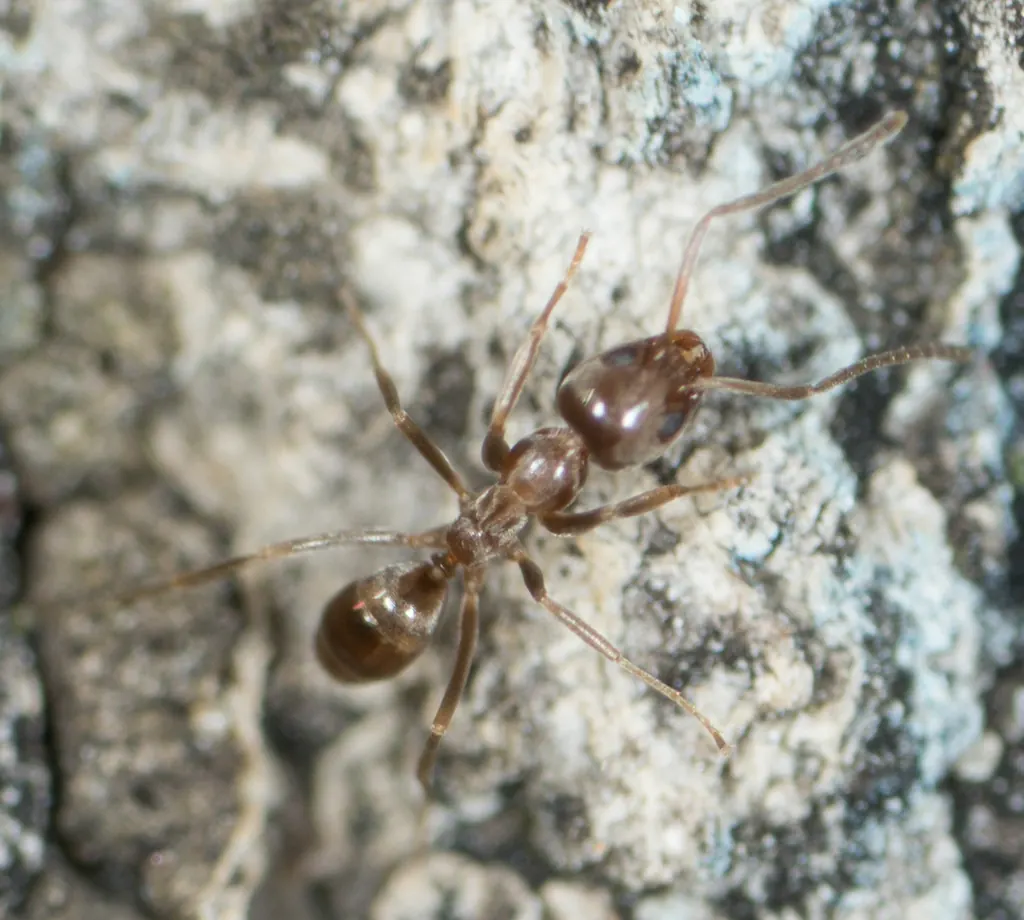
Argentine ants are 1/8 inch, dull brown and the most common pest ant around California homes. They run in long trails from linked nests with many queens.1 Spraying fails. Use refillable bait stations with 0.5 to 1 percent borate in sugar water and refill them for weeks.1,3 See the ant hub for other ants.
Field guide reviewed October 31, 2026, with 7 cited sources
5,036 pest companies name ants across 51 states and Washington DC, 195 in Ohio and 665 in California. 5,036 say so on their own website.
See Who Treats AntsHow to identify Argentine ants
Public domain photo, CC0, via iNaturalist 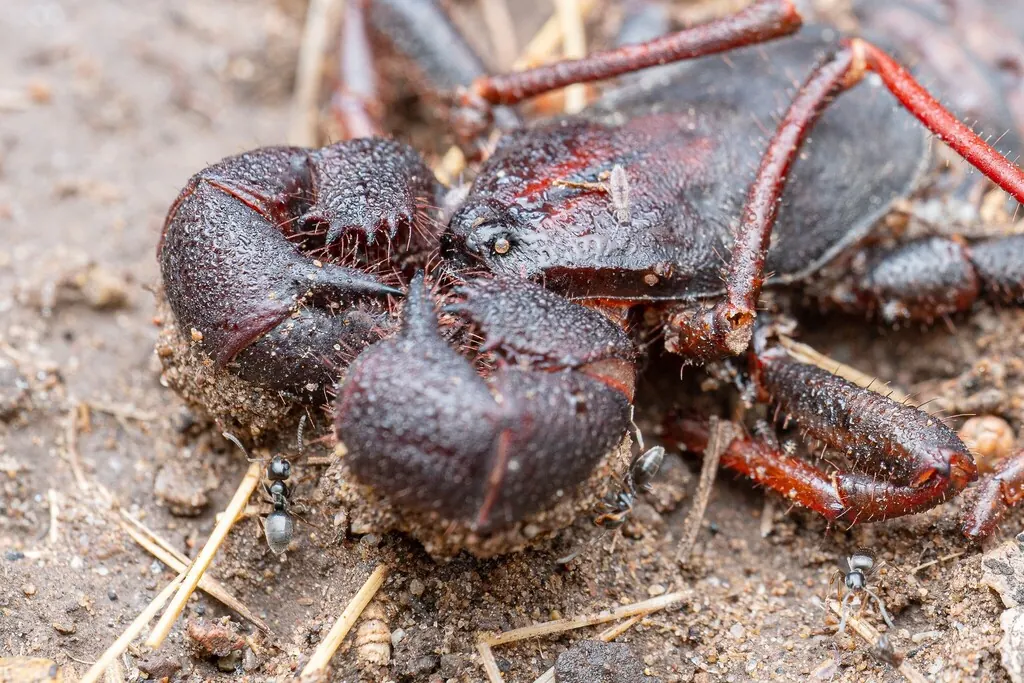
Photo by Jake Nitta, CC BY 4.0, via iNaturalist Odorous house ant
Tapinoma sessile
- Size
- 1/8 inch
- Look
- Dark brown to shiny black
- Where
- California and Ohio
Smells strongly when crushed.1
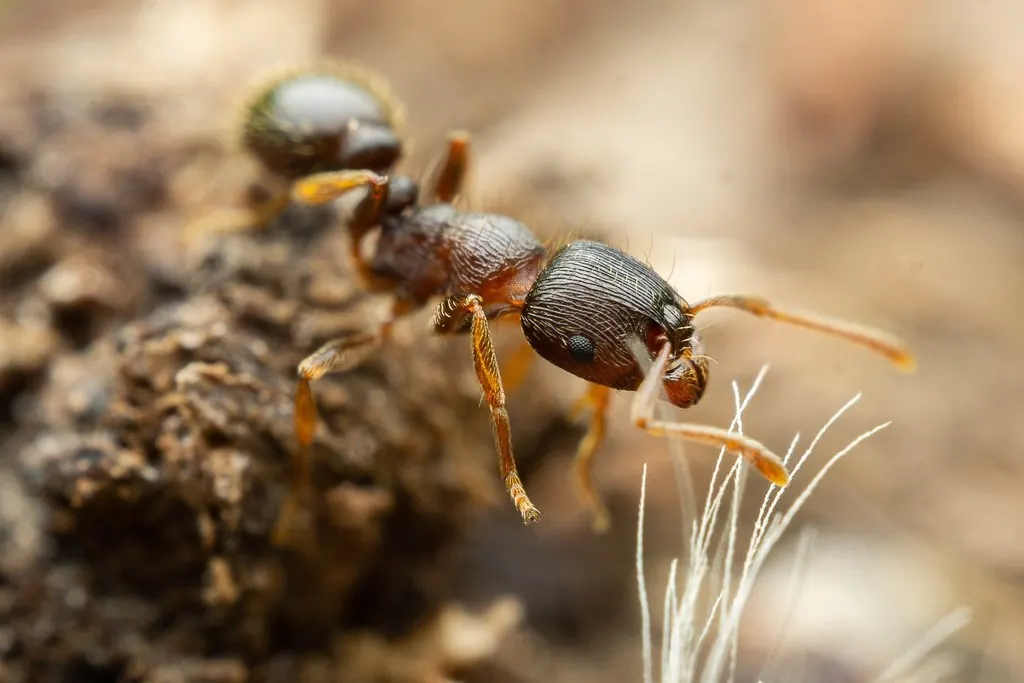
Photo by Jake Nitta, CC BY 4.0, via iNaturalist Pavement ant
Tetramorium caespitum
- Size
- 3/16 inch
- Look
- Dark brown to black
- Where
- California and Ohio
Darker and a bit bigger than an Argentine ant.1
Argentine ants (Linepithema humile) are 1/8 inch and dull brown. UC IPM calls them the most common pest ant in and around California homes and gardens.1 Other small ants look close. Odorous house ants are 1/8 inch, dark brown to shiny black, and smell strongly when crushed. Pavement ants are 3/16 inch.1
Argentine ants are known for scale. Colonies with several nests and queens can cover a large area because the ants show little aggression to each other.2 Back to the ant hub for the rest.
Life cycle and colonies
Life cycle of argentine ants
- 1Colony links upseveral nests, many queens
- 2New queens leave with workersno mating flight needed
- 3Nests sit shallowjust below the soil surface
- 4Colony growslate winter and spring
Argentine ant colonies sit shallow, just below the soil surface, unless conditions are dry.1 A substantial portion of colonies exist below ground.2
Colonies link into one supercolony with multiple queens. Newly mated queens leave with workers to start new nests.1 Most other ants start from one queen.1
This is why killing the ants you see does little. The queens sit in the nest, and workers share food with nestmates, which carries bait to the queens.3
Signs of Argentine ants
- Trails with thousands of ants running from nests to food.1
- Ants along wires and pipes, which they prefer to travel on.1
- Ants swarming over sweets, pet food and spills indoors.1
- Aphids, mealybugs or scales on plants with ants walking among them.3
Entry often means a crack, a window frame or a pipe gap. Wipe trails with soapy water to remove the scent trail and caulk the entry.1
Risks
Argentine ants are mostly a household nuisance. They enter homes for food and water.2 The sources we used list no sting or disease threat from them. UC IPM names the velvety tree ant as an aggressive biter, which is a different ant.1
The bigger damage is outdoors. They disrupt native ants and food webs. Parasitism of California red scale was reduced two- to five-fold when Argentine ants were present.2 They tend aphids, mealybugs and soft scales for honeydew and drive off the predators of those pests.3
Treatment, DIY or pro
Baits are the tool. UC IPM calls them the only type of insecticide recommended in most situations. They must be slow-acting so workers can carry them back.1
For severe Argentine ant infestations, use refillable stations with 0.5 to 1 percent borate in sugar water. Prepackaged stations have about 5.4 percent borate and are weaker.1 Stay at or under 1 percent, since stronger borate repels ants.3 Argentine ants take sweet baits year-round and protein baits mainly in spring. If the bait does not suit the ants, it provides no control.1,3
Place one refillable dispenser on each side of the house in shady spots where ants trail, and space outdoor baits every 10 to 20 feet. Expect 5 to 10 days before ants drop and weeks for control.1 Spraying indoors will not stop more from coming in.1 Broadcast spraying has limited value because most colonies are underground.2
Cost
Price ranges for argentine ants
- Barrier spray$80 to $120 per visit
- Poison bait$120 to $200 per visit
- General ant visit$200 to $300 per visit
- Bait plus barrier$600 to $900 per job
Fixr lists general ant extermination at $200 to $300. A barrier spray runs $80 to $120 and poison bait runs $120 to $200. The two-step method of bait plus barrier runs $600 to $900.4
Argentine ants often need follow-up visits because new workers arrive from linked nests. Ask for a plan that names the bait, the refill schedule and the outdoor treatment. DIY refillable stations cost far less if you keep them stocked.
Prevention
- Caulk cracks and openings.1
- Store food in sealed containers and clean up crumbs and spills.1
- Fix leaky faucets.1
- Keep plants, grass and mulch away from the foundation.1
- Remove or manage honeydew insects like aphids and soft scales near buildings.1
- Bait in late winter or early spring, when populations are lowest.3
For trees, band trunks with sticky material and check it every one or two weeks.1
Season
When argentine ants are active, by month
- Quiet
- Low
- Active
- Peak
Start baiting in late winter or early spring, when Argentine ant populations are lowest. That is the most economical and effective time.3 Sweet liquid baits attract them year-round, and protein baits work when colonies produce young in spring.3
Plan ahead for annual invasions by caulking and baiting before the influx.1
OHOhio notes
The Ohio State ant fact sheet lists carpenter, pavement, odorous house, Pharaoh and other ants for Ohio, and it does not list the Argentine ant.5 If you see tiny ant trails in Ohio, the likely suspects there are the odorous house ant and pavement ant.5
Ohio pest companies need a commercial applicator license from the Ohio Department of Agriculture. Category 10a covers general pest control.6 Back to the ant hub.
CACalifornia notes
The Argentine ant was first recorded in California in 1907. It is now widely distributed in coastal and southern parts of the state, most common near the coast, along rivers and in cities.2
Avoid pyrethroid sprays on hard outdoor surfaces, since they pollute waterways.1 California pest companies are licensed by the Structural Pest Control Board, and its site lets you verify a business.7
Organic or Extermination for Ants
Here is what each way of getting rid of ants looks like, side by side, from university and EPA sources.
Organic and green
How well each one works. Baits beat sprays. Spraying ants indoors does not stop more from coming in, whether the spray is botanical or not. UC IPM warns against pyrethroid sprays on driveways and foundations because they pollute waterways. Most ant jobs go best with sealing and cleaning first, then baits when they are needed. 123
- UC IPM, Pest Notes Ants
- UC IPM, Ant Management in Gardens and Landscapes
- Ohio State University Extension, Ants In and Around the Home
More Ants Guides
Who Treats Ants Near You
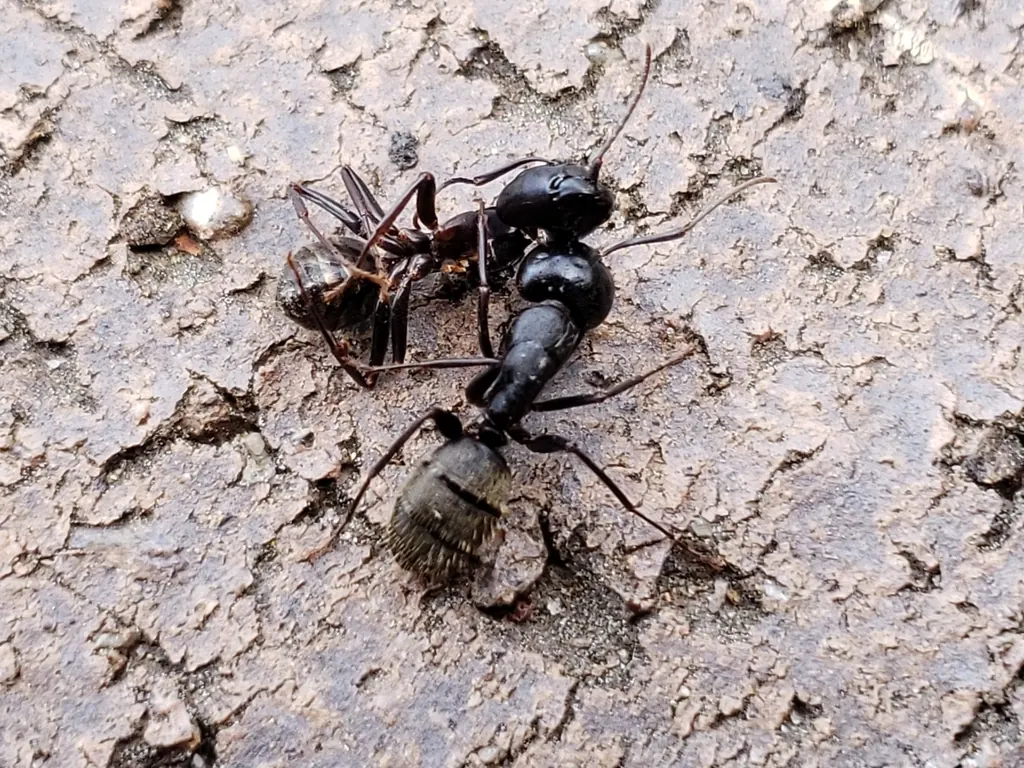
These companies name ants on their own website, the top of the Ohio and California lists. Every other state is linked below. See all 5036 sorted by region.
Ohio
- Names ants on its siteOpen 7 days
- Names ants on its siteSaturdays
- Names ants on its site
- Names ants on its siteSaturdays
- Names ants on its siteSaturdays
- Names ants on its siteSaturdays
California
- Names ants on its site

- Names ants on its siteOpen 7 days
- Names ants on its siteOpen 7 days
- Names ants on its siteSaturdays
- Names ants on its siteOpen 7 days
- Names ants on its siteOpen 7 days
Ants Help in Every State
The notes above cover Ohio and California in detail. Pick your state to see every company there that names ants, sorted by region, with the state’s own license rules in the answers.
- Alabama 73
- Alaska 8
- Arizona 143
- Arkansas 31
- California 665
- Colorado 86
- Connecticut 44
- Delaware 11
- Florida 535
- Georgia 139
- Hawaii 12
- Idaho 77
- Illinois 114
- Indiana 90
- Iowa 39
- Kansas 52
- Kentucky 30
- Louisiana 69
- Maine 14
- Maryland 109
- Massachusetts 100
- Michigan 94
- Minnesota 30
- Mississippi 27
- Missouri 73
- Montana 18
- Nebraska 18
- Nevada 70
- New Hampshire 19
- New Jersey 171
- New Mexico 32
- New York 198
- North Carolina 147
- North Dakota 4
- Ohio 195
- Oklahoma 70
- Oregon 95
- Pennsylvania 71
- Rhode Island 15
- South Carolina 99
- South Dakota 11
- Tennessee 114
- Texas 577
- Utah 110
- Vermont 4
- Virginia 126
- Washington 141
- Washington DC 5
- West Virginia 7
- Wisconsin 47
- Wyoming 7
Questions People Ask About Argentine Ants
Why are Argentine ants a problem?
They invade homes for food and water and harm native ants and food webs. They also protect honeydew insects, which cut natural control of pests like California red scale.2,3
What is the best way to get rid of Argentine ants?
Use slow-acting bait in refillable stations with 0.5 to 1 percent borate in sugar water. Place stations on trails and at nest openings. Do not rely on sprays.1,3
Do Argentine ants bite or sting?
The sources we used describe them as a nuisance and list no sting threat. UC IPM names the velvety tree ant as an aggressive biter, which is a different species.1,2
Where are Argentine ants found?
In California they are widely distributed in coastal and southern parts, with the most ants near the coast, along rivers and in cities.2
What smell do Argentine ants hate?
No fetched source backs a smell. What UC IPM does say is that borate stronger than 1 percent repels ants and cuts bait uptake.3
How long do Argentine ant baits take?
It can take 5 to 10 days to see fewer ants and several weeks to control a big infestation. Keep stations filled during that time.1
Sources
- UC IPM. Pest Notes Ants
- UC Riverside CISR. Argentine Ant
- UC IPM. Ant Management in Gardens and Landscapes
- Fixr. Ant Exterminator Cost
- Ohio State University Extension. Ants In and Around the Home
- Ohio State University Extension. Ohio Commercial Pesticide Applicator Requirements
- California Structural Pest Control Board. Structural Pest Control Board home page