Bees, Wasps and Hornets field guide
Bald-faced Hornets. How to Spot, Avoid and Remove a Nest
The bald-faced hornet is a black wasp about 7/8 inch long with white or cream on the face and tail end.1 It is a yellowjacket relative, not a true hornet.2 It hangs a large paper nest in a tree, shrub or house wall. Stay 3 feet or more from the nest, and leave it alone if it is away from people.1 See the wasp guide for the rest.
Field guide reviewed October 31, 2026, with 10 cited sources
3,145 pest companies name bees, wasps and hornets across 51 states and Washington DC, 168 in Ohio and 405 in California. 3,104 say so on their own website.
See Who Treats Bees, Wasps and HornetsHow to identify a bald-faced hornet
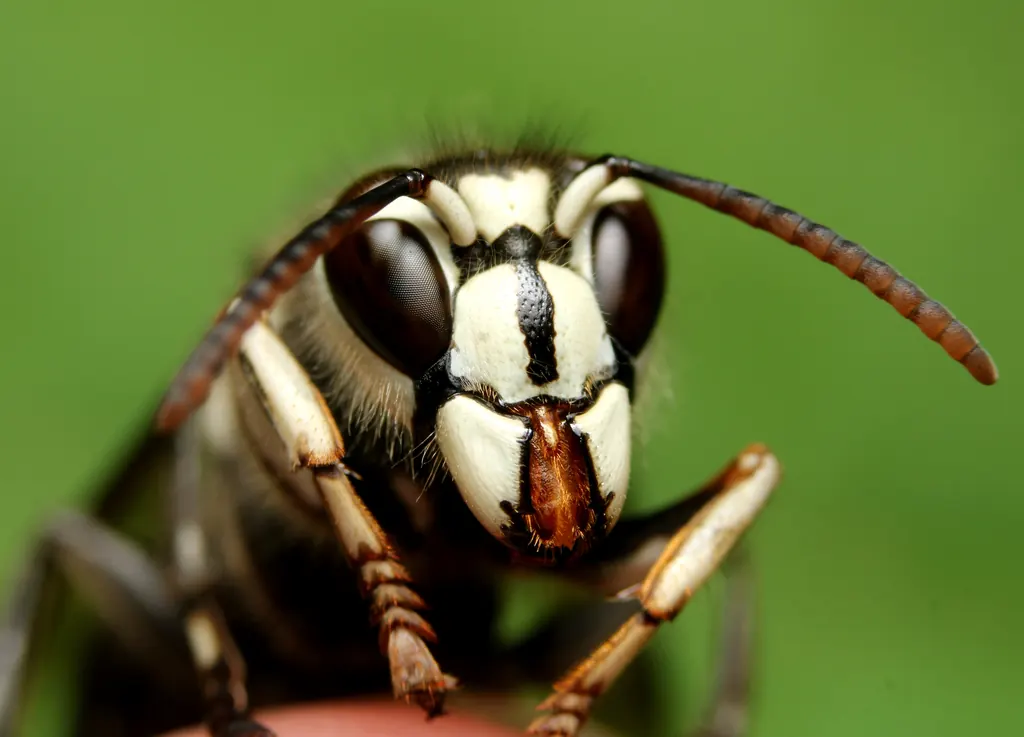
Photo by Zachary Dankowicz, CC BY 4.0, via iNaturalist Bald-faced hornet
Dolichovespula maculata
- Size
- about 7/8 inch
- Look
- black with white to cream markings on the front of the head and tip of the abdomen
- Where
- Ohio and California, in trees, shrubs, utility poles and house siding
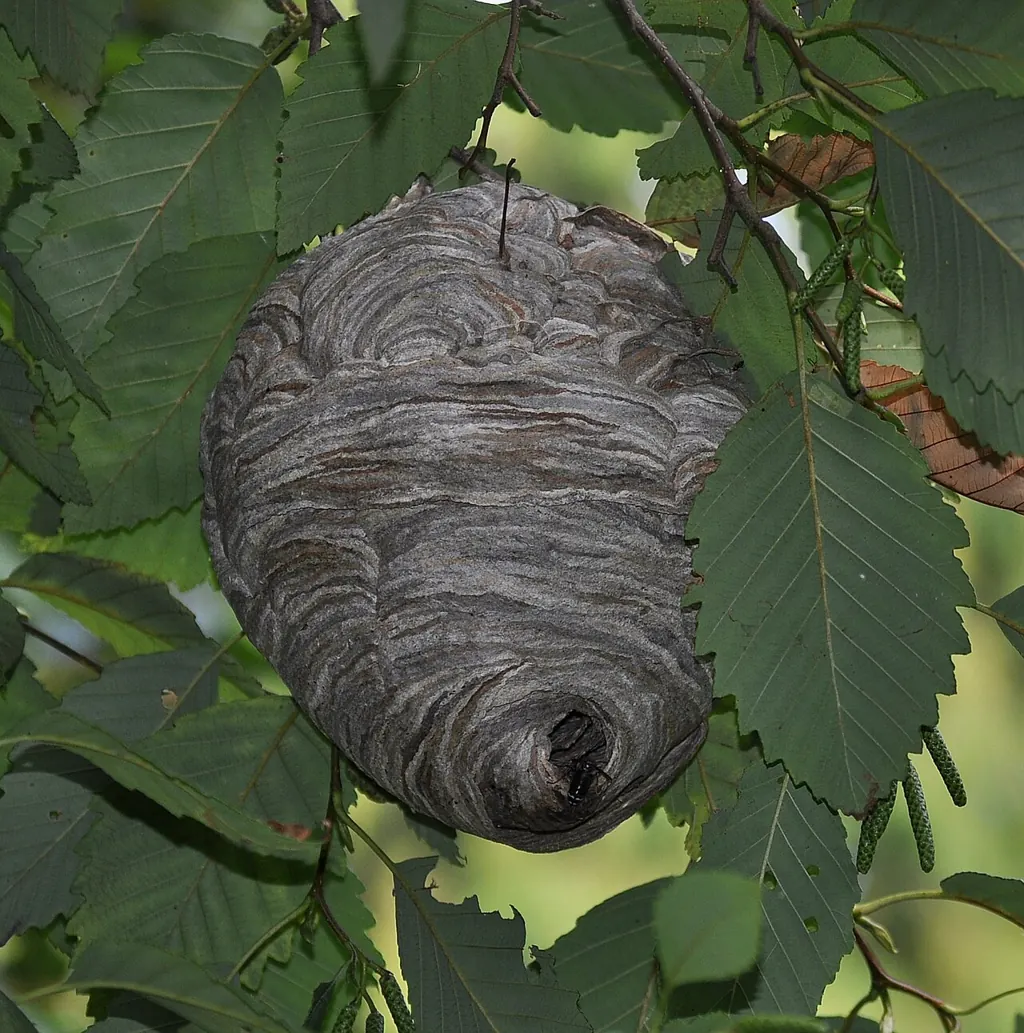
Black and white, with a large hanging nest that has one opening at the bottom.
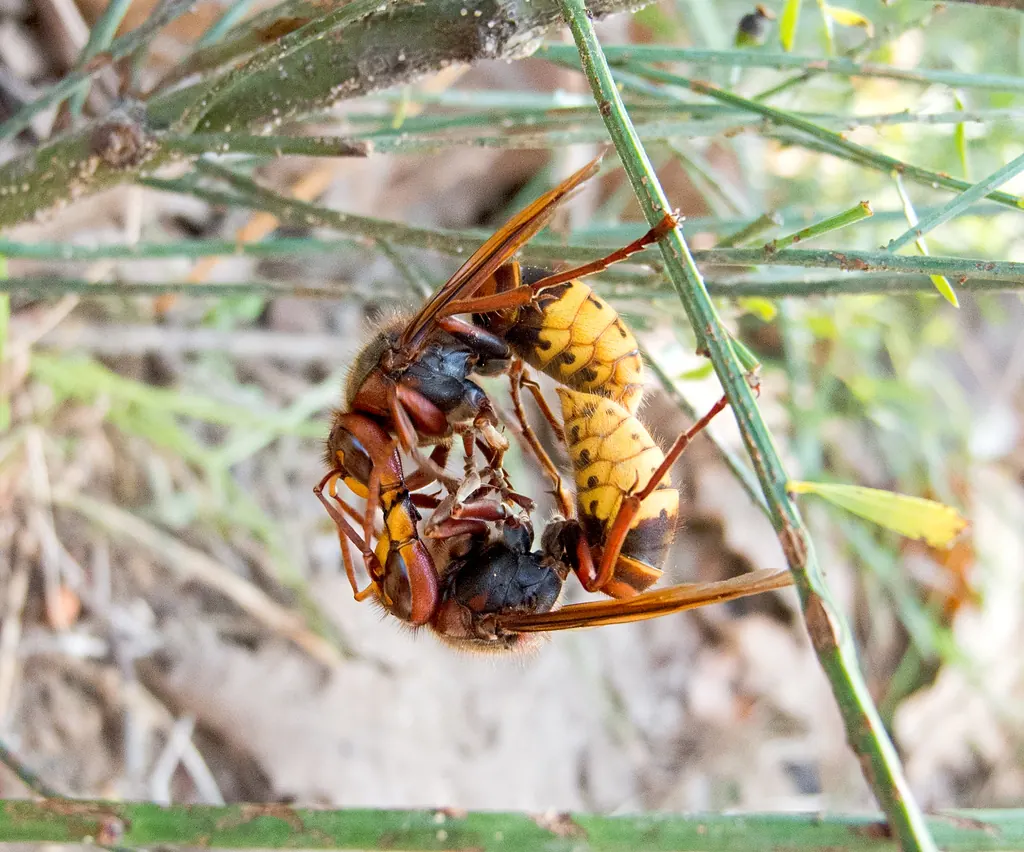
Photo by katunchik, CC BY 4.0, via iNaturalist European hornet
Vespa crabro
- Size
- 1 to 1 1/2 inches
- Look
- mahogany or reddish brown thorax, yellow face, yellow and black abdomen
- Where
- Eastern states including Ohio
The only true hornet in Ohio. It nests in cavities like hollow trees and attics and flies at night.
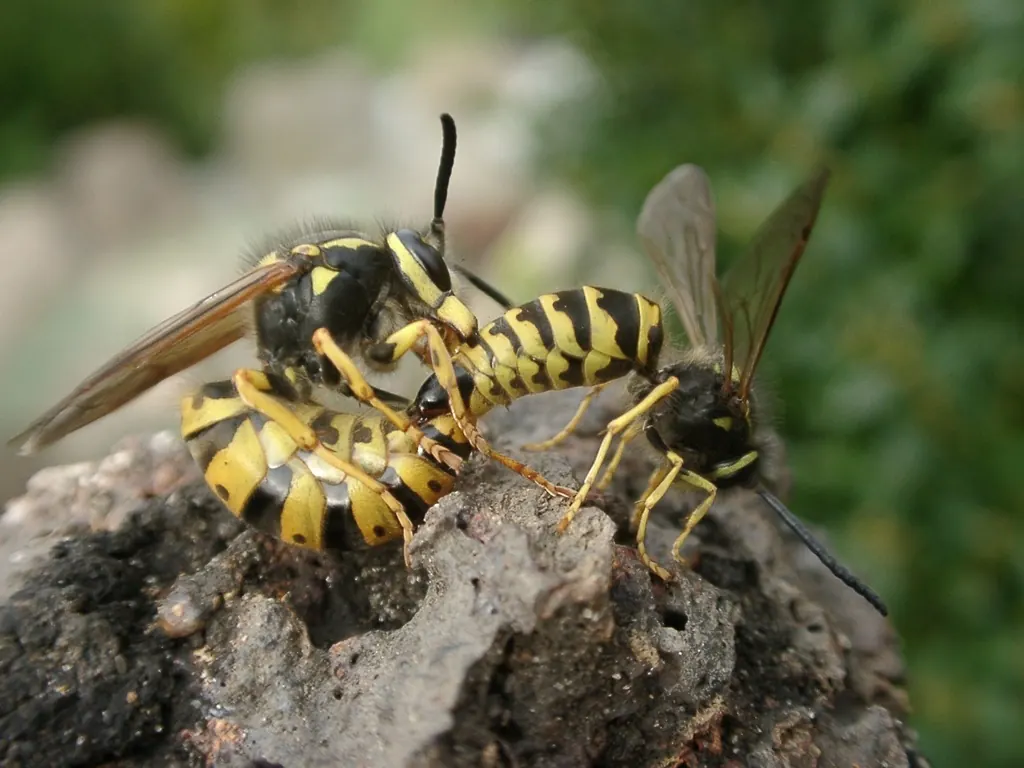
Photo by Grzegorz Grzejszczak, CC BY-SA 4.0, via iNaturalist German yellowjacket
Vespula germanica
- Size
- 1/2 inch workers
- Look
- black and yellow bands, hard and shiny
- Where
- Ohio and California
Yellow instead of white, and it usually nests underground or in walls.
Adults are about 7/8 inch long, black, with white to cream markings on the front of the head and at the tip of the abdomen.1 That black and white look is the quickest tell, since yellowjackets are yellow.
Despite the name, it is not a true hornet. It belongs to the yellowjacket genera.2,4 The only true hornet in Ohio is the European hornet, which is 1 to 1 1/2 inches long with a reddish brown thorax and a yellow face.4
The nest gives it away. It has three or four tiers of combs inside a thick, layered outer shell with one opening at the bottom.1 It is built of weathered wood chewed to fiber and mixed with saliva.3 See the main guide and the yellowjacket guide for the other look-alikes.
Bald-faced hornet life cycle
Life cycle of bald-faced hornets
- 1Queen wakesApril or May
- 2Starter nestabout 1.5 inches long
- 3Brood develops20 to 25 days in the Midwest
- 4Peak colony100 to 400 workers by late summer
- 5New queens and malesfall
- 6Colony diesover winter, queens survive
The queen spends the winter under bark or in a hollow tree, then comes out in spring to start a nest.3 Iowa State puts nest starts in April or May.1
An early nest is no more than about 1.5 inches long.3 Offspring take 20 to 25 days to develop in the Midwest, so each generation is bigger than the last.3 By the end of summer the colony peaks at 100 to 400 workers.1
In fall the colony makes males and new queens. The fertilized queens hibernate and the rest of the colony dies.1 Nests are used one season only.3 The old nest is not reused, so you do not need to hunt for the same one next year.
Signs of a bald-faced hornet nest
- A large gray paper nest hanging from a tree branch, often in wooded areas.1
- The same nest on a shrub, a utility pole or house siding.1,3
- Black and white wasps going in and out of one opening at the bottom.1
- Hornets that dive at you when you get close, usually within 3 feet.1
- A nest that seems to show up overnight in August. Nests start tiny and are often hidden by leaves, so most go unnoticed until mid to late August.3
Look up before you trim a hedge or hang a feeder.
Sting risks
Bald-faced hornets are not especially aggressive, but they sting if the nest is disturbed or one is threatened.1 They usually attack anyone who comes within 3 feet of the nest.1 They can sting more than once.2
UC IPM warns that many yellowjacket stings at once can damage the kidneys.5 One to two people in 1,000 are allergic to bee and wasp stings.10
An Ohio State BYGL writer rates a single sting from these wasps as no more than a 2 on the 1 to 4 Schmidt pain scale. Most painful run-ins come from poorly planned attempts to remove a nest.2
For care, Ohio State says use an ice pack in 10 minute rounds, take an antihistamine, and get medical help for more than 10 stings or any sting in the mouth or around the eyes.7
Treatment. DIY or professional
First ask if you need to act. Iowa State says nests along walks or near doors justify control, and nests away from people should be left alone.1 Ohio State says each nest dies out by winter anyway.2
If you do it yourself, Iowa State describes an aerosol made for hornets that sprays a thin stream up to 20 feet. Treat at night, when most hornets are in the nest. Wear a thick jacket, long pants tucked in, gloves and a hat. Spray the entrance first, then wet the whole nest.1
Do not take the nest down until all the hornets are dead. That can take a day or two because foragers may have been away.1
Ohio State advises having a professional remove any nest that threatens people.7 That is the right call for a high tree nest or a nest in a wall. Ask the company if it treats at night and what a return visit costs. Commercial traps are usually not attractive to bald-faced hornets.2
What bald-faced hornet removal costs
Price ranges for bald-faced hornets
- Bald-faced hornet, average$625 per job
- Hornet, average$450 per job
- Typical wasp nest job$212 to $875 per job
- Nest in a wall$350 to $875 per job
- DIY spray, dust and suit$57 to $227 total kit
One national guide averages $625 to remove bald-faced hornets. Other wasps are cheaper, with paper wasps at $385 and hornets at $450.6 The most common wasp job runs $212 to $875.6
Where the nest sits matters. Attic nests run $325 to $450 and wall nests $350 to $875.6 Tree canopy nests have no separate price in that guide, only the $625 bald-faced average.6
Method matters too. Aerosol averages $125, dusting $200 and vacuuming $250.6 A do-it-yourself kit with spray, dust and a bee suit costs $57 to $227.6
These are national averages, so ask for local quotes.
How to prevent bald-faced hornet problems
- Look over trees, shrubs, eaves and sheds in spring and early summer, while nests are tiny.3
- Avoid nests, especially those near entrances or high-traffic areas.3
- Keep trash collected. Overflowing bins attract yellowjackets and hornets in late summer.3
- Keep food and drinks covered at outdoor meals from August on, when workers want sugar.2
- Seal gaps around rooflines, windows and soffits to keep cavity nesters out.4
- Find out whether you are allergic to wasp venom before you deal with a nest, not during an attack.3
- Never block the entrance of a nest in a wall. Hornets can chew exit holes through drywall.4
- Have any nest that threatens people removed by a professional.3
When bald-faced hornets are active
When bald-faced hornets are active, by month
- Quiet
- Low
- Active
- Peak
Queens start nests in April or May.1 The nests are small and hidden through spring and early summer, then big enough to see by mid to late August.3
Late in the season, the workers hunt for sugar and become nuisances at outdoor meals.3 Colonies peak at 100 to 400 workers by the end of summer, and the queens leave in fall.1
Winter is the safe time to take a dead nest down. The colony has died and only queens survive in hiding.1 UC IPM describes the same pattern for social wasps, with colonies growing from spring to midsummer and defensiveness rising in fall.5
OHOhio notes
Ohio State says baldfaced hornets are yellowjacket relatives, not true hornets. The only true hornet in the state is the non-native European hornet.3,4 Baldfaced hornets build exposed nests in trees, shrubs or on buildings.2
The European hornet is the look-alike worth knowing. It is the largest wasp in Ohio, flies at night and nests in cavities.4
Ohio State Extension tells homeowners to avoid nests and have a professional remove any that threaten people.3 Anyone treating a client's property for pay needs a commercial pesticide applicator license from the Ohio Department of Agriculture.8 Category 10a is general pest control.8
CACalifornia notes
UC IPM lists the bald-faced hornet, Dolichovespula maculata, among the aerial-nesting yellowjackets, and says it has white rather than yellow banding.5 Aerial nests hang from eaves or tree limbs with the entrance at the bottom.5
UC IPM says aerosols labeled for wasp and hornet nests can work, but they need extreme caution and full protective clothing.5 For nests that are far away or hard to reach, it suggests your local Mosquito and Vector Control District or a licensed pest control operator.5
The California Structural Pest Control Board has a Verify a Company or Licensee page you can use before hiring.9
Organic or Extermination for Bees, Wasps and Hornets
Here is what each way of getting rid of bees, wasps and hornets looks like, side by side, from university and EPA sources.
Organic and green
How well each one works. Traps lower the number of yellowjackets but do not end a nest. Treating the nest itself is what ends it, and for a nest in the ground or a wall that is usually a pro with an insecticide. Honey bees are different. Call a beekeeper or a live removal company first. 123
- UC IPM, Pest Notes Yellowjackets and Other Social Wasps
- UC IPM, Pest Notes Bee Swarms and Established Hives
- Ohio State University Extension, Yellowjackets HYG-2075
More Bees, Wasps and Hornets Guides
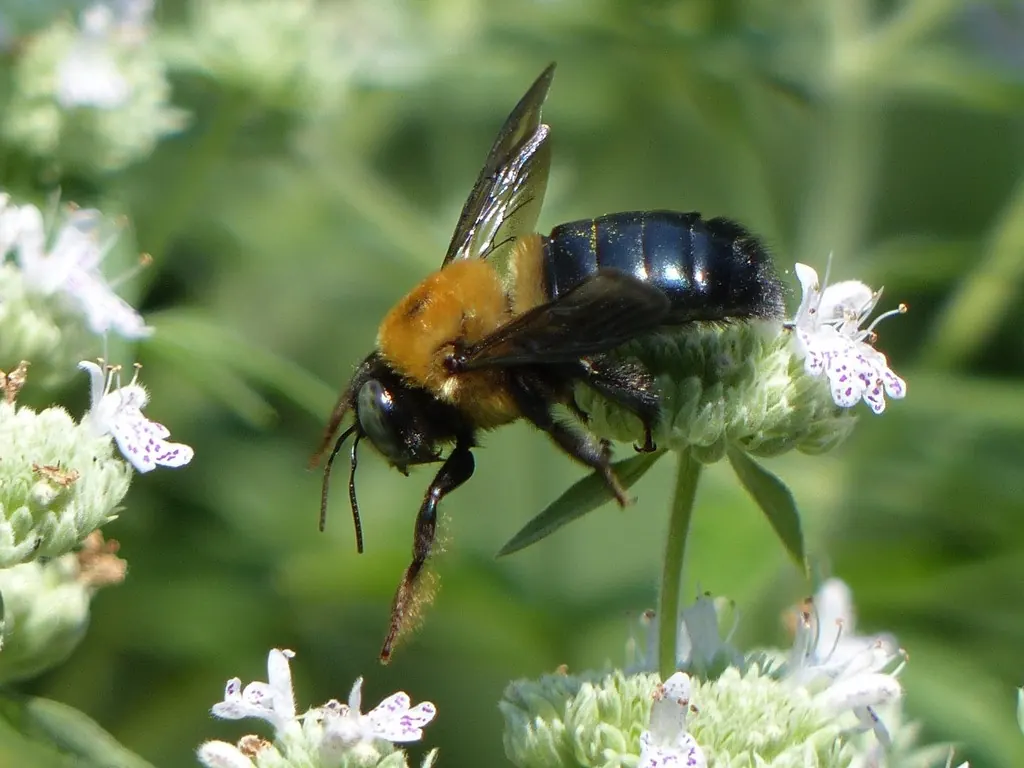 Carpenter BeesCarpenter bees are large, bumble bee lookalikes with a bare, shiny black abdomen that drill round holes about
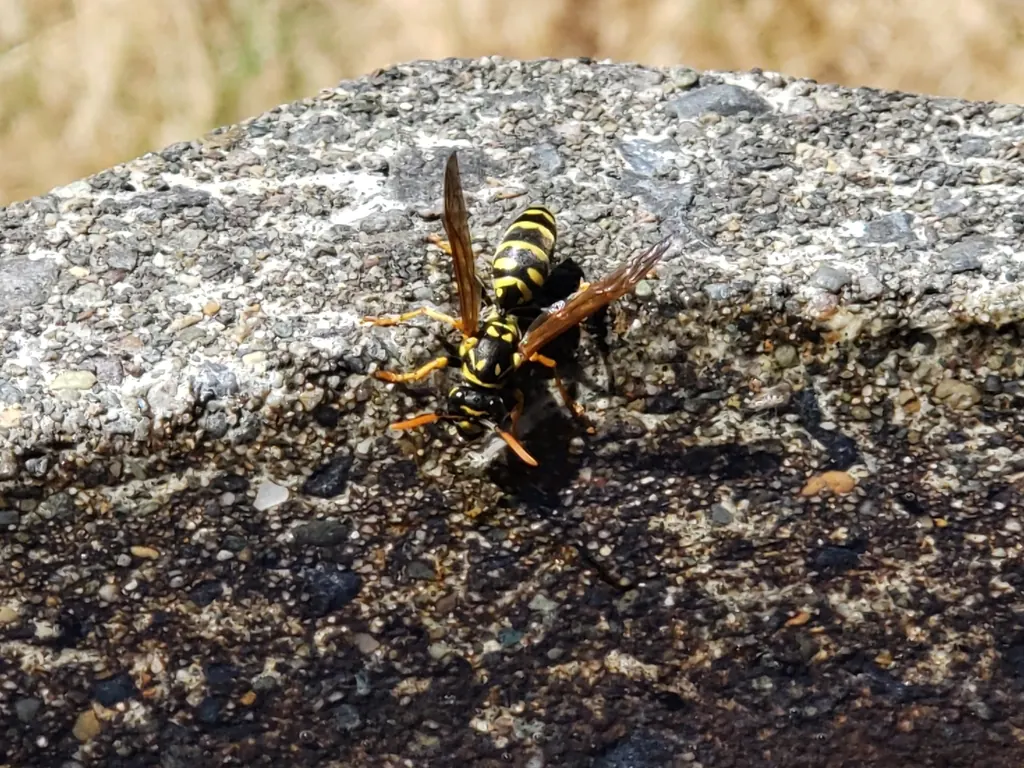 Paper WaspsPaper wasps are slender, long-legged wasps about 1 inch long that hang an open, umbrella-shaped nest under eav
- YellowjacketsYellowjackets are 1/2 to 1 inch long wasps with bright yellow and black bands and a very short waist.
Read the full bees, wasps and hornets guide
Who Treats Bees, Wasps and Hornets Near You
These companies name bees, wasps and hornets on their own website, the top of the Ohio and California lists. Every other state is linked below. See all 3145 sorted by region.
Ohio
- Names wasps on its siteOpen 7 days
- Names wasps on its siteSaturdays

- Names wasps on its site
- Names wasps on its siteSaturdays
- Names wasps on its siteSaturdays
- Names wasps on its siteSaturdays
California
- Names wasps on its site

- Names wasps on its siteOpen 7 days
- Names wasps on its siteOpen 7 days

- Names wasps on its siteSaturdays

- Names wasps on its siteOpen 7 days

- Names wasps on its siteOpen 7 days

Bees, Wasps and Hornets Help in Every State
The notes above cover Ohio and California in detail. Pick your state to see every company there that names bees, wasps and hornets, sorted by region, with the state’s own license rules in the answers.
- Alabama 36
- Alaska 4
- Arizona 108
- Arkansas 8
- California 405
- Colorado 71
- Connecticut 20
- Delaware 10
- Florida 255
- Georgia 66
- Hawaii 4
- Idaho 70
- Illinois 85
- Indiana 65
- Iowa 22
- Kansas 18
- Kentucky 20
- Louisiana 32
- Maine 10
- Maryland 79
- Massachusetts 88
- Michigan 81
- Minnesota 25
- Mississippi 15
- Missouri 35
- Montana 18
- Nebraska 10
- Nevada 47
- New Hampshire 19
- New Jersey 135
- New Mexico 18
- New York 149
- North Carolina 65
- North Dakota 6
- Ohio 168
- Oklahoma 26
- Oregon 78
- Pennsylvania 50
- Rhode Island 5
- South Carolina 49
- South Dakota 7
- Tennessee 42
- Texas 263
- Utah 87
- Vermont 4
- Virginia 90
- Washington 123
- Washington DC 3
- West Virginia 3
- Wisconsin 41
- Wyoming 7
Questions People Ask About Bald-faced Hornets
Do bald-faced hornets use the same nest every year?
No. Each colony lasts one year and a new nest is built every spring.1 Only the fertilized queens survive the winter, hidden away, and the rest of the colony dies.1
How painful is a bald-faced hornet sting?
An Ohio State BYGL writer rates a single sting from these wasps at no more than a 2 on the 1 to 4 Schmidt scale.2 The risk is in numbers, because they can sting more than once.2 Multiple stings can also hurt the kidneys.5
What looks like a bald-faced hornet?
Few Ohio wasps are black and white, so look-alikes are mostly big hornets. The European hornet has a reddish brown thorax and yellow face.4 The cicada killer has a black abdomen with yellow splotches.4
What kind of wasp has a white spot on its back?
A black wasp with white or cream on the front of the head and the end of the abdomen is probably a bald-faced hornet.1 It is about 7/8 inch long.1
What's the worst wasp to be stung by?
It depends on your allergy and the number of stings. Yellowjackets and bald-faced hornets can both sting repeatedly.2,5 Many stings can harm the kidneys, and a few people are allergic.5,10
What calms down a wasp sting?
Use an ice pack in 10 minute rounds and take an antihistamine for itching and swelling.7 Get care if you are stung more than 10 times or in the mouth or around the eyes.7
Sources
- Iowa State University Extension. Bald-faced Hornets
- Ohio State BYGL. A Stinging Commentary on Wasps, Yellowjackets, and Baldfaced Hornets
- Ohio State BYGL. Wasp Nest Expansion
- Ohio State CFAES. European Hornets and Look-Alikes
- UC IPM. Pest Notes Yellowjackets and Other Social Wasps
- Lawn Love. How Much Does Wasp Nest Removal Cost
- Ohio State University Extension. Yellowjackets HYG-2075
- Ohio State CFAES. Ohio Commercial Pesticide Applicator Requirements
- California Structural Pest Control Board. Structural Pest Control Board home page
- UC IPM. Pest Notes Bee and Wasp Stings
Photo credits
- European hornet. Photo by katunchik, CC BY 4.0, via iNaturalist