Ants field guide
Carpenter Ants. How to Find the Nest and Stop the Damage
Carpenter ants are big ants, 1/4 to 1/2 inch, that dig nests in damp wood. Look for pencil-sharpener shavings called frass, a dry rustling in the wall and trails at night.1 Find the parent and satellite nests and kill the queen. Spraying around the ants without treating nests is generally ineffective.1 See the ant hub.
Field guide reviewed October 31, 2026, with 6 cited sources
860 pest companies name ants, 195 in Ohio and 665 in California. 860 say so on their own website.
See Who Treats AntsHow to identify carpenter ants
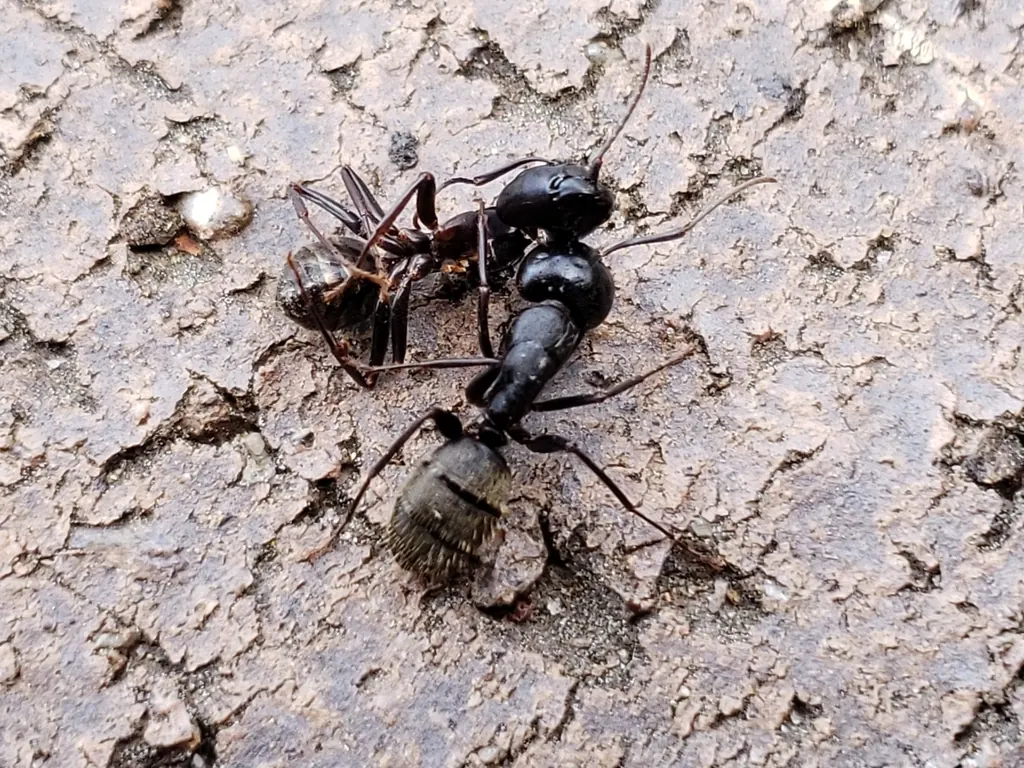
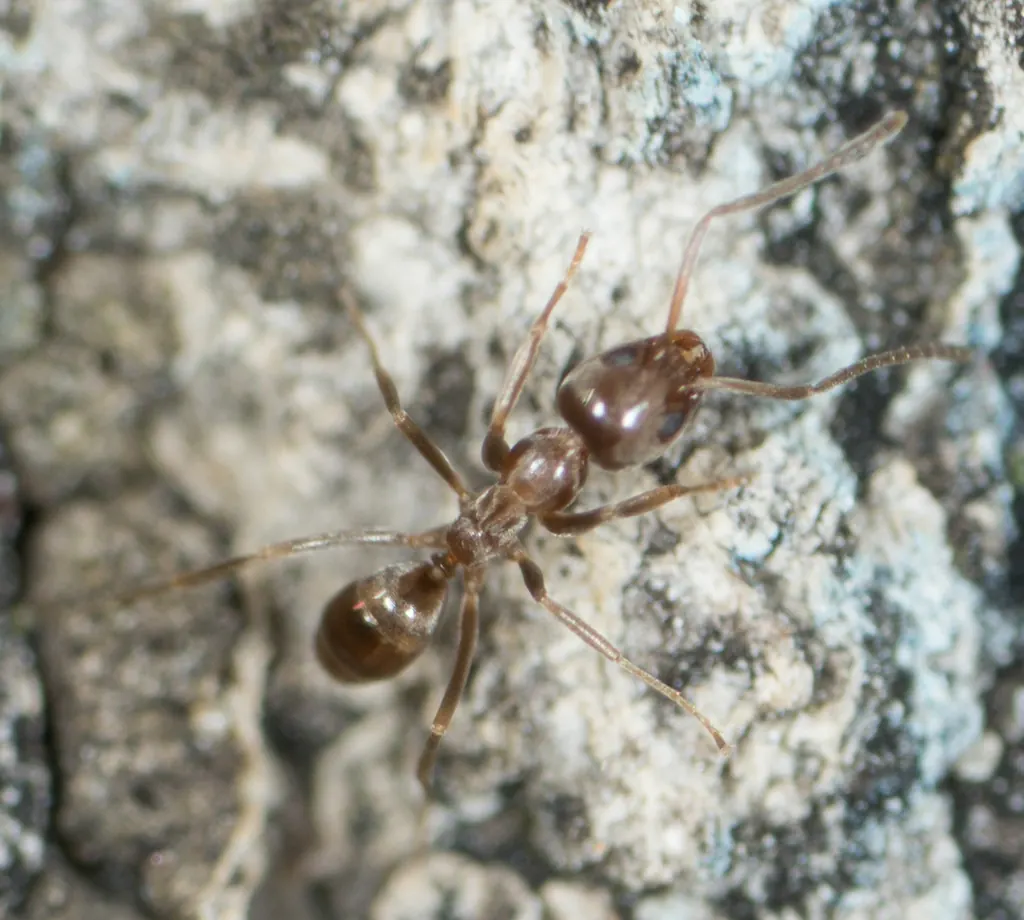
Photo by Tyler Bishop, CC BY 4.0, via iNaturalist Black carpenter ant
Camponotus pennsylvanicus
- Size
- 1/4 inch minor workers, 1/2 inch major workers
- Look
- Large black ant with a pinched waist and elbowed antennae
- Where
- Ohio's most common carpenter ant
Smooth galleries with no soil, and shavings below small windows in the wood.1
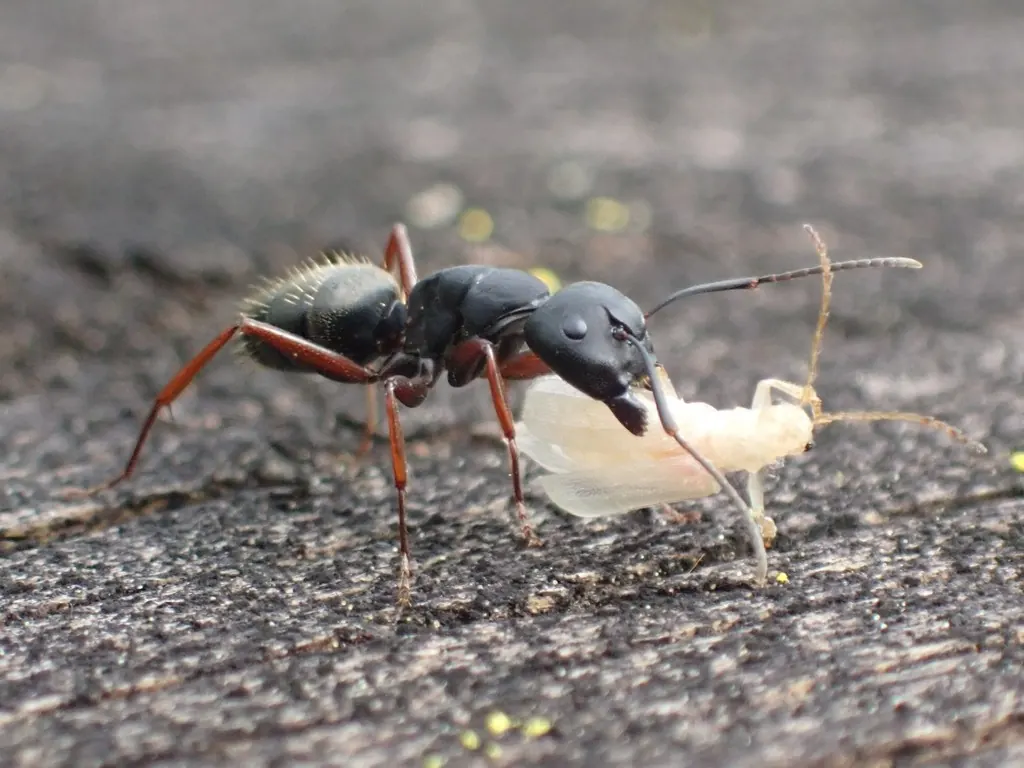
Photo by giantcicada, CC BY 4.0, via iNaturalist Western carpenter ant
Camponotus modoc
- Size
- 1/4 to 1/2 inch
- Look
- Large ant that hollows out wood to nest
- Where
- California
Swarms in the late afternoon, often after heavy rain.2
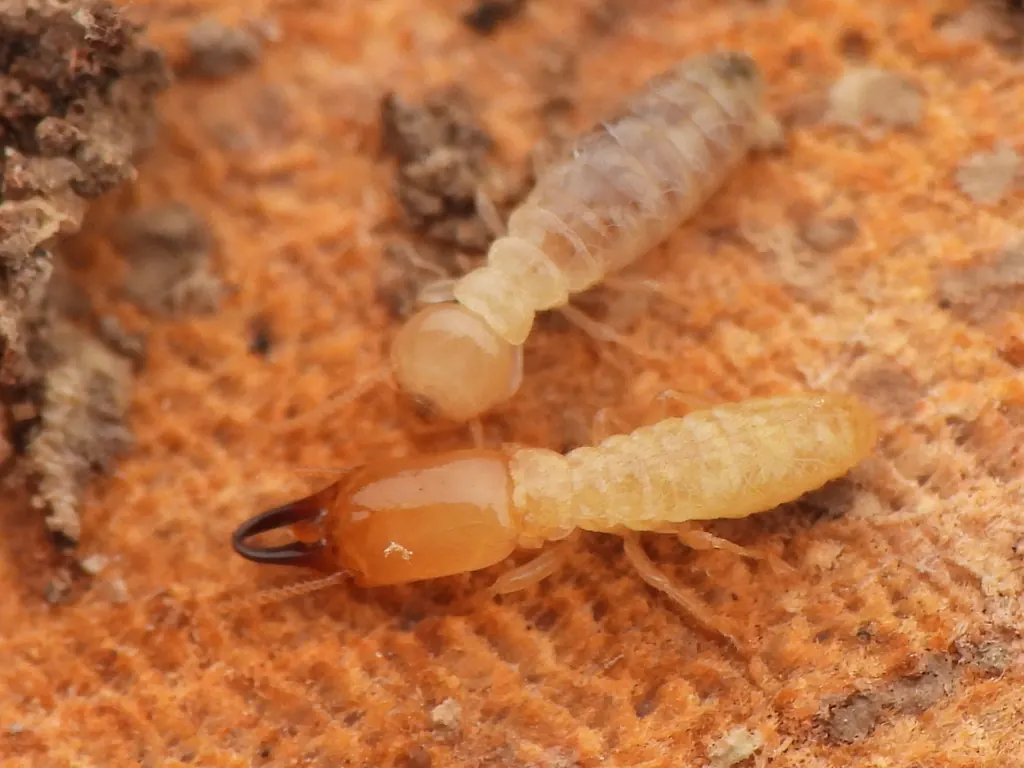
Photo by Sam Kieschnick, CC BY 4.0, via iNaturalist
Carpenter ants (genus Camponotus) are the largest ants in Ohio homes. The black carpenter ant is Ohio's most common species. Minor workers are about 1/4 inch and major workers about 1/2 inch. Size alone is not reliable, because one colony has workers of several sizes.1
In California, Camponotus modoc and C. vicinus are the most destructive. Workers run 1/4 to 1/2 inch. The smaller yellow and black C. clarithorax is also common.2
Ants have a pinched waist and elbowed antennae. Termites do not.3 Ohio field ants (Formica) look alike but build soil mounds, and their control is different.1 Back to the ant hub.
Life cycle and nests
Life cycle of carpenter ants
- 1Mating flightMarch to July in Ohio
- 2Parent nestdamp, decayed wood
- 3Satellite nestsdrier, warmer spots
- 4Colonyseveral thousand ants
- 5Winged adultsAug and Sept from spring eggs
The parent nest holds the queen. It sits in damp, decayed wood, often hardwood, with moisture above 15 percent.1 Satellite nests are in drier, warmer areas. Inside homes they turn up in hollow porch posts, crawl spaces, hollow doors, curtain rods and under attic insulation.1
Indoor nests are typically satellites of a parent nest outside, such as a tree, woodpile or landscaping timber.2 A nest can hold several thousand ants.2
Winged swarmers emerge from mature colonies from March to July in Ohio. Eggs laid in spring produce sexual forms in August and September.1
Signs of carpenter ants
- Frass that looks like pencil sharpener shavings, often in piles under nest openings called windows. It can include insect parts and seed husks.1
- A dry rustling like cellophane in a wall.1
- Large ants moving on trails at night.1
- Smooth, clean galleries with no soil.1
- Trails from a tree cavity or stump to the house.1
UC IPM says to inspect after sunset, when carpenter ants are most active, and follow the trail back to the nest.2 Their sawdust is fibrous, unlike the six-sided pellets of drywood termites.2
Risks
Carpenter ants do not eat wood. They excavate it to enlarge nests.3 The damage is slower than termite damage, but colonies often start where water or decay already hurt the wood, and they can expand into sound wood.2
That is why moisture is the first thing to check. Roof leaks, bad gutters, skylights and chimneys are common starting points.1
The sources we used list no disease threat from carpenter ants. Indoor bait stations must be childproof.1
Treatment, DIY or pro
The goal is the queen. Find the parent and satellite nests, since the colony only ends when the queen dies.1 Spraying around the ants without hitting nests is generally ineffective.1
Ohio State lists these tools. Vacuum nests or treat them with insecticide. Use dust through drill holes about three to six feet on either side of the entry site for wall voids. Use aerosols where there is a lot of insulation.1 Baits work on their own when placed on or near trails and entrances.1
UC IPM says to use slow-acting baits, and offer a nontoxic food such as sugar milk first to see what the ants take.2 Perimeter sprays go on the foundation 2 feet up and 3 feet out, and need a summer reapplication every four to six weeks.1 Ohio State says many ant jobs are best handled by licensed pros, which fits a nest inside a wall.3
Cost
Price ranges for carpenter ants
- Barrier spray$80 to $120 per visit
- Poison bait$120 to $200 per visit
- General ant visit$200 to $300 per visit
- Carpenter ant job$250 to $1,200 per job
Fixr lists carpenter ant removal near $250 for a 1,000 square foot home. A big job with treatment and repairs on a house over 3,000 square feet can reach $1,200.4
General ant treatment runs $200 to $300. Poison bait runs $120 to $200 and barrier sprays $80 to $120.4 Carpenter ants usually need more than a barrier spray. Ask the pro whether the quote includes finding the nest and a follow-up visit.
Prevention
- Fix moisture problems such as leaks, poor ventilation and blocked gutters.1
- Replace rotted wood and end wood-to-soil contact.1
- Remove dead stumps within about 50 feet of the house if practical.1
- Prune broken limbs and trim branches that touch the house.1
- Store firewood off the ground and away from the house.1
- Seal foundation cracks, especially where pipes and wiring enter.1
- Keep mulch 2 to 3 inches deep or less near the foundation.2
Season
When carpenter ants are active, by month
- Quiet
- Low
- Active
- Peak
OHOhio notes
The black carpenter ant, Camponotus pennsylvanicus, is the most common Ohio species.1 Perimeter sprays are reapplied every four to six weeks in summer, or within a week after heavy rain.1
Treatment by a company needs an Ohio Department of Agriculture commercial applicator license. Category 10a covers general pest control.5 Back to the ant hub.
CACalifornia notes
Camponotus modoc and C. vicinus are the two most destructive Western species and are found in California.2 C. vicinus nests can have up to 40 queens.2
UC IPM lists pyrethroid sprays and borate dusts as effective. Desiccant dusts such as silica gel need a licensed applicator, and so do perimeter sprays with fipronil.2 California pest companies are licensed by the Structural Pest Control Board.6
Organic or Extermination for Ants
Here is what each way of getting rid of ants looks like, side by side, from university and EPA sources.
Organic and green
How well each one works. Baits beat sprays. Spraying ants indoors does not stop more from coming in, whether the spray is botanical or not. UC IPM warns against pyrethroid sprays on driveways and foundations because they pollute waterways. Most ant jobs go best with sealing and cleaning first, then baits when they are needed. 123
- UC IPM, Pest Notes Ants
- UC IPM, Ant Management in Gardens and Landscapes
- Ohio State University Extension, Ants In and Around the Home
More Ants Guides
Who Treats Ants Near You
These companies name ants on their own website, the top of each state list. See all 860 sorted by region.
Ohio
- Names ants on its siteOpen 7 days
- Names ants on its siteSaturdays

- Names ants on its site
- Names ants on its siteSaturdays
- Names ants on its siteSaturdays
- Names ants on its siteSaturdays
California
- Names ants on its site

- Names ants on its siteOpen 7 days
- Names ants on its siteOpen 7 days
- Names ants on its siteSaturdays

- Names ants on its siteOpen 7 days
- Names ants on its siteOpen 7 days
Questions People Ask About Carpenter Ants
Is it bad if your house has carpenter ants?
Yes, if they are nesting inside. They excavate wood and can spread from damaged wood into sound wood. A few foragers may only mean a nest outside.2,1
How do you get rid of carpenter ants?
Find the parent and satellite nests and kill the queen. Use dust through drill holes, baits on trails and fix the moisture. Spraying around the ants without treating nests is generally ineffective.1
How can you tell if it's a carpenter ant?
Look for large black ants, 1/4 to 1/2 inch, with a pinched waist, plus frass like pencil shavings. Ohio field ants look similar but build soil mounds.1
What time of year are carpenter ants most active?
Swarmers emerge from March to July in Ohio. In California, mating flights are in spring. Workers forage mainly at night.1,2
What do carpenter ants hate most?
No fetched source names a smell that works. What they need is damp, decayed wood for the parent nest, so fixing leaks and replacing rotted wood takes that away.1
Will carpenter ants eventually go away?
Not if a nest is in your wall. Colonies grow, and satellite nests keep expanding unless the queen is killed. Moisture fixes help prevent a return.1
Sources
- Ohio State University Extension. Carpenter Ants HYG-2063
- UC IPM. Pest Notes Carpenter Ants
- Ohio State University Extension. Ants In and Around the Home
- Fixr. Ant Exterminator Cost
- Ohio State University Extension. Ohio Commercial Pesticide Applicator Requirements
- California Structural Pest Control Board. Structural Pest Control Board home page
Photo credits
- Western carpenter ant. Photo by giantcicada, CC BY 4.0, via iNaturalist
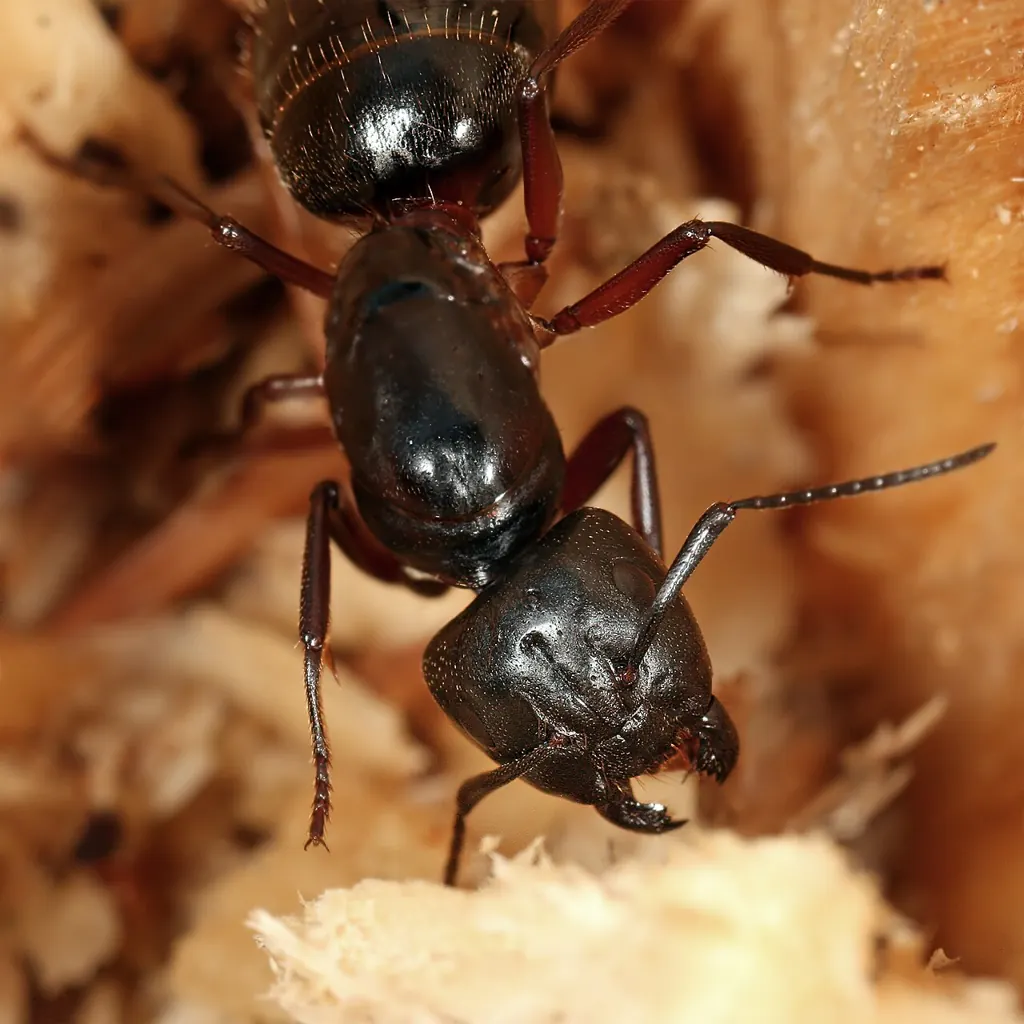
- Carpenter ant workers on wood. Photo by Richard Bartz, Munich Makro Freak, CC BY-SA 2.5, via Wikimedia Commons