Spiders field guide
Black Widow Spiders in Ohio and California
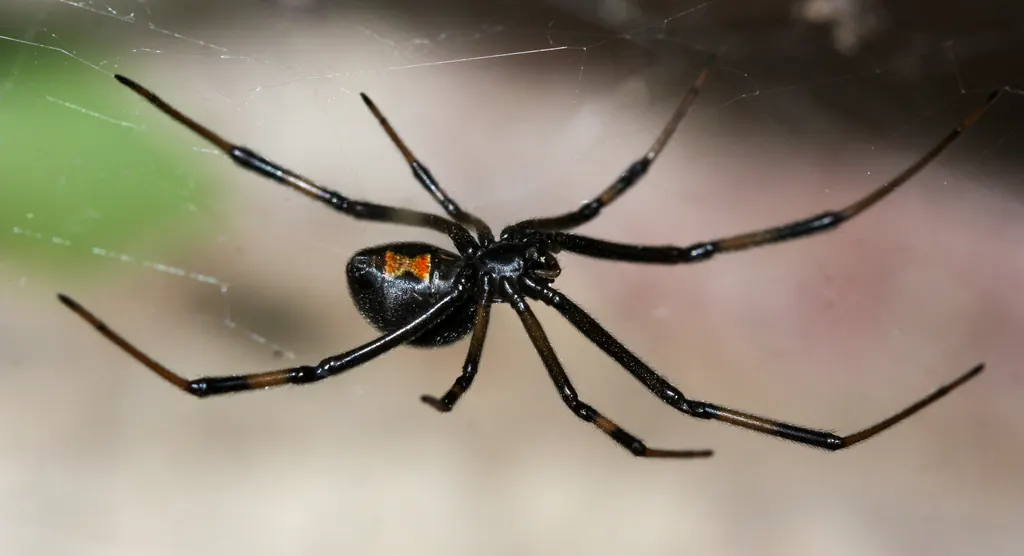
Female black widows are shiny black with a red hourglass under the abdomen and about 1/2 inch long.1 They hide in clutter, woodpiles and garages close to the ground.1 Bites are rare but need medical care, since cramps can start within an hour.1 Wear gloves around clutter, vacuum webs, and call a doctor after any bite.1,4 More in the spider guide.
Field guide reviewed October 31, 2026, with 8 cited sources
688 pest companies name spiders, 144 in Ohio and 544 in California. 688 say so on their own website.
See Who Treats SpidersHow to identify a black widow
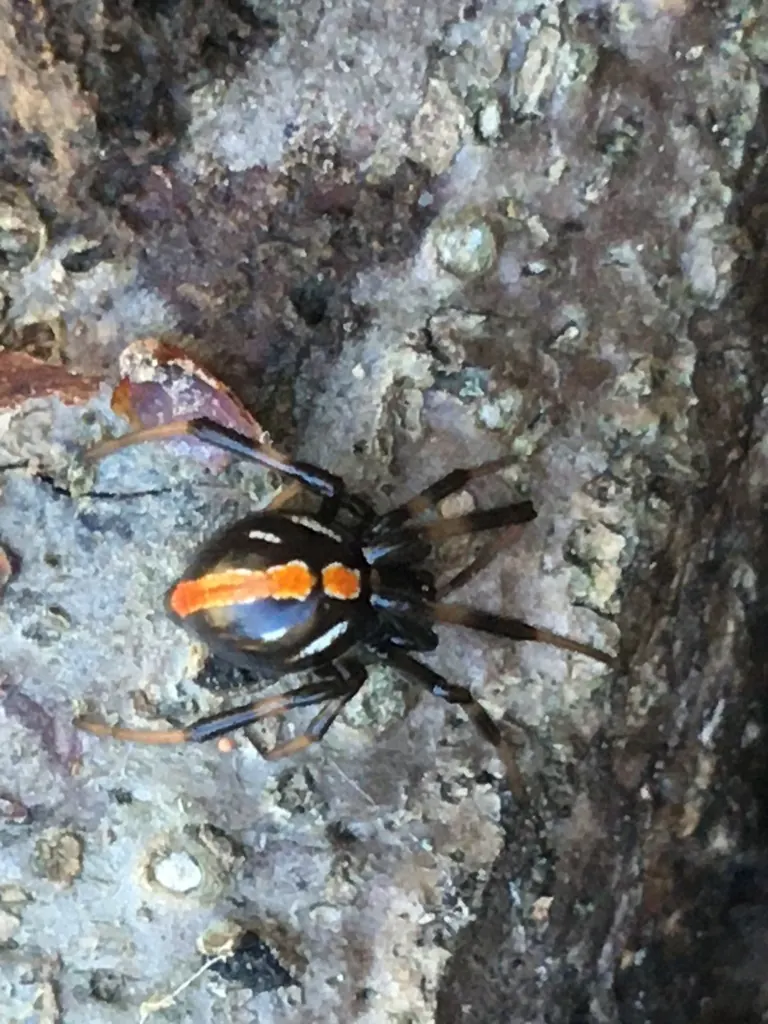
Photo by Joseph McPhail, CC BY 4.0, via iNaturalist Northern black widow
Latrodectus variolus
- Size
- about 1/2 inch body, slightly smaller than the southern
- Look
- shiny black with a broken red hourglass and a row of red spots on top
- Where
- Ohio
A broken hourglass points to the northern species.
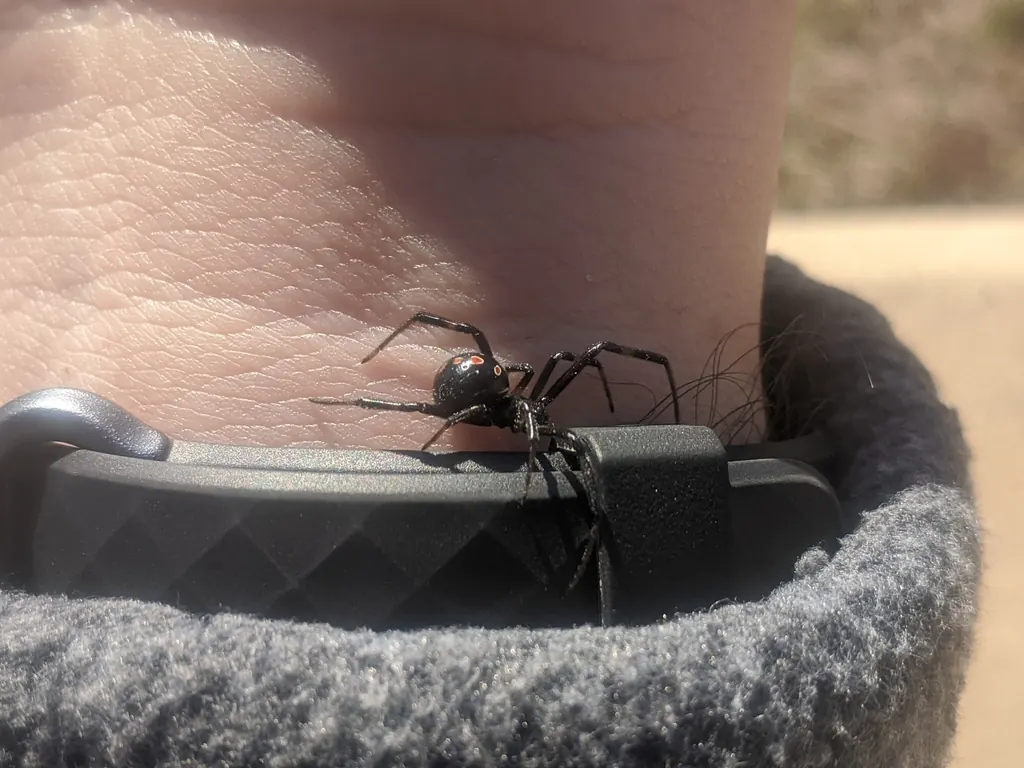
Photo by Justin Quintanilla, CC BY 4.0, via iNaturalist Southern black widow
Latrodectus mactans
- Size
- about 1/2 inch body
- Look
- shiny black with a red hourglass
- Where
- Southern parts of Ohio
It lives in the southern part of Ohio, and the female has a red hourglass.
Photo by Andrew Meeds, CC BY 4.0, via iNaturalist Western black widow
Latrodectus hesperus
- Size
- about 1/2 inch body
- Look
- shiny black with a red hourglass-like mark that can vary
- Where
- California deserts and high ground in Southern California
Teardrop yellowish egg sacs of about 300 eggs.
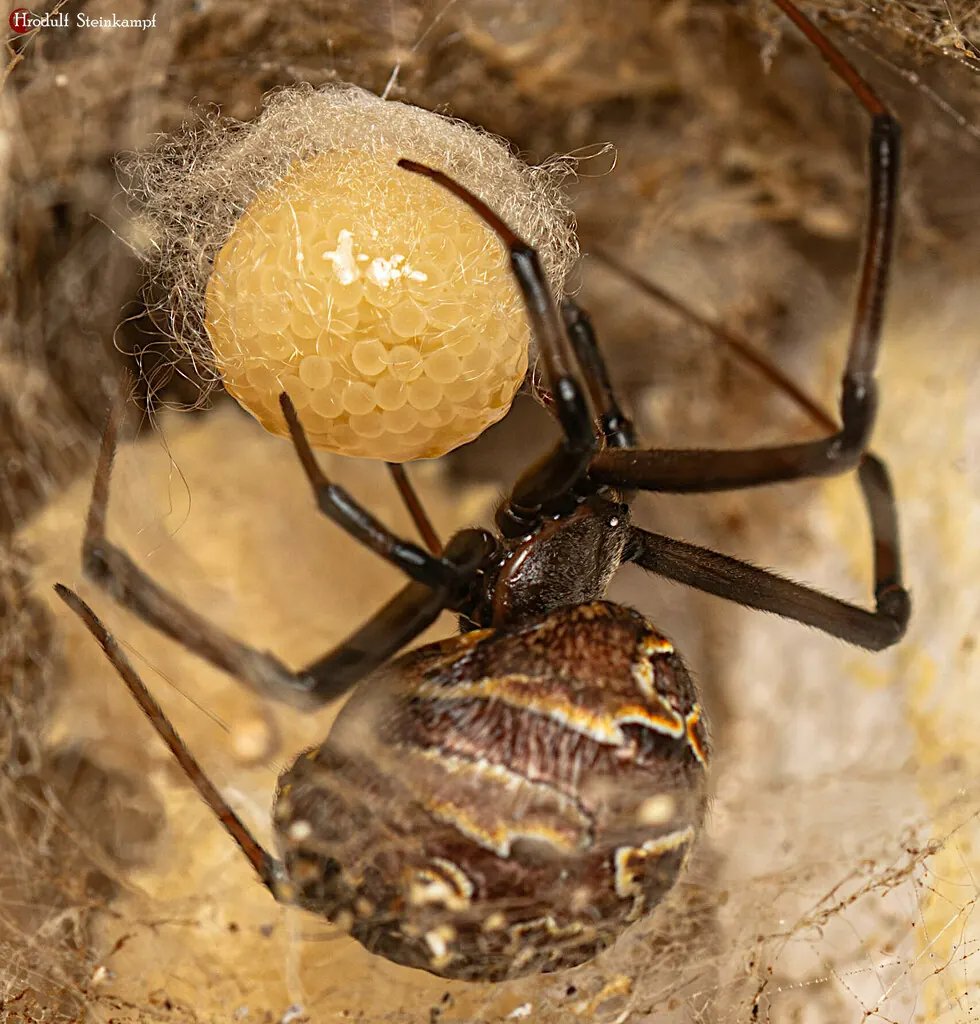
Photo by Rudolph Steenkamp, CC BY-SA 4.0, via iNaturalist Brown widow
Latrodectus geometricus
- Size
- about 3/8 inch body
- Look
- mottled tan, brown and gray, sometimes nearly black
- Where
- Southern California from Santa Barbara to the San Bernardino area
The egg sac has silk spikes, like a large pollen grain, and holds about 130 eggs.
Adult females are shiny black with a red, hourglass-like mark under the abdomen. The mark can vary and is rarely missing.1 They are about 1/2 inch long in the body. Males are much smaller.1,2
The young look different. Spiderlings hatch with tan legs and a white abdomen with black spots, then turn olive-gray or tan with white stripes.1
In Ohio, a broken hourglass points to the northern black widow, and the northern female usually has a row of red spots on top.2,3 The brown widow in California is smaller at about 3/8 inch and mottled tan, brown and gray. Its egg sac, with silk spikes, is the best clue.1
The false black widow is chocolate brown and never has red marks.1 See the spider guide for other look-alikes.
Black widow life cycle
Life cycle of black widow spiders
- 1Egg sacabout 250 to 300 eggs
- 2Hatchthree to four weeks
- 3Spiderlingstan legs, white abdomen with black spots
- 4Immaturesolive-gray or tan with white stripes
- 5Adult femaleshiny black with a red hourglass
The female lays eggs in a yellowish, teardrop-shaped sac. A western sac holds about 300 eggs.1 A northern widow sac holds about 250, and she can make up to nine in one summer.2 Eggs hatch in three to four weeks.2
A female can make more than 10 sacs after one mating without fewer eggs or lower hatch rates.1 Brown widow females can make 20 or more sacs in a lifetime, sometimes several at once.1
Spiderlings can balloon on silk threads, traveling from a few feet to miles.1 Only a small fraction survive.2
Females live longer than males.2 Contrary to the myth, female widows rarely eat their mates after mating. They may if hungry.5
Signs of black widows
- A tough, cobweb-like web in a garage, near doors and vents, or in holes and crevices.1
- Webs close to the ground, usually within three feet. Some are built higher and drop 10 or more feet.1
- Yellowish teardrop egg sacs in the web. Brown widow sacs look spiky.1
- Clutter, woodpiles, rock walls, barns and outbuildings, where they hide.1
- Curled lips on toys, playhouses, picnic tables and plant pots.1
- A spider that comes out at dusk.1
The Ohio find at the base of a garage door frame fits the pattern.3
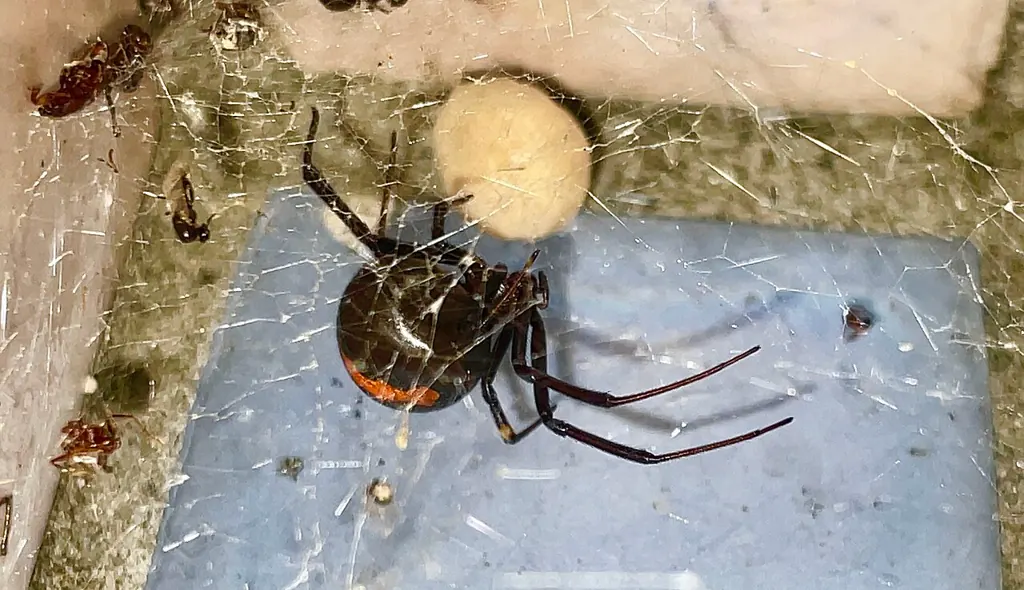
Bite risk
Bites are quite rare, even where widows are common, and most serious ones come from adult females.1 The bite is often painless or feels like a pinprick. Symptoms often start within an hour.1
Look for rigid stomach muscles, sweating, pain that spreads, and less often numbness, agitation or fever.1 The CDC says the venom is a neurotoxin that can spread pain to the chest, abdomen or whole body.4 Symptoms often feel like the flu and fade within a few days.1
Get medical care right away. A cold pack can ease pain.1 Antivenom works against all tested black widows and can bring relief fast. It is made from horse serum, so doctors watch for allergic shock.1
The brown widow venom is strong, but the spider is smaller and a bite is unlikely, since a disturbed one drops and plays dead.1 Tetanus shots should stay current, because bites can become infected.4
Treatment. What works
This is mostly a clean-up job. Reduce clutter, woodpiles and heavy ground cover. Vacuum or sweep corners, windows and storage areas often, since vacuuming usually kills spiders.1
You can hunt at night with a flashlight and kill them with a shoe or rolled newspaper. Or relocate them about 100 feet from the home using a jar and paper.1 Wear gloves when you handle clutter, wood or outdoor objects.1
Sprays do not work well alone. Insecticides do not give long-term control, and most registered water-based products had no significant effect on brown widow egg sacs in a 2016 study. Petroleum-based products did reach inside the sacs.1
Complete elimination is not practical, and both species reinfest treated areas.1 A pro can help with the hard places, but expect repeat visits. A Miami University researcher urges people not to kill them because they eat pests.3
What black widow control costs
Price ranges for black widow spiders
- Average spider treatment$300 to $500 per job
- One-time visit$125 to $350 per visit
- Garage or basement$400 to $1,000 per treatment
- Yard$150 to $450 per treatment
- Quarterly plan$350 to $750 plan
A national spider cost guide gives an average of $400, with most jobs at $300 to $500.6 It gives no separate price for black widows, but says costs run higher for large venomous spiders.6
A single visit runs $125 to $350. Quarterly service runs $350 to $750 and monthly $600 to $1,250.6 Garages and basements run $400 to $1,000 per treatment, yards $150 to $450 and attics $170 to $500.6
Pet-safe products add roughly $100 to $200.6 Possible repairs afterward run $100 to $550.6
Because spiderlings drift in on silk and the spiders re-infest, a repeat plan can cost less over time than a single visit. Ask for two local quotes.
How to prevent black widows
- Store garage items in zipper-lock bags or taped boxes raised off the floor.1
- Wear gloves when you handle clutter, wood or outdoor objects.1
- Check toys, playhouses, picnic tables and plant pots with curled lips.1
- Keep outdoor lights away from walls and doors, because insects draw spiders.1
- Reduce clutter, woodpiles and heavy ground cover near the house.1
- Shake out clothing, shoes and towels before use.4
- Clear debris and trim tall grass around work areas.4
- Vacuum corners, windows and storage areas on a schedule.1
When black widows are active
When black widow spiders are active, by month
- Quiet
- Low
- Active
- Peak
Widows come out at dusk and stay near ground-level retreats.1 Egg sacs build up over the summer, with a female making up to nine in a season.2
Spiderlings can balloon on silk at any time of year, so control has to be repeated throughout the year.1
In Ohio, a female was found alone in her web on Sept. 14 with no egg cases, which was unusual, since egg cases are usually present at that time of year.3 Brown widows in Southern California are common in urban areas and parks.1
OHOhio notes
Ohio has two black widows, the northern and the southern. The southern one is found in southern parts of the state.3 An Ohio State urban entomologist confirmed a northern widow in New Carlisle, Clark County, by its broken hourglass.3
He said there have been 250 reported sightings in Ohio, and the count may be low since widows are shy.3 A Miami University researcher says they eat agricultural pests and urges residents not to kill them.3
A person who applies pesticides to another party's property for pay needs a commercial applicator license from the Ohio Department of Agriculture.7 Category 10a covers general pest control.7
CACalifornia notes
The western black widow, Latrodectus hesperus, is the most common harmful spider in California.5 It is common in deserts and in mountainous terrain above 5,000 feet in Southern California.1
The brown widow is well established from Santa Barbara to the San Bernardino area and south to Mexico, as of 2016. Established populations had not been found north of the Los Angeles Basin, in the Central Valley or in the deserts.1
The false black widow, Steatoda grossa, is common indoors in Pacific Coast homes. Its bite is like a yellowjacket sting.1 The noble false widow was first found in Southern California in 2011.1
The California Structural Pest Control Board has a Verify a Company or Licensee page for checking a pest company.8
More Spiders Guides
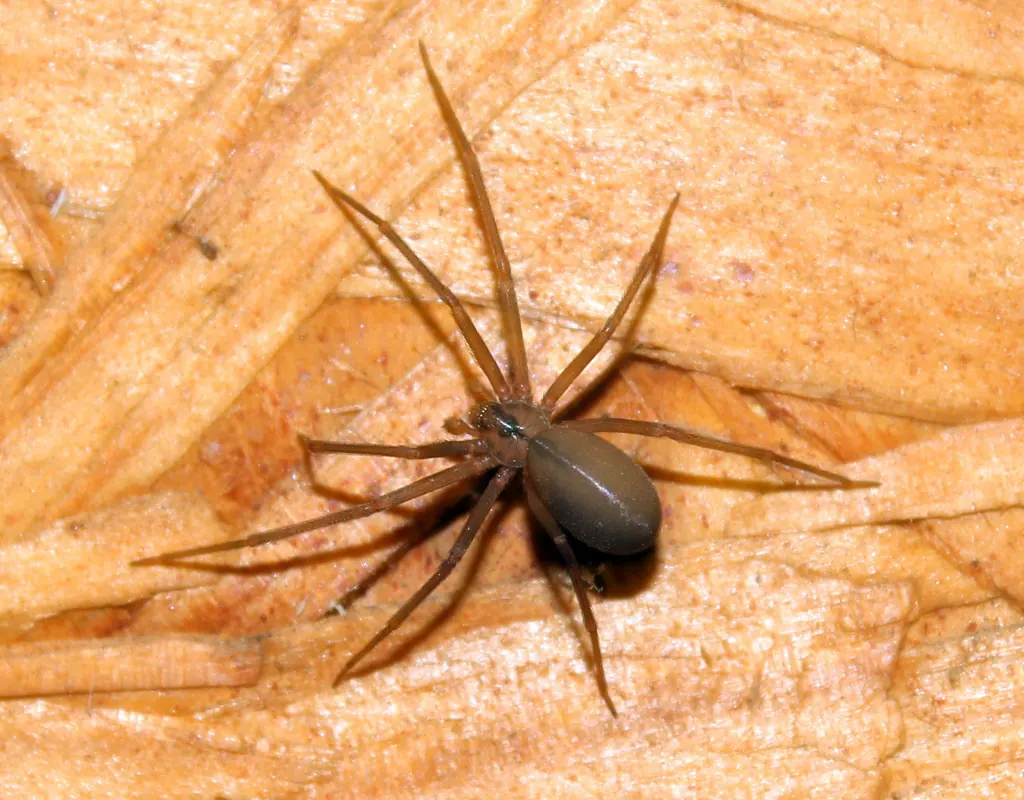 Brown Recluse SpidersThe brown recluse is a tan to brown spider with a body no longer than 3/8 inch and six eyes in three pairs, no
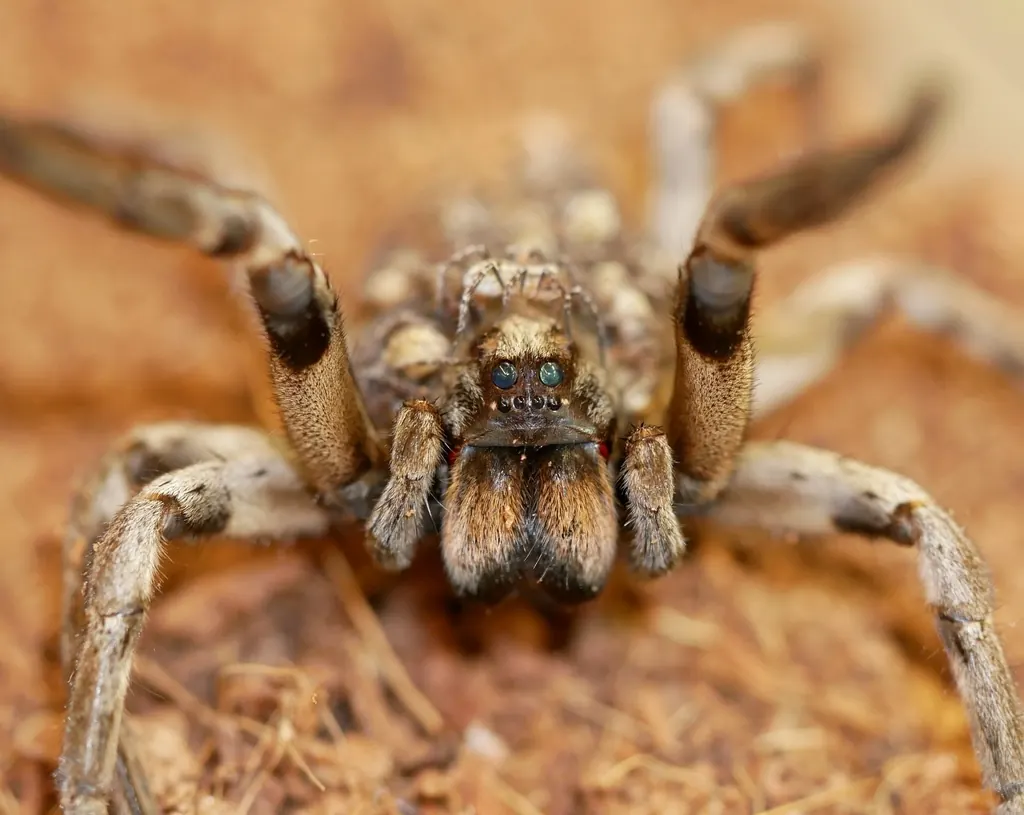 Wolf SpidersWolf spiders are brown or tan ground hunters with striped bodies and eyes that shine green under a flashlight.
Who Treats Spiders Near You
These companies name spiders on their own website, the top of each state list. See all 688 sorted by region.
Ohio
- Names spiders on its siteOpen 7 days
Bayer Pest Control
4.9 from 53 reviews - Names spiders on its siteSaturdays

Expert Pest Management
4.9 from 159 reviews - Names spiders on its site
Crago's Pest Solutions and Home Inspections, LLC
5.0 from 4 reviews - Names spiders on its siteSaturdays
Expert Pest Management
4.0 from 3 reviews - Names spiders on its siteSaturdays
Expert Pest Management
5.0 from 2 reviews - Names spiders on its siteSaturdays
Expert Pest Management
5.0 from 1 reviews
California
- Names spiders on its site

Newport Exterminating
4.9 from 516 reviews - Names spiders on its siteOpen 7 days

Legacy Pest Management
5.0 from 54 reviews - Names spiders on its siteOpen 7 days
Dan's Pest Management Inc.
4.9 from 223 reviews - Names spiders on its siteSaturdays
Versa-Tech Pest Management
4.9 from 48 reviews - Names spiders on its siteOpen 7 days

The Termite Inspectors of Tustin
5.0 from 16 reviews - Names spiders on its siteOpen 7 days

Dewey Pest & Termite Control
4.8 from 910 reviews
Questions People Ask About Black Widow Spiders
What happens if you are bitten by a black widow?
The bite is often painless or feels like a pinprick. Within an hour you may get cramps, rigid stomach muscles and sweating.1 Get medical care at once. A cold pack eases pain, and antivenom is available.1 Symptoms often fade in a few days.1
What kind of spider is black with a white spot on the back?
A black widow's marks are red and underneath, not white and on the back.1 Young widows have a white abdomen with black spots that turns olive-gray with white stripes.1 Northern males have pale bands on each side of the abdomen.2
What is the #1 deadliest spider?
The CDC names two venomous US spiders, the black widow and the brown recluse, and says death is extremely rare.4 UC IPM says death from a black widow is very unlikely, and prompt treatment eases symptoms.5
Is it okay to squish a black widow?
UC IPM lists a shoe or rolled newspaper as a control tool, or you can move the spider about 100 feet away with a jar and paper.1 An Ohio researcher urges people not to kill them because they eat pests.3
Where do black widows hide?
In holes, crevices and clutter around homes, barns, outbuildings and rock walls, usually near ground level.1 In garages the webs are often by doors and vents.1
Do female black widows eat their mates?
Rarely. UC IPM says female black widows rarely eat their mates after mating, contrary to popular belief.5 They may do so if they are hungry.5 Males are much smaller than females.1
Sources
- UC IPM. Pest Notes Widow Spiders and Their Relatives
- UW-Milwaukee Field Station. Speed-dating the Spiders Black Widows
- Springfield News-Sun. First recorded northern black widow in Clark County
- CDC NIOSH. Venomous Spiders
- UC IPM. Pest Notes Spiders
- Fixr. Spider Exterminator Cost
- Ohio State CFAES. Ohio Commercial Pesticide Applicator Requirements
- California Structural Pest Control Board. Structural Pest Control Board home page
Photo credits
- Southern black widow. Photo by Justin Quintanilla, CC BY 4.0, via iNaturalist
- Brown widow. Photo by Rudolph Steenkamp, CC BY-SA 4.0, via iNaturalist