Bees, Wasps and Hornets field guide
Carpenter Bees. How to Stop the Holes in Your Wood
Carpenter bees are large, bumble bee lookalikes with a bare, shiny black abdomen that drill round holes about half an inch wide into wood.1 Males cannot sting, and females sting only when handled.1 Damage is usually minor, so paint bare wood and treat holes in early spring or fall.2 A removal averages $794.3 More in the wasp and bee guide.
Field guide reviewed October 31, 2026, with 5 cited sources
573 pest companies name bees, wasps and hornets, 168 in Ohio and 405 in California. 566 say so on their own website.
See Who Treats Bees, Wasps and HornetsHow to identify carpenter bees
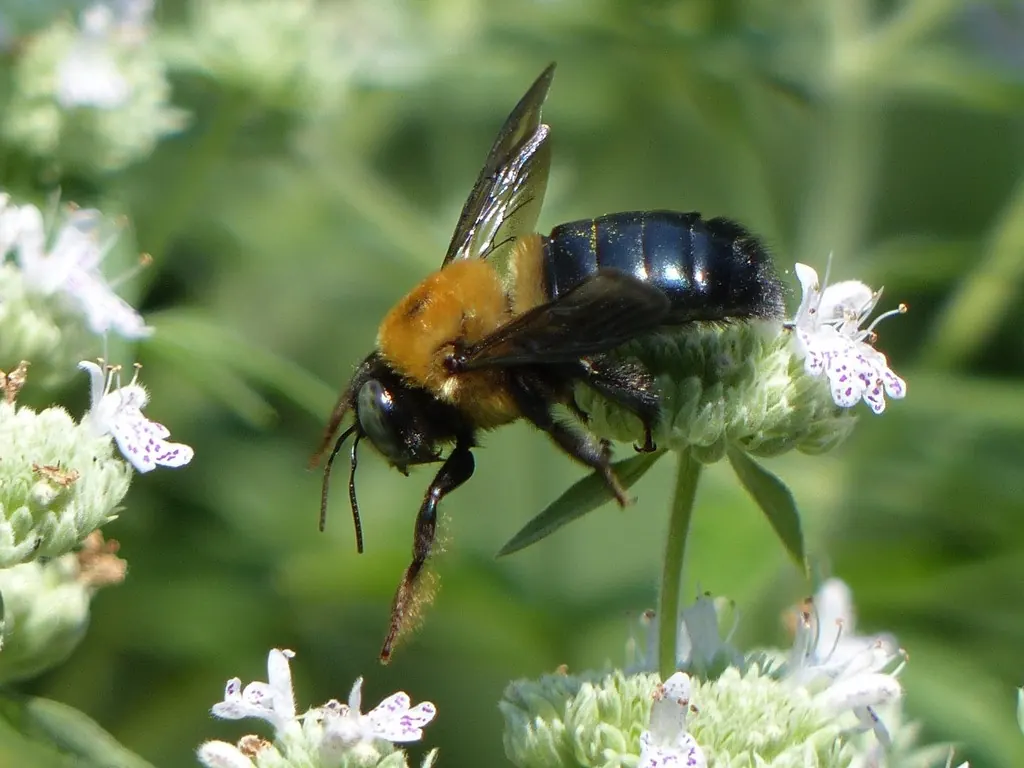
Public domain photo, CC0, via iNaturalist Eastern carpenter bee
Xylocopa virginica
- Size
- 3/4 to 1 inch
- Look
- largely bare, shiny black abdomen with yellow, orange or white hair on the thorax
- Where
- Ohio wood trim, decks, fascia and railings
The head is almost as wide as the thorax, and females have an all black head.
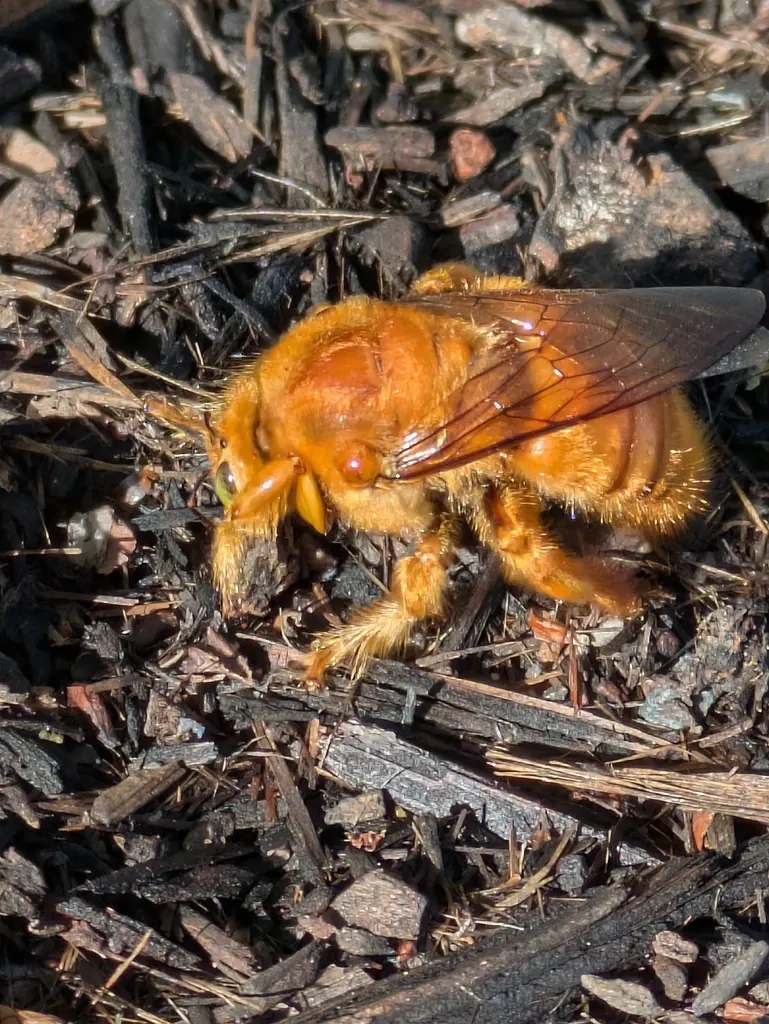
Photo by jayjt, CC BY 4.0, via iNaturalist Valley carpenter bee
Xylocopa varipuncta
- Size
- 5/8 to 1 inch for females
- Look
- shiny black females with metallic blue reflections, golden brown males
- Where
- California
The golden brown male is the giveaway, since eastern males have yellow or white head marks.
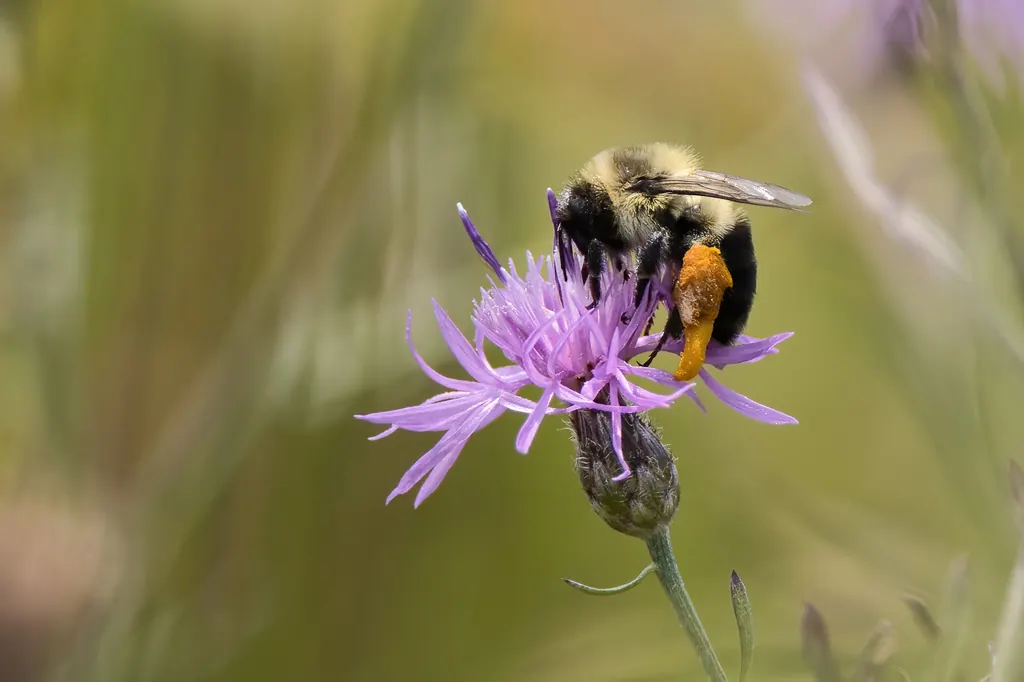
Photo by Lauren McLaurin, CC BY 4.0, via iNaturalist Bumble bee
Bombus species
- Size
- similar size, much fuzzier
- Look
- very hairy yellow-marked abdomen with large pollen baskets on the legs
- Where
- Ground nests in yards and fields
A fuzzy abdomen and a narrower head. Bumble bees are social and nest in the ground.
Eastern carpenter bees are large and robust, about 3/4 to 1 inch long. The top of the abdomen is largely bare and shiny black, and the thorax has yellow, orange or white hairs.1
Bumble bees are the lookalike. They have a much narrower head than thorax, a hairy yellow-marked abdomen and large pollen baskets. They are social and nest in the ground.1 The bare abdomen is the quick test.
In California UC IPM features the valley carpenter bee. Females are 5/8 to 1 inch and shiny black or metallic blue. Males usually have pale thorax hair, and the male valley bee is golden brown.2
In Ohio, females have an entirely black head and males have yellow or white head marks.1 Compare the photos above, then read about other bees and wasps if yours is not a carpenter bee.
Carpenter bee life cycle
Life cycle of carpenter bees
- 1Adults emergeApril and early May in Ohio
- 2Female bores a galleryabout 1 inch every six days
- 3Brood cells filled6 to 10 per gallery
- 4Egg to adultabout 7 weeks
- 5New adults feedfrom late August
- 6Overwinter in the galleryemerge next spring
Carpenter bees are solitary. Each female has her own gallery, although many may share one piece of wood.1 Adults come out in April and early May in Ohio, and males hover near nesting females.1
The female makes a round entrance hole slightly less than half an inch wide. She turns 90 degrees and tunnels 4 to 6 inches along the grain at about 1 inch every six days.1 Each gallery holds six to 10 brood cells.1
Egg to adult takes about seven weeks. New adults feed from late August and spend the winter in the old gallery.1 UC IPM gives about 3 months and one generation a year in California.2
The same galleries get reused and extended, since new digging is slow.1 That is why the damage grows year after year.
Signs of carpenter bees
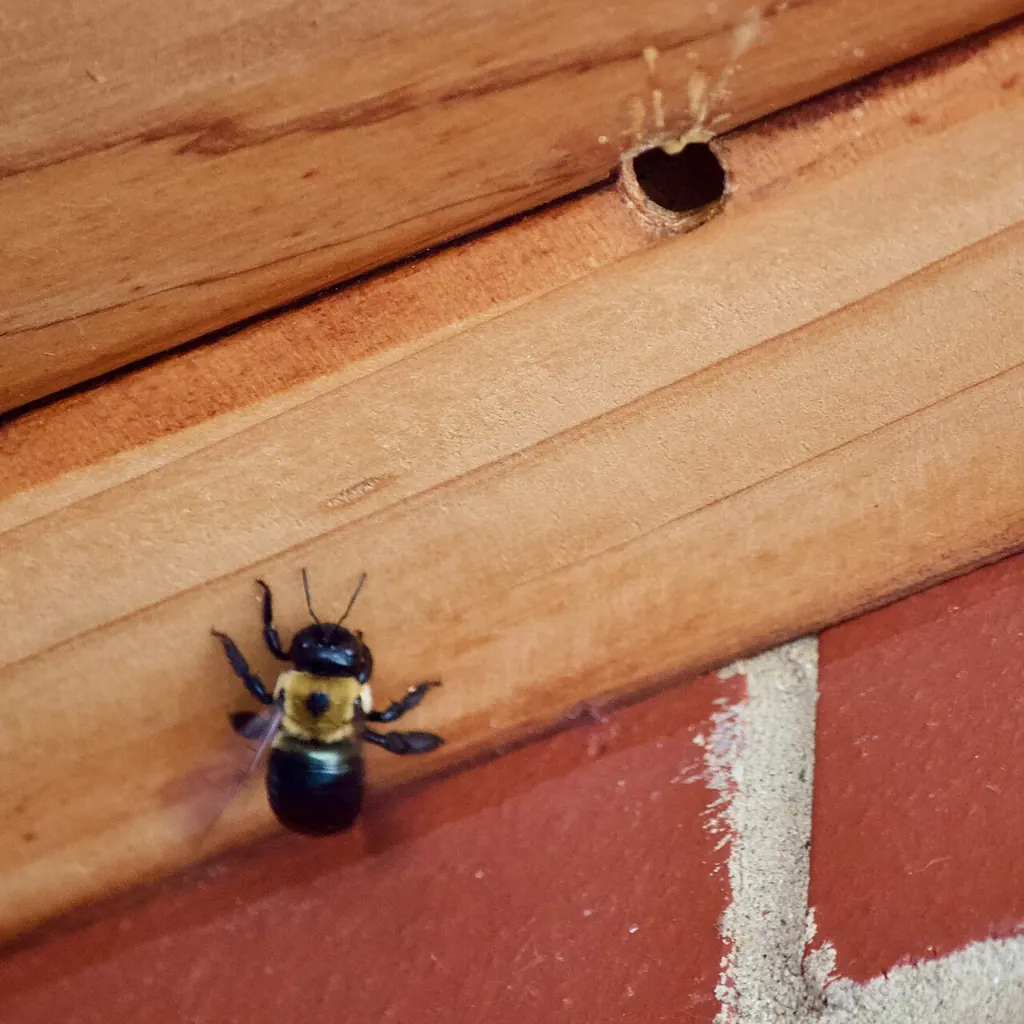
- A round hole about half an inch wide in fascia, eaves, decks, railings or siding.1
- Coarse sawdust on the ground or deck below the hole.1
- Yellowish to brownish streaks of droppings and dislodged pollen under hidden holes.1
- Big bees hovering and dive-bombing near the wood. These are mostly males, which cannot sting.1
- Woodpecker holes in the same board, since woodpeckers hunt the larvae and overwintering adults.1
- Bees buzzing in and out of an old hole in spring.1
Look at unpainted wood first. Nail holes and saw cuts can attract them too.1
Risks. Stings and wood damage
The sting risk is low. Males cannot sting and only look scary when they dive-bomb. Females are docile and sting only when handled, though a female can sting more than once.1 UC IPM says females sting only when provoked or roughly handled.2
The damage is slow. Initial damage is minor and serious structural harm is uncommon.1 Over years, galleries can reach 10 feet, and linked tunnels can weaken wood enough that it should be replaced.1 UC IPM says severe damage is rare.2
Woodpeckers can add holes while hunting bee larvae.1 Carpenter bees are also pollinators of many crop and noncrop plants.2
A bee sting can be serious for the few people with an allergy, so see the main guide for sting care.
Treatment. DIY or professional
Dust works best. Ohio State says pyrethroid dusts such as cyfluthrin, bifenthrin, deltamethrin and permethrin are the most effective and longest lasting option. Treat at night on a cool evening, puff the dust deep into each hole, and wait a few days before plugging so the bees spread it.1
Surface sprays are a short-term shield. Apply them in early spring before the females dig. They break down in weeks to months.1 UC IPM agrees on timing, early spring before nesting or fall after adults settle in.2
Do not treat from late spring through summer. Brood chambers are sealed with wood particles that block pesticides, so it does not work. Do not fill tunnels before the bees have come out.2
Ohio State says wood stain does not stop them, and stomach-poison products such as borates are ineffective, since the bees do not eat wood.1 After the bees die, seal holes with steel wool and caulk or putty, then paint.1,2 Many of the dusts are sold only to licensed pros.2
What carpenter bee removal costs
Price ranges for carpenter bees
- Carpenter bee removal, typical$88 to $1,500 per job
- Carpenter bee removal, average$794 per job
- Removal plus carpentry repairs$794 to $2,000 per job
- Honey bee removal by a beekeeper$0 to $445 per job
- Soffit repair$6 to $20 per linear foot
One national cost guide puts carpenter bee removal at an average of $794, with a range of $88 to $1,500.3 If carpentry repairs are needed, the total can approach $2,000.3
Repairs are where the money goes. The same guide lists soffit repair at $6 to $20 per linear foot and drywall repair at an average of $512.3
Other things move the price. Hard-to-reach spots such as walls, ceilings and roofs cost more than an easy spot. City work costs more than suburban or rural work.3
Honey bees are a different job. A beekeeper may remove a live hive for nothing, and live removal averages $445.3 Prices are national, so ask for local quotes that name the method.
How to prevent carpenter bees
- Paint or varnish exposed wood. Ohio State says use polyurethane or oil-based paint, and check it as it weathers.1
- Do not count on stain. It does not prevent damage.1
- Choose aluminum, vinyl siding or other materials the bees do not damage.1
- Build exposed parts from hardwoods when you can.2
- Fill cracks and holes in wood. After the bees are out, plug unused holes with steel wool and caulk, then paint.2
- Cover rough timber ends with wire screening or metal flashing.2
- Apply a surface treatment in early spring, before females begin to dig.1
When carpenter bees are active
When carpenter bees are active, by month
- Quiet
- Low
- Active
- Peak
In Ohio, adults come out in April and early May.1 Males hover near nesting females while the females drill.1
Egg to adult takes about seven weeks, so a new generation appears later in summer. New adults feed from late August and then overwinter.1 The best treatment windows are early spring, before digging begins, and fall, once adults settle in for the winter.2
In California, adults emerge in spring to mate and nest, and there is one generation per year.2 New adults come out in late summer, feed and overwinter, often in old tunnels.2
OHOhio notes
Ohio carpenter bees are the eastern species. They prefer softwoods such as cedar, redwood, cypress, pine and fir.1 They avoid well-painted or bark-covered wood.1
Common targets are fascia boards, eaves, gables, decks, railings, siding, shutters and fence posts.1 The Ohio State fact sheet HYG-2074 is the Extension guide to read first.1
Dusts for holes are the pro-grade fix. In Ohio, a person who applies pesticides to another party's property for pay needs a commercial applicator license from the Ohio Department of Agriculture.4 Category 10a covers general pest control, and a license needs passing exams with a 70 percent score.4
CACalifornia notes
UC IPM covers the valley carpenter bee, Xylocopa varipuncta, and its relatives. Females bore into sound wood, and sometimes decaying wood. Nests are tunnels about 1/2 inch wide and 6 to 10 inches deep, split into chambers with an egg and pollen.2
Western species often use oak, eucalyptus and redwood.1 UC IPM says sound, unpainted wood without bark is preferred, and most hardwoods are avoided.2
UC IPM says insecticide use is generally not recommended under most conditions and is best kept for heavy infestations or high structural risk.2 Some pesticides are limited to licensed applicators.2 The California Structural Pest Control Board has a Verify a Company or Licensee page.5
More Bees, Wasps and Hornets Guides
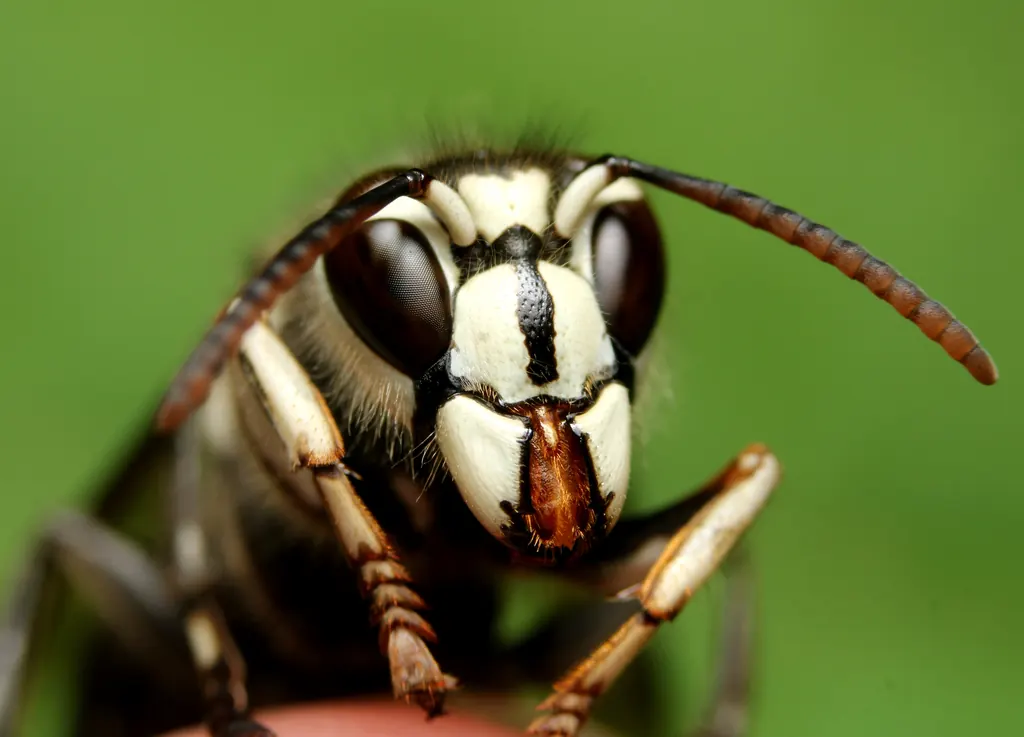 Bald-faced HornetsThe bald-faced hornet is a black wasp about 7/8 inch long with white or cream on the face and tail end.
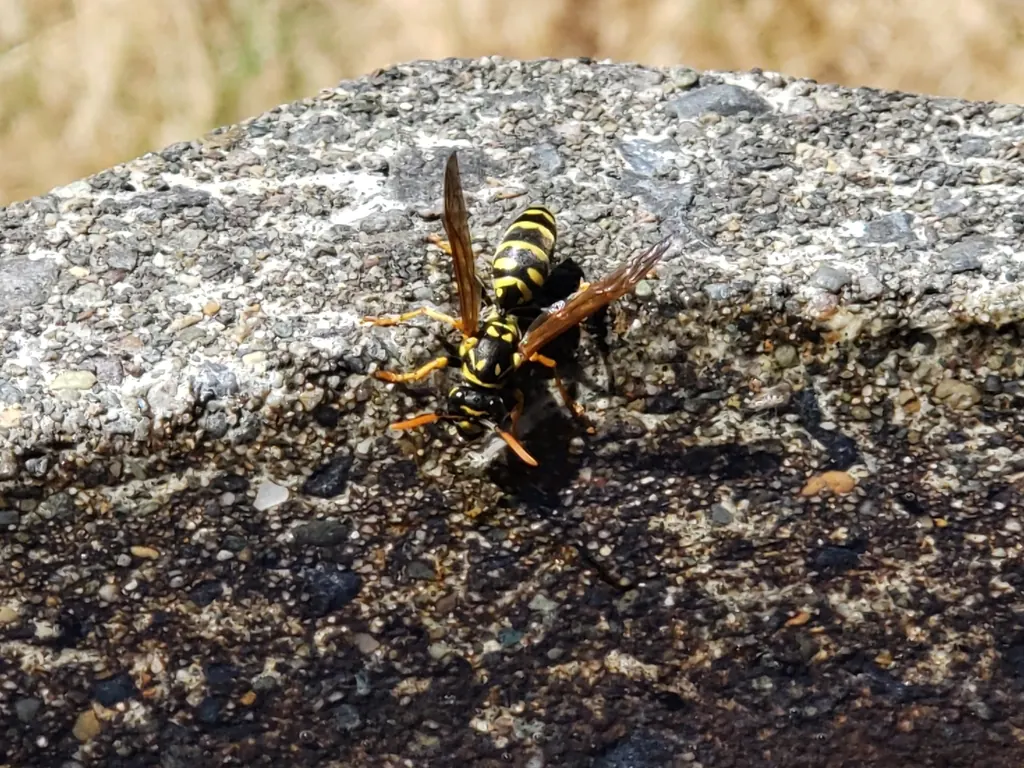 Paper WaspsPaper wasps are slender, long-legged wasps about 1 inch long that hang an open, umbrella-shaped nest under eav
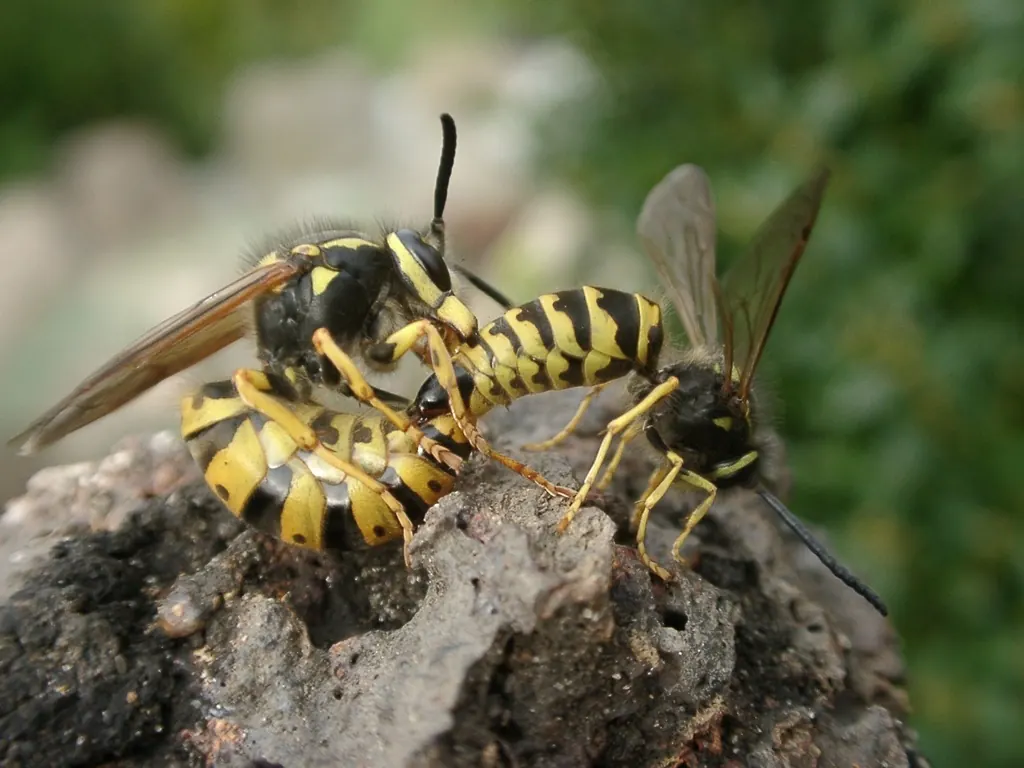 YellowjacketsYellowjackets are 1/2 to 1 inch long wasps with bright yellow and black bands and a very short waist.
Read the full bees, wasps and hornets guide
Who Treats Bees, Wasps and Hornets Near You
These companies name bees, wasps and hornets on their own website, the top of each state list. See all 573 sorted by region.
Ohio
- Names wasps on its siteOpen 7 days
Bayer Pest Control
4.9 from 53 reviews - Names wasps on its siteSaturdays

Expert Pest Management
4.9 from 159 reviews - Names wasps on its site
Crago's Pest Solutions and Home Inspections, LLC
5.0 from 4 reviews - Names wasps on its siteSaturdays
Expert Pest Management
4.0 from 3 reviews - Names wasps on its siteSaturdays
Expert Pest Management
5.0 from 2 reviews - Names wasps on its siteSaturdays
Expert Pest Management
5.0 from 1 reviews
California
- Names wasps on its site

Newport Exterminating
4.9 from 516 reviews - Names wasps on its siteOpen 7 days
Legacy Pest Management
5.0 from 54 reviews - Names wasps on its siteOpen 7 days

Dan's Pest Management Inc.
4.9 from 223 reviews - Names wasps on its siteSaturdays

Versa-Tech Pest Management
4.9 from 48 reviews - Names wasps on its siteOpen 7 days

The Termite Inspectors of Tustin
5.0 from 16 reviews - Names wasps on its siteOpen 7 days

Dewey Pest & Termite Control
4.8 from 910 reviews
Questions People Ask About Carpenter Bees
Do wood bees sting?
Males cannot sting. Females are docile and sting only when handled, but a female can sting more than once.1 UC IPM says females sting only when provoked or roughly handled.2
Where do carpenter bees go in the winter?
They overwinter as adults in the old gallery in the wood, and they come out the next spring.1 New adults leave their cells and feed from late August before settling in.1
What attracts carpenter bees?
Bare softwood such as cedar, pine and fir, and wood with nail holes or saw cuts.1 Old galleries are reused because new digging is slow.1 Well-painted wood is avoided.1
What is the natural enemy of a carpenter bee?
Woodpeckers hunt the larvae and overwintering adults inside the wood, and they can leave extra holes.1 Extension sources do not list another natural enemy that controls them around a house.1,2
What smell do carpenter bees hate?
Extension sources do not name a scent that works. Ohio State points to paint or varnish and says stain does not stop them.1 Non-wood materials are not damaged.1
How do you get rid of carpenter bees?
Treat the holes with a labeled pyrethroid dust at night, wait a few days, then plug and paint.1 Do it in early spring or fall.2 Treating active nests in summer does not work.2
Sources
- Ohio State University Extension. Carpenter Bees HYG-2074
- UC IPM. Pest Notes Carpenter Bees
- Lawn Love. How Much Does Beehive Removal Cost
- Ohio State CFAES. Ohio Commercial Pesticide Applicator Requirements
- California Structural Pest Control Board. Structural Pest Control Board home page
Photo credits
- Valley carpenter bee. Photo by jayjt, CC BY 4.0, via iNaturalist
- Common eastern bumble bee. Photo by Lauren McLaurin, CC BY 4.0, via iNaturalist
- A carpenter bee at its round hole in wood. Photo by Ahmedtahrir, CC BY-SA 4.0, via Wikimedia Commons