Mice and Rats field guide
Deer Mice and Hantavirus. What You Need to Know
Deer mice carry Sin Nombre hantavirus, the cause of most hantavirus lung illness in the western U.S. People catch it by breathing dust from dried mouse urine, droppings or nests.1,3 Air the room for 30 minutes, soak droppings with disinfectant for 5 minutes and never sweep or vacuum.2 Symptoms start 1 to 8 weeks later.1 Ohio has deer mice but no confirmed cases.4
Field guide reviewed October 31, 2026, with 9 cited sources
7,409 pest companies name mice and rats across 51 states and Washington DC, 260 in Ohio and 1073 in California. 7,409 say so on their own website.
See Who Treats Mice and RatsDeer mouse or white-footed mouse?
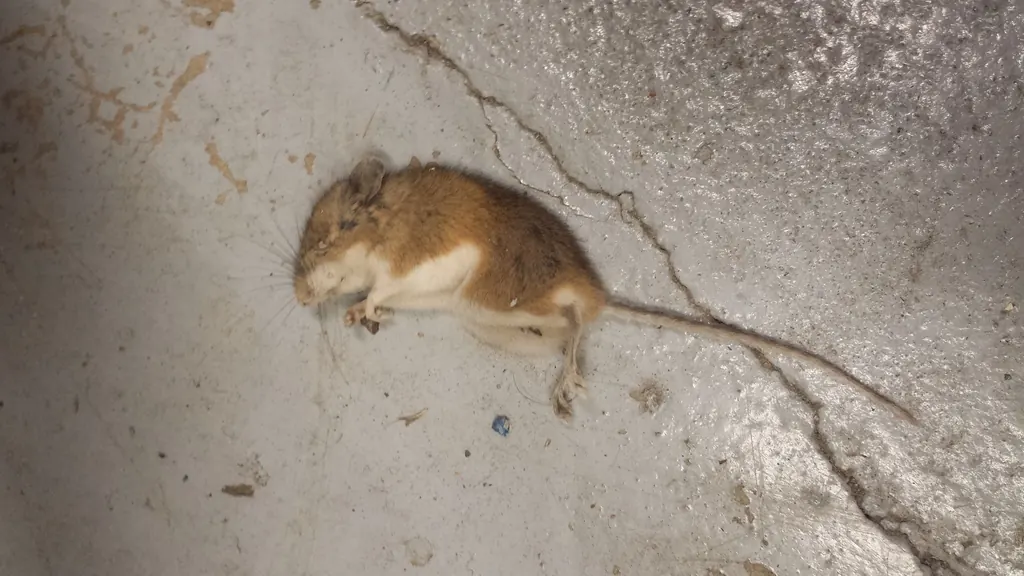
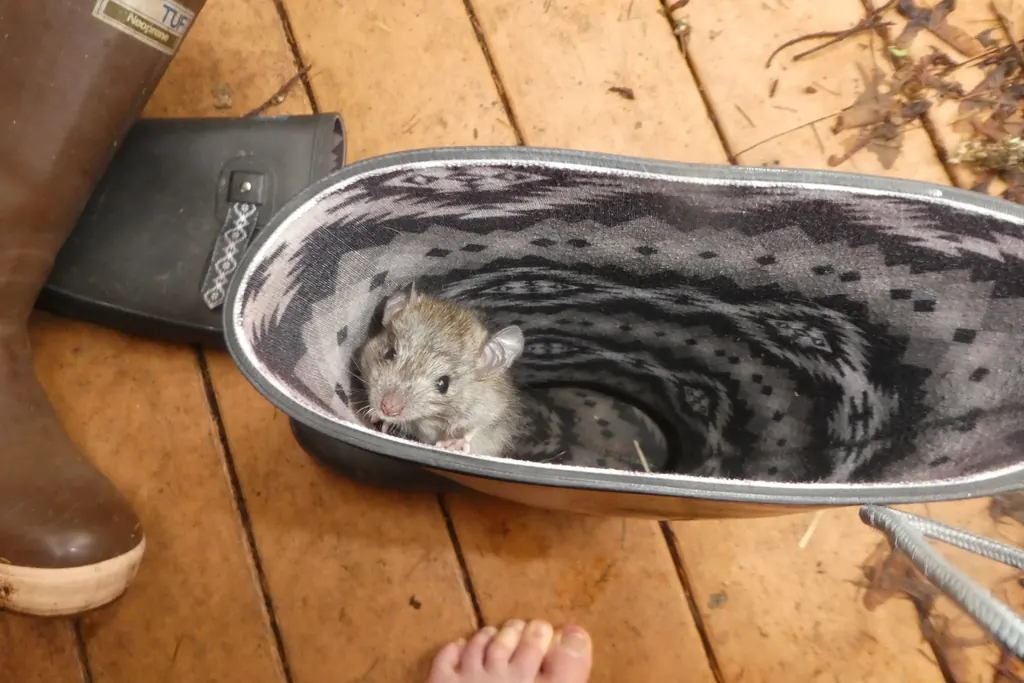
Photo by alicia penney, CC BY 4.0, via iNaturalist Deer mouse
Peromyscus maniculatus
- Size
- about the size of a house mouse
- Look
- pale gray to deep reddish brown, larger eyes, white belly
- Where
- Forests, grasslands, brush and farm fields in both states
The tail is sharply two-toned, white below and dark above.
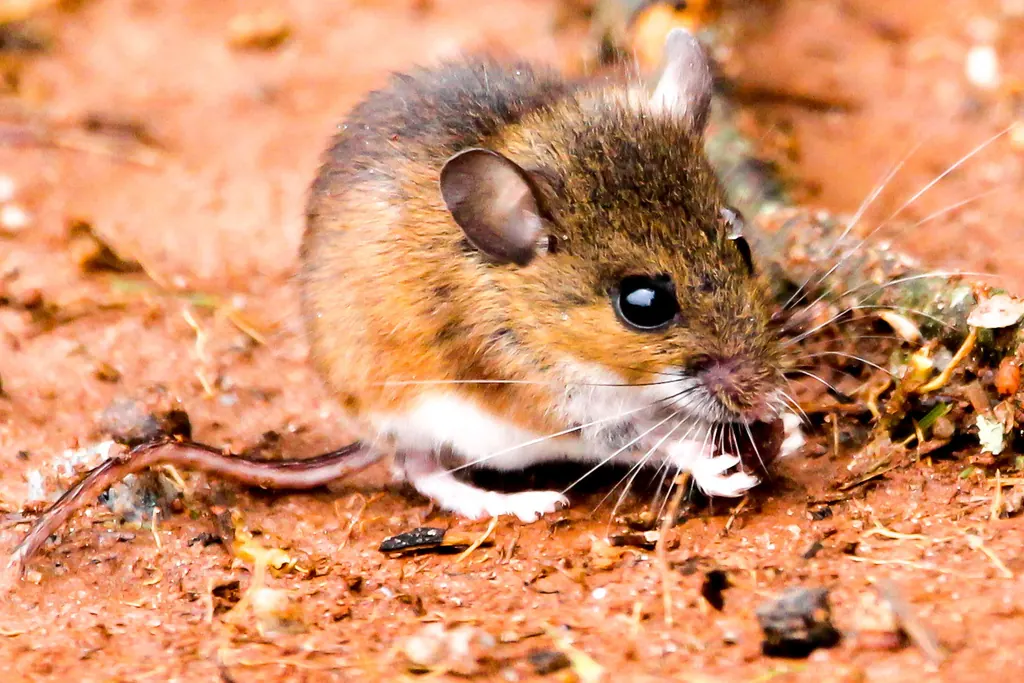
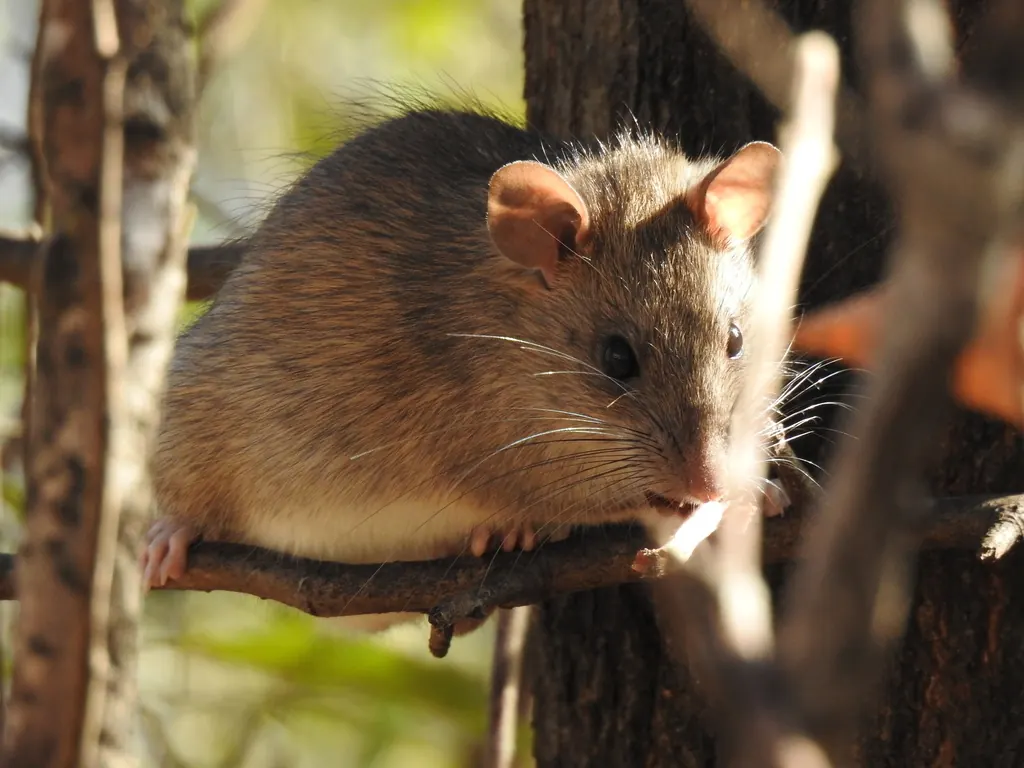
Public domain photo, CC0, via iNaturalist White-footed mouse
Peromyscus leucopus
- Size
- small, tail usually shorter than the body
- Look
- pale to rich reddish brown, white belly and feet
- Where
- Woody and brushy areas, common in Ohio
White feet and belly with a tail shorter than the body.
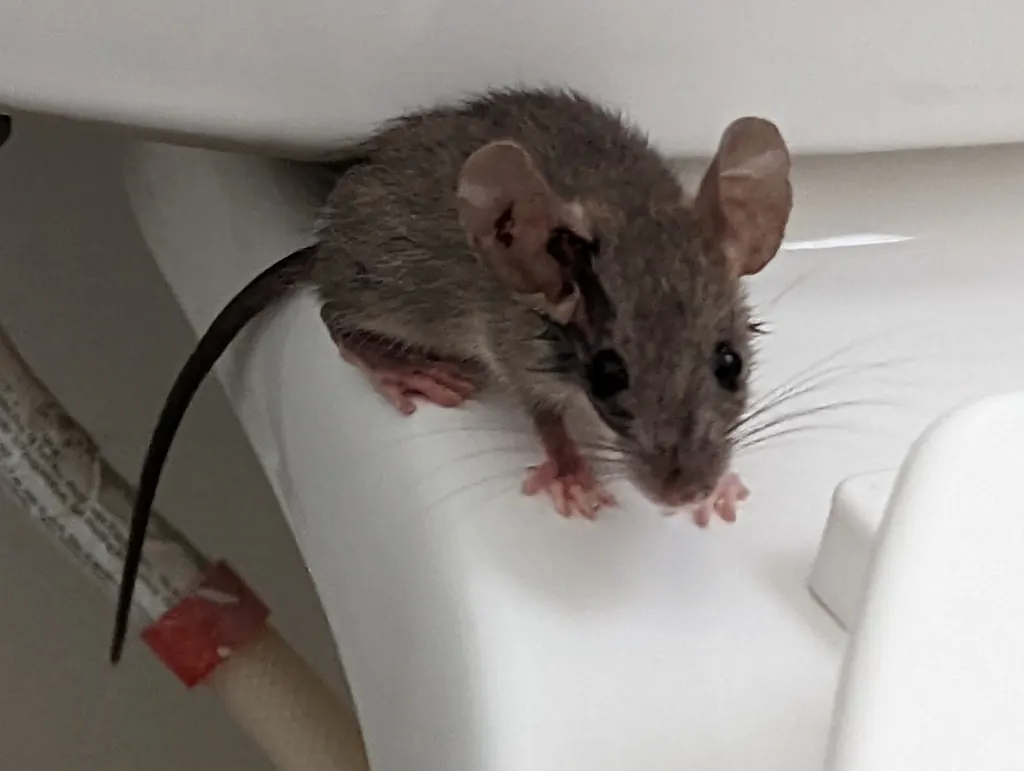
Photo by Justin, CC BY 4.0, via iNaturalist House mouse
Mus musculus
- Size
- 5 to 7 in with tail
- Look
- overall gray coat, smaller eyes, scaly tail
- Where
- Inside buildings in both states
Gray all over, with no white underside.
A deer mouse is about the size of a common house mouse. Its coat runs from pale gray to deep reddish brown, and the tail is sharply two-toned, white below and dark above.5 Deer mice also have larger eyes and a white underside, while a house mouse is gray all over.7
The white-footed mouse looks close. It is pale to rich reddish brown on top with a white belly and white feet, and its tail is usually shorter than its body.6 Both are Peromyscus mice and both are named as hantavirus reservoirs in the United States.4
Do not try to tell them apart in a wall. Treat any wild mouse with white on the belly with care. For gray mice in the kitchen, see house mice or the mice and rats hub.
Deer mouse life cycle
Life cycle of deer mice and hantavirus
- 1Litter size1 to 11, usually 5 or 6
- 2Litters per year2 to 4
- 3White-footed pregnancy22 to 28 days
- 4White-footed breedingMarch to June
Deer mice have 2 to 4 litters a year. A litter can hold 1 to 11 young, though the average is five or six.5 They nest in burrows, trees and buildings.5
White-footed mice also have 2 to 4 litters a year during a breeding season that runs between March and June. Litters are two to six young born after a 22 to 28 day pregnancy.6
These mice live outside most of the year. They eat seeds, fruits, flowers and insects, and they are found in forests, grasslands, brushlands and farm fields.5 They move into sheds, cabins and garages when the nest spot is warm and dry.6
Signs of deer mice
The signs look like any mouse problem, so assume wild mice in any shed, cabin or barn.
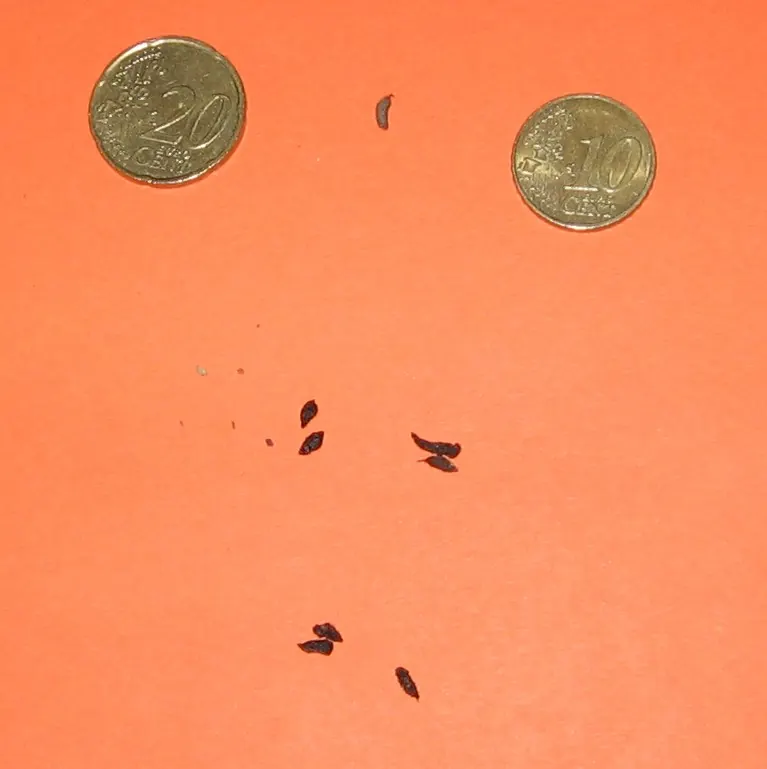
- Droppings in drawers, cupboards, sheds and cabins.
- Nests of shredded fibrous material in warm, dry places such as boxes and old vehicles.6
- Gnaw marks and tracks.7
- Mice that live in a closed building through the winter.3
Look at the dust, not just the droppings. The danger is dried urine, droppings and nests that get stirred up into the air.3 If you see a mess in a space that has been shut, do not start with a broom.
Hantavirus risks
Hantavirus can be deadly. Infection starts with fatigue, fever and muscle aches 1 to 8 weeks after contact. Later symptoms such as cough and shortness of breath follow 4 to 10 days later. CDC says 38% of people who develop respiratory symptoms may die.1 The Ohio Department of Health puts the mortality rate of the lung syndrome at about 40 to 50%, and says patients often need hospital care within 24 hours once the lung phase begins.4
People get it by breathing air contaminated when fresh urine, droppings or nesting material is stirred up, or when saliva, urine or droppings get in cuts or the eyes, nose or mouth. A bite can also spread it.8 Risk climbs in small, closed spaces.3
It is not common. California reports about 3 infections a year.3 There is no specific treatment, but early medical care helps.3
Safe cleanup and removal
Clean wet, never dry. Follow the CDC steps.
- Open all doors and windows for 30 minutes and leave the area.2
- Put on rubber or plastic gloves.2
- Soak urine and droppings with disinfectant, or 1.5 cups of bleach in 1 gallon of water, until very wet. Let it sit 5 minutes.2
- Wipe up with paper towels and put them in a covered garbage can. Mop hard surfaces with disinfectant.2
- Spray dead rodents and nests, bag them, then double bag and knot both bags.2
- Wash gloved hands, take off the gloves and wash with soap and warm water.2
Never sweep or vacuum droppings or nests.2 To remove the mice, use snap traps, not glue or live traps.3 House mouse details are in the house mouse guide.
What control costs
Price ranges for deer mice and hantavirus
- Typical mouse job$150 to $550 per job
- Pro visit$75 to $125 per visit
- After-hours extra$100 to $200 added fee
- Snap traps$3 to $6 each
Cleanup with bleach and gloves costs little, so most of the cost is stopping the mice. A pro mouse job usually runs $150 to $550, with an average near $350. Some charge $75 to $125 per visit, and after-hours calls add $100 to $200.9
Snap traps run $3 to $6 each. Bait stations cost $8 to $20.9
Severity, home size and location move the price. Mice in the walls need more visits, and sealing entry points costs more now but may save money later.9 The guide we used gives no price for hantavirus cleanup alone, so ask any pro what the cleanup includes.
Preventing hantavirus exposure
The best prevention is to keep wild rodents out. CDC calls rodent control the primary strategy against hantavirus pulmonary syndrome.8
- Seal holes the width of a pencil or larger.3
- Set snap traps, and skip glue and live traps.3
- Store all food in rodent-proof containers.3
- Air out closed cabins, sheds and outbuildings for 30 minutes before you go in to clean.2
- Wash contaminated bedding, clothing and stuffed animals in hot water with detergent.2
- Trap and seal before you clean, so new mice do not undo the work.
Pet rats are not recommended for households with children 5 or younger, pregnant women or people with weakened immune systems.8
When the risk is highest
When deer mice and hantavirus are active, by month
- Quiet
- Low
- Active
- Peak
The risk peaks when you disturb old nests. CDPH says the chance of infection rises when you open or clean buildings in rural areas that were closed for winter and where deer mice have entered.3 That makes spring the time to be careful.
In Ohio, the white-footed mouse breeding season runs March to June, which is why the grid rises in those months.6
Wild mouse numbers do not drop to zero in winter, so a cabin you shut in October can hold a nest by April. Open it, air it out for 30 minutes and then clean it wet.2
OHDeer mice and hantavirus in Ohio
Ohio has deer mice and white-footed mice, and both are named hantavirus reservoirs in the United States. The Ohio Department of Health says the deer mouse occurs in Ohio, but there have been no confirmed cases in the state.4 Most U.S. cases, 95%, came from states west of the Mississippi River.4
White-footed mice live in many habitats but are most often found in woody or brushy areas, and they are the most abundant rodent in mixed forests and edges of farm fields.6
That means an Ohio barn or hunting shed will often hold white-footed mice. Use the same wet cleanup steps for any wild mouse mess.2
CADeer mice and hantavirus in California
Deer mice live throughout California, and Sin Nombre virus is the hantavirus that can make people sick in the state. Andes virus is not found in California.3 About 3 Sin Nombre infections are reported each year.3
CDPH says the best prevention is to keep wild mice out of homes, cabins, sheds, cars and campers. Seal holes the width of a pencil, use snap traps and store food in rodent-proof containers.3 Clean with a fresh 10% bleach solution after you air out the space for 30 minutes. Do not sweep or vacuum.3
Hire a licensed pest company for a heavy infestation. See the mice and rats hub for how to check a California license.
Organic or Extermination for Mice and Rats
Here is what each way of getting rid of mice and rats looks like, side by side, from university and EPA sources.
Organic and green
How well each one works. Sealing and trapping is the first plan for rodents inside a home, and you can see the result. Baits kill more rodents fast but a poisoned mouse can die inside a wall, and pets and wildlife can be hurt if bait is not locked in a station. High frequency electronic devices do not work. 123
- UC IPM, Pest Notes House Mouse
- UC IPM, Pest Notes Rats
- US EPA, Safely Use Rodent Bait Products
More Mice and Rats Guides
- House MiceThe house mouse is a gray-brown rodent about 5 to 7 inches long with its tail.
 Norway RatsNorway rats are large, stocky rats that burrow along foundations, under woodpiles and trash, then move into ba
 Roof RatsRoof rats are sleek climbers that nest in attics, wall voids and trees.
Read the full mice and rats guide
Who Treats Mice and Rats Near You
These companies name mice and rats on their own website, the top of the Ohio and California lists. Every other state is linked below. See all 7409 sorted by region.
Ohio
- Names mice on its siteOpen 7 days
- Names mice on its siteSaturdays

- Names mice on its site

- Names mice on its siteSaturdays
- Names mice on its siteSaturdays
- Names mice on its siteSaturdays
California
- Names mice on its site

- Names mice on its siteOpen 7 days

- Names mice on its siteOpen 7 days
- Names mice on its siteSaturdays
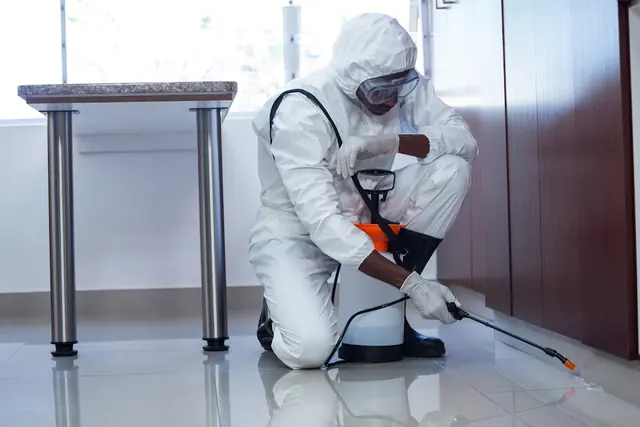
- Names mice on its siteOpen 7 days
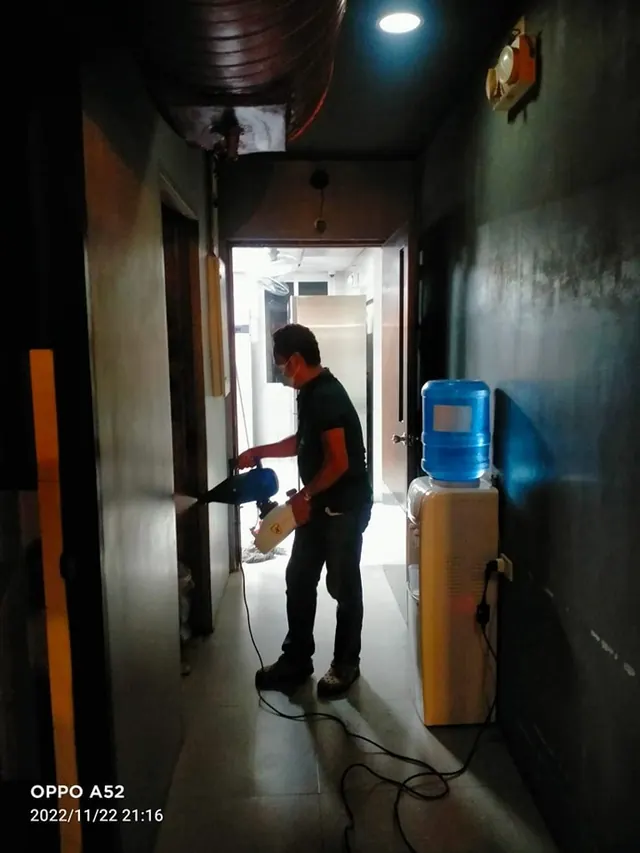
- Names mice on its siteOpen 7 days

Mice and Rats Help in Every State
The notes above cover Ohio and California in detail. Pick your state to see every company there that names mice and rats, sorted by region, with the state’s own license rules in the answers.
- Alabama 92
- Alaska 9
- Arizona 209
- Arkansas 42
- California 1,073
- Colorado 136
- Connecticut 73
- Delaware 21
- Florida 818
- Georgia 188
- Hawaii 21
- Idaho 94
- Illinois 192
- Indiana 135
- Iowa 59
- Kansas 71
- Kentucky 49
- Louisiana 102
- Maine 19
- Maryland 157
- Massachusetts 157
- Michigan 141
- Minnesota 44
- Mississippi 49
- Missouri 102
- Montana 30
- Nebraska 31
- Nevada 98
- New Hampshire 25
- New Jersey 278
- New Mexico 45
- New York 307
- North Carolina 171
- North Dakota 14
- Ohio 260
- Oklahoma 100
- Oregon 132
- Pennsylvania 110
- Rhode Island 18
- South Carolina 121
- South Dakota 24
- Tennessee 161
- Texas 784
- Utah 149
- Vermont 5
- Virginia 198
- Washington 181
- Washington DC 8
- West Virginia 11
- Wisconsin 84
- Wyoming 11
Questions People Ask About Deer Mice and Hantavirus
Do all mice carry hantavirus?
No. Hantavirus spreads through the urine, droppings and saliva of certain wild rodents. In California, Sin Nombre virus is spread by deer mice. In Ohio, the deer mouse occurs but no confirmed cases are on record.3,4
What are hantaviruses?
They are a group of viruses spread through the urine, droppings and saliva of wild rodents. Some cause serious illness that affects the lungs and kidneys.1,3
What virus can be found in mouse droppings?
Deer mouse droppings can carry hantavirus. House mice can carry lymphocytic choriomeningitis virus, called LCM, along with leptospirosis and salmonella. About 5% of U.S. house mice carry LCM.3,7
Which U.S. states have hantavirus?
Most hantavirus pulmonary syndrome cases, 95%, came from states west of the Mississippi River, and cases trace to exposure in rural areas. Ohio reports no confirmed cases, but neighboring states do.4
How long until symptoms start after exposure?
Early symptoms such as fatigue, fever and muscle aches usually start 1 to 8 weeks after contact with an infected rodent. Cough and shortness of breath come 4 to 10 days after that.1
Can hantavirus spread from person to person?
Sin Nombre virus is not known to spread person to person. Only Andes virus, a different hantavirus not found in California, is known to spread between people in close contact.1,3
How do I clean up mouse droppings safely?
Air out the room for 30 minutes, wear gloves, soak droppings with disinfectant for 5 minutes, then wipe them up with paper towels. Do not sweep or vacuum. Bag waste twice and wash your hands.2
Sources
- CDC. About Hantavirus
- CDC. How to Clean Up After Rodents
- California Department of Public Health. Hantavirus Infection
- Ohio Department of Health. Hantavirus
- Ohio Department of Natural Resources. North American Deermouse
- Ohio Department of Natural Resources. White-footed Mouse
- UC IPM. Pest Notes House Mouse
- CDC. Hantavirus Prevention
- This Old House. Mice Exterminator Cost
Photo credits
- White-footed mouse. Public domain photo, CC0, via iNaturalist