Mice and Rats field guide
House Mouse. How to Identify and Get Rid of Them
The house mouse is a gray-brown rodent about 5 to 7 inches long with its tail. It squeezes through a 1/4 inch gap and breeds fast, with 5 to 10 litters a year.1 Seal gaps with metal, then set snap traps along walls, about 10 feet apart. Poison is a last resort.1 A pro job usually costs $150 to $550.5
Field guide reviewed October 31, 2026, with 9 cited sources
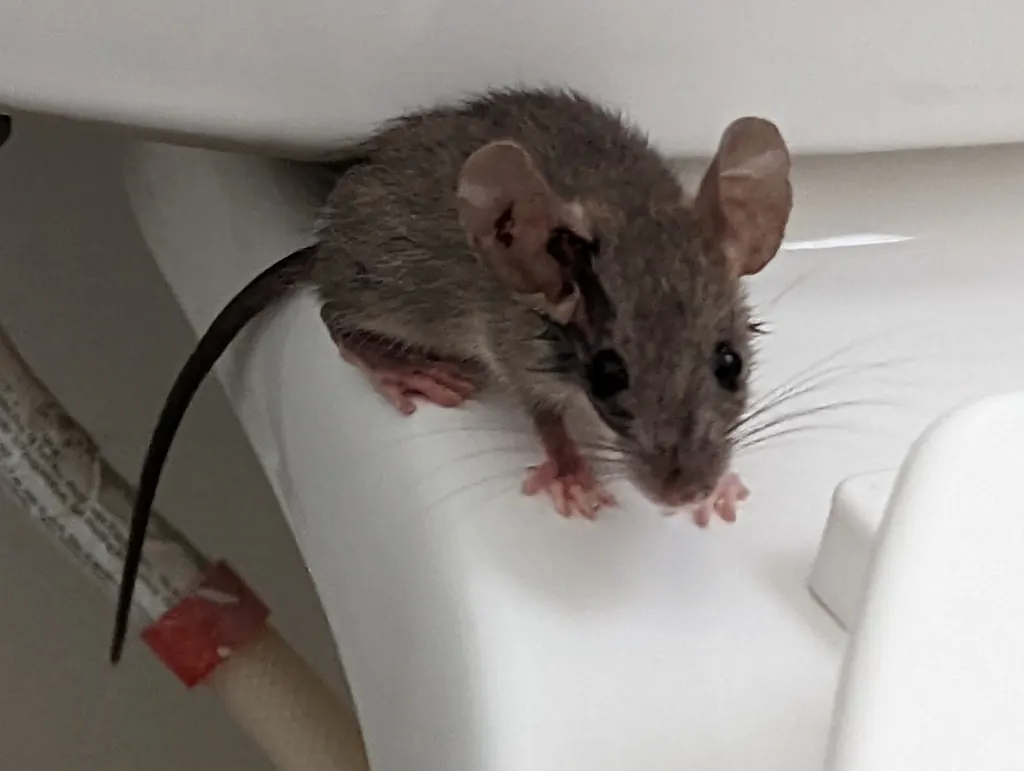
7,409 pest companies name mice and rats across 51 states and Washington DC, 260 in Ohio and 1073 in California. 7,409 say so on their own website.
See Who Treats Mice and RatsHow to identify a house mouse
Photo by Justin, CC BY 4.0, via iNaturalist House mouse
Mus musculus
- Size
- 5 to 7 in with tail, about 1/2 oz
- Look
- gray-brown coat, gray or buff belly, big ears, nearly hairless tail
- Where
- Inside buildings in Ohio and California
Gray all over with no sharp white belly.
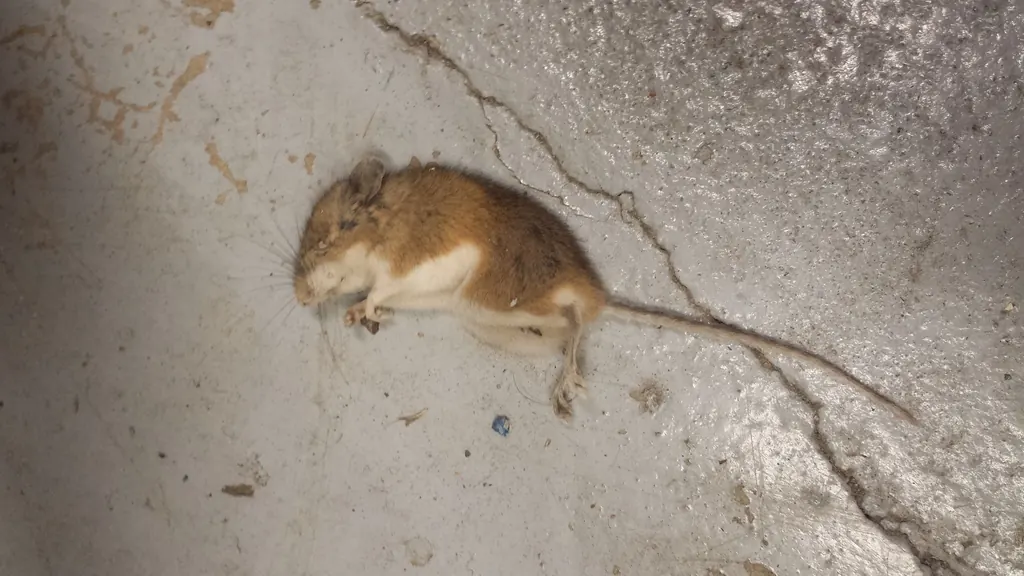
Photo by alicia penney, CC BY 4.0, via iNaturalist Deer mouse
Peromyscus maniculatus
- Size
- about the size of a house mouse
- Look
- pale gray to reddish brown, larger eyes, white belly
- Where
- Woods, fields, sheds and cabins
The tail is sharply two-toned, white below and dark above.

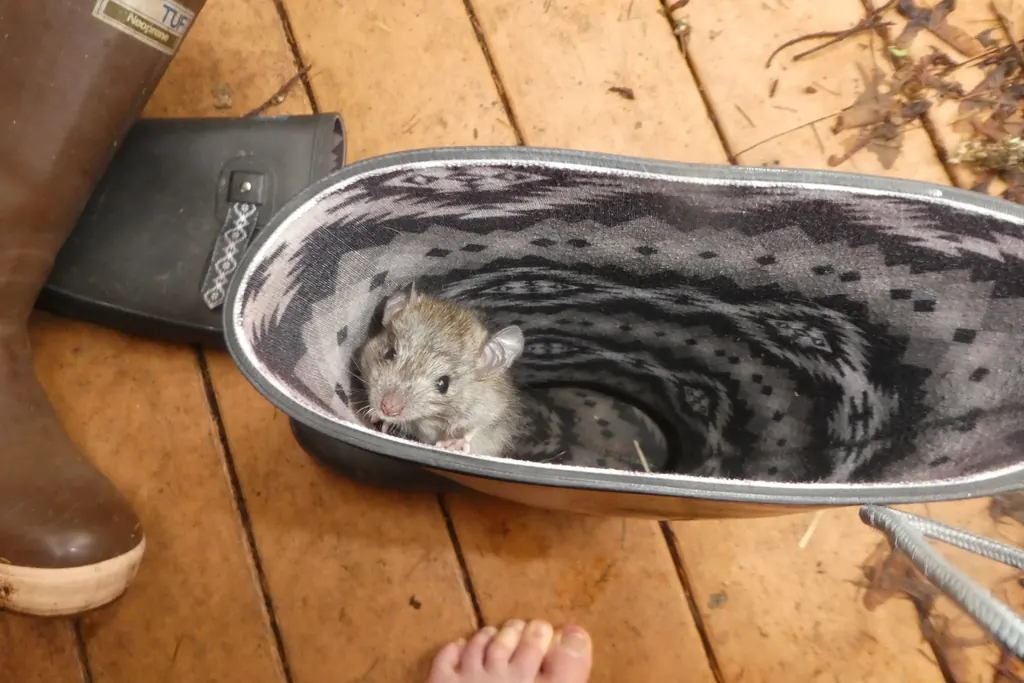
Public domain photo, CC0, via iNaturalist White-footed mouse
Peromyscus leucopus
- Size
- small, tail shorter than the body
- Look
- pale to rich reddish brown on top, white belly and feet
- Where
- Woody and brushy areas in Ohio
White feet and belly. House mice never have both.
A house mouse is a small rodent with big ears, small black eyes and a nearly hairless tail. Adults are about 5 to 7 inches long with a 3 to 4 inch tail and weigh about half an ounce. The coat is light brown to gray.1 The belly is gray or buff and the tail looks scaly.2
Check the belly. Deer mice have a white underside and larger eyes.1 White-footed mice have a white belly and white feet.9 If you see white, read the deer mouse and hantavirus guide. For the full picture on mice and rats, go back to mice and rats.
House mouse life cycle
Life cycle of house mice
- 1Pregnancy18 to 21 days
- 2Litterabout 5 or 6 pups
- 3Breeding age5 to 6 weeks, up to 12
- 4Adult life9 to 12 months
One pair can fill a house in a season. Pups are born 18 to 21 days after mating. A female is ready to breed at 5 to 6 weeks old, though that can be delayed to as late as 12 weeks.1
She has 5 to 10 litters a year with about 5 or 6 pups each, and older females have larger litters.1 Ohio sources list litters of 3 to 11 young.2
Most house mice live 9 to 12 months, and a few live up to 3 years. With plenty of steady food, they breed all year.1 Cut off the food and the nest, or the numbers never drop.
Signs of house mice
House mice are mostly active at night, but you may see one by day when the nest is crowded.1 Look for these signs.
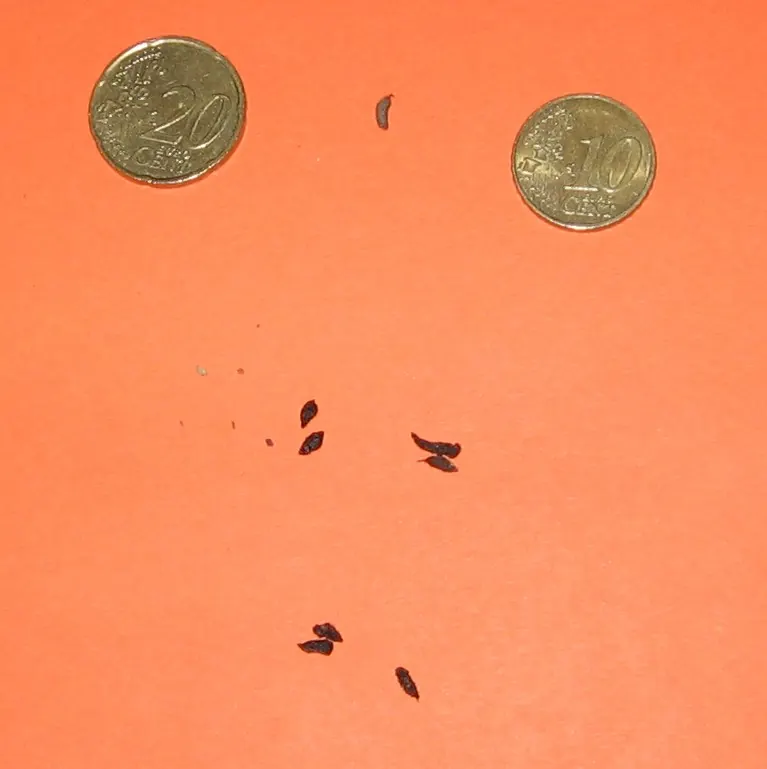
- Droppings along walls, in drawers and near food.
- Fresh gnaw marks and tracks.1
- Nests of finely shredded paper or fibrous material behind boxes, in drawers, in garages or around woodpiles.1
- A musky smell in large or long-term infestations.1
Droppings are the quickest check. Clean them up safely, then look for fresh ones the next morning. If new droppings show up, the mice are still active and your traps are not yet in the right place. Move traps toward the wall line where the droppings were found.
Health and property risks
Mice are a bigger health risk than most people think. They can carry leptospirosis, salmonella and lymphocytic choriomeningitis, called LCM. UC IPM estimates about 5% of U.S. house mice carry the LCM virus.1
Their urine is a major allergen, and exposure to urine proteins has been linked to early-onset asthma in sensitive children. Mice also gnaw electrical wires and gas lines, and many fires of unknown origin are believed to start from rodents chewing wires.1
Mice also contaminate food. Throw out anything they touched. The hantavirus that sickens people in California is spread by deer mice, not house mice.8 Compare the two in the hantavirus guide.
Getting rid of house mice
Traps and sealing do the work. Set snap traps close to walls, behind objects and in dark corners. Mice rarely go more than 30 feet from the nest and food, so space traps no more than about 10 feet apart where they are active.1
Use a pea-sized dab of bait on the trigger plate. Wide-trigger traps catch more. Setting traps in pairs 1 to 2 inches apart helps with mice that jump over obstacles.1
Poison needs care. Homeowner products are ready-to-use bait stations, and the toxins are dangerous to pets and wildlife.4 Baits take several days to work, and mice often die inside the building, so trapping may be better when smell is a worry.1
Call a pro for mice in walls or after two weeks of failed trapping.
House mouse control cost
Price ranges for house mice
- Typical mouse job$150 to $550 per job
- Pro visit$75 to $125 per visit
- After-hours extra$100 to $200 added fee
- Snap traps$3 to $6 each
A pro mouse job usually costs $150 to $550, with an average near $350. Some charge $75 to $125 per visit. Emergency or after-hours service adds $100 to $200.5
DIY is cheap. Snap traps run $3 to $6 each, glue traps $5 to $15, bait stations $8 to $20 and electronic traps $20 to $50.5
More mice, a bigger home and mice in the walls all raise the bill. Sealing entry points costs more now but may save money later.5 Ask what the price includes and whether a follow-up visit is covered.
Keeping house mice out
Seal first. Mice live where it is easy.
- Seal gaps larger than 1/4 inch with metal or concrete. Rubber, vinyl, plastic screening, foam and wood do not work.1
- Store food in sealed containers and clean crumbs.
- Keep woodpiles and boxes away from the house, since nests often sit there.1
- Keep traps set after you seal, in case one mouse was left inside.1
Cleaning alone rarely ends an infestation, but poor sanitation lets a mouse population grow. Do both. Seal the holes, then keep the kitchen, pantry and garage tidy so nothing rewards a new mouse that finds a way in.
When house mice are active
When house mice are active, by month
- Quiet
- Low
- Active
- Peak
House mice are a year-round problem. With plentiful, stable food they breed in every month, so the season grid stays flat in Ohio and California.1
Mice are mostly nocturnal, so many people notice them only after droppings or gnaw marks appear.1 That can happen in any month.
The one calendar rule is for sheds and cabins closed for the winter. Open the doors and windows for 30 minutes and leave before you clean, then use disinfectant and paper towels, never a broom or vacuum.3
Treat the first sign the same way in January or July. Seal, trap and check again in a week.
OHHouse mice in Ohio
Ohio house mice are small, gray-brown and live close to people, usually inside buildings. They eat plants, insects and meat. Litters are 3 to 11 young.2 Ohio also has white-footed mice in woody and brushy areas, which look different because of their white feet and belly.9
Ohio law requires pest management companies to be licensed through the Ohio Department of Agriculture. Ask for the license, proof of insurance and workers' compensation, and get at least three bids.6
Go back to the mice and rats hub for Ohio rat information.
CAHouse mice in California
In California no trapping license is needed to control house mice, and you can control them at any time by any legal method. Moving a live house mouse off the property needs a special CDFW permit.1
Two toxins are registered for house mice, bromethalin and cholecalciferol. Zinc phosphide is restricted to licensed applicators, and residential rodenticides are sold only in ready-to-use bait stations.1
To check a pest company, use the Structural Pest Control Board's online tool to verify a company or an individual.7 Deer mice, not house mice, are the California hantavirus carrier. See the deer mouse guide.
Organic or Extermination for Mice and Rats
Here is what each way of getting rid of mice and rats looks like, side by side, from university and EPA sources.
Organic and green
How well each one works. Sealing and trapping is the first plan for rodents inside a home, and you can see the result. Baits kill more rodents fast but a poisoned mouse can die inside a wall, and pets and wildlife can be hurt if bait is not locked in a station. High frequency electronic devices do not work. 123
- UC IPM, Pest Notes House Mouse
- UC IPM, Pest Notes Rats
- US EPA, Safely Use Rodent Bait Products
More Mice and Rats Guides
- Deer Mice and HantavirusDeer mice carry Sin Nombre hantavirus, the cause of most hantavirus lung illness in the western U.S.
 Norway RatsNorway rats are large, stocky rats that burrow along foundations, under woodpiles and trash, then move into ba
 Roof RatsRoof rats are sleek climbers that nest in attics, wall voids and trees.
Read the full mice and rats guide
Who Treats Mice and Rats Near You
These companies name mice and rats on their own website, the top of the Ohio and California lists. Every other state is linked below. See all 7409 sorted by region.
Ohio
- Names mice on its siteOpen 7 days
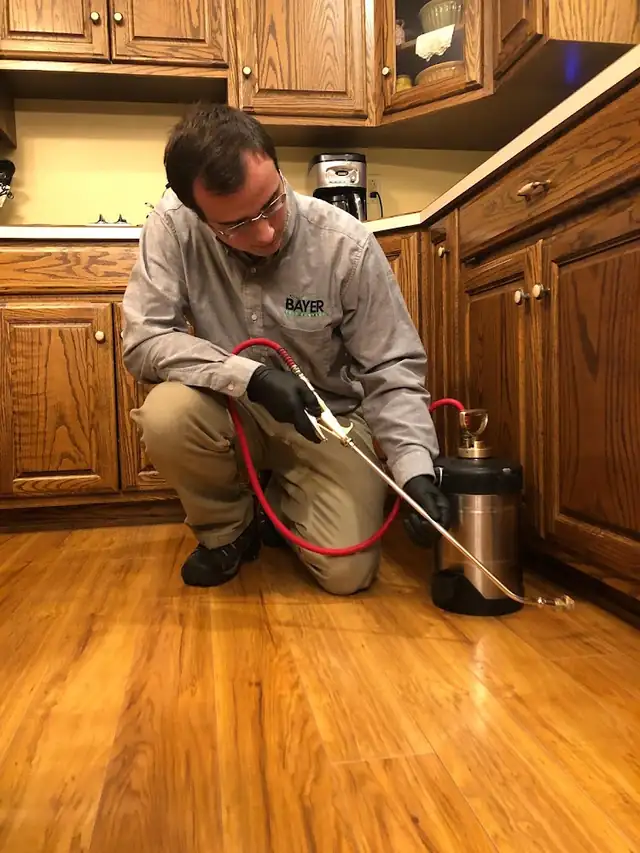
- Names mice on its siteSaturdays

- Names mice on its site

- Names mice on its siteSaturdays
- Names mice on its siteSaturdays
- Names mice on its siteSaturdays
California
- Names mice on its site

- Names mice on its siteOpen 7 days

- Names mice on its siteOpen 7 days

- Names mice on its siteSaturdays

- Names mice on its siteOpen 7 days

- Names mice on its siteOpen 7 days

Mice and Rats Help in Every State
The notes above cover Ohio and California in detail. Pick your state to see every company there that names mice and rats, sorted by region, with the state’s own license rules in the answers.
- Alabama 92
- Alaska 9
- Arizona 209
- Arkansas 42
- California 1,073
- Colorado 136
- Connecticut 73
- Delaware 21
- Florida 818
- Georgia 188
- Hawaii 21
- Idaho 94
- Illinois 192
- Indiana 135
- Iowa 59
- Kansas 71
- Kentucky 49
- Louisiana 102
- Maine 19
- Maryland 157
- Massachusetts 157
- Michigan 141
- Minnesota 44
- Mississippi 49
- Missouri 102
- Montana 30
- Nebraska 31
- Nevada 98
- New Hampshire 25
- New Jersey 278
- New Mexico 45
- New York 307
- North Carolina 171
- North Dakota 14
- Ohio 260
- Oklahoma 100
- Oregon 132
- Pennsylvania 110
- Rhode Island 18
- South Carolina 121
- South Dakota 24
- Tennessee 161
- Texas 784
- Utah 149
- Vermont 5
- Virginia 198
- Washington 181
- Washington DC 8
- West Virginia 11
- Wisconsin 84
- Wyoming 11
Questions People Ask About House Mice
How can I get rid of mice in my house?
Seal gaps over 1/4 inch with metal or concrete, then set snap traps next to walls and where you see droppings. Keep traps within about 10 feet of each other where mice are active.1
Do house mice have white bellies?
No. A house mouse has an overall gray coat with a gray or buff belly. Deer mice have a white underside and larger eyes, so a white belly means you may have a deer mouse.1,2
How long do mice live?
House mice usually live 9 to 12 months, and some live up to 3 years. Females can have 5 to 10 litters a year, so the population grows much faster than any one mouse ages out.1
How small a hole can a mouse get through?
A mouse can squeeze through a gap about 1/4 inch tall or an opening about 3/8 inch wide. Seal anything larger than 1/4 inch with metal, concrete or similar material.1
Does peanut butter work in a mouse trap?
Peanut butter is a common bait, and a small dab works best. Too much lets the mouse take the bait without setting off the trap. It can also be an allergy risk in a home.1
Can I release a live mouse outside?
In California, moving a live house mouse off the property where you caught it needs a special permit from CDFW. No license is needed to trap and kill house mice.1
How do I clean up mouse droppings?
Air the room out for 30 minutes. Wear gloves, soak droppings with disinfectant for 5 minutes, and wipe them up with paper towels. Never sweep or vacuum them.3
Sources
- UC IPM. Pest Notes House Mouse
- Ohio Department of Natural Resources. House Mouse
- CDC. How to Clean Up After Rodents
- EPA. Safely Use Rodent Bait Products
- This Old House. Mice Exterminator Cost
- Ohio State University Extension. Choosing a Pest Management Company
- California Structural Pest Control Board. Online Services
- California Department of Public Health. Hantavirus Infection
- Ohio Department of Natural Resources. White-footed Mouse