Spiders field guide
Brown Recluse Spiders in Ohio and California
The brown recluse is a tan to brown spider with a body no longer than 3/8 inch and six eyes in three pairs, not eight.1 It is rare in Ohio and often arrives in furniture or household goods.2 UC IPM says there are no brown recluse populations in California.1 Count the eyes, because the violin mark is a poor clue.1,2 More in the spider guide.
Field guide reviewed October 31, 2026, with 7 cited sources
688 pest companies name spiders, 144 in Ohio and 544 in California. 688 say so on their own website.
See Who Treats SpidersHow to identify a brown recluse
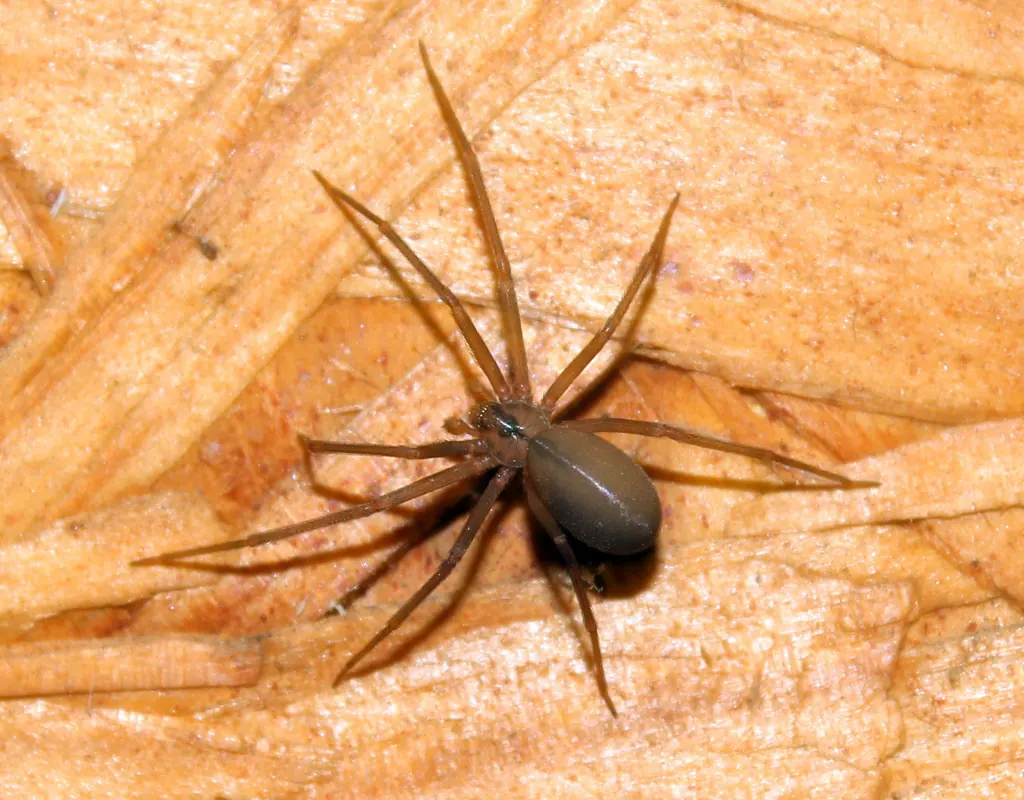
Photo by mayfly1963, CC BY 4.0, via iNaturalist Brown recluse
Loxosceles reclusa
- Size
- body up to 3/8 inch, quarter size with legs
- Look
- tan to brown, nearly hairless, uniform legs with no spines, six eyes in three pairs
- Where
- South-central Midwest and south. Rare in Ohio, and not established in California
Six equal-sized eyes in pairs. The violin mark is faint on some and often mistaken on others.
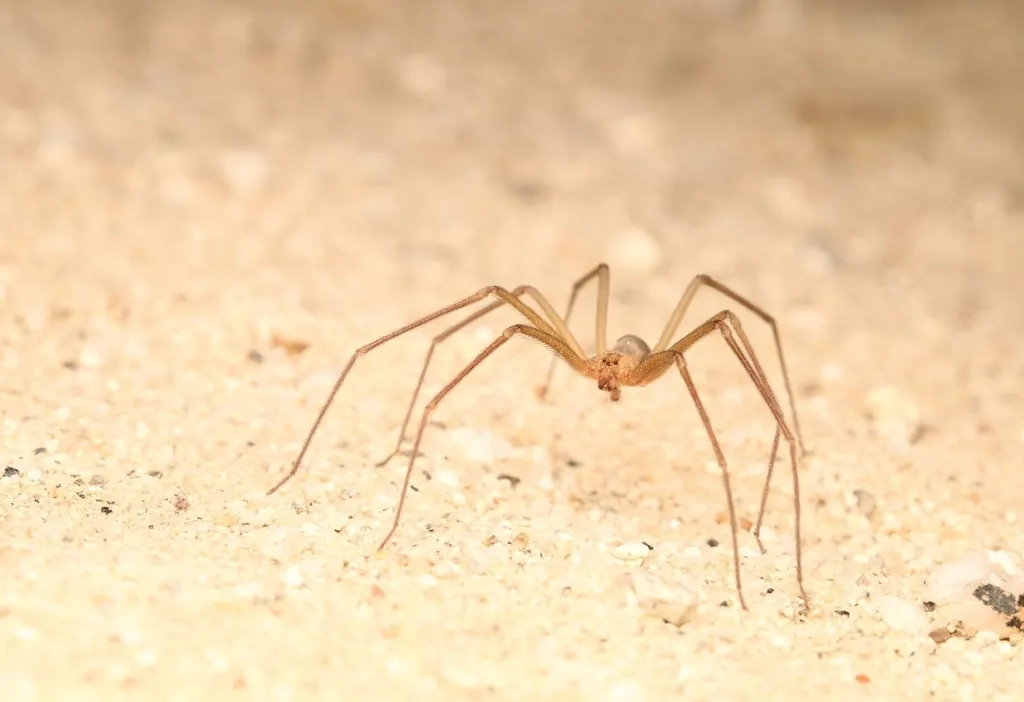
Photo by Benjamin Burgunder, CC BY 4.0, via iNaturalist Desert recluse
Loxosceles deserta
- Size
- body up to 3/8 inch
- Look
- a recluse with six eyes and uniform color
- Where
- Sonoran and Mojave deserts and the foothills of the lower San Joaquin Valley in California
The most common recluse in California, but only in the southern deserts.
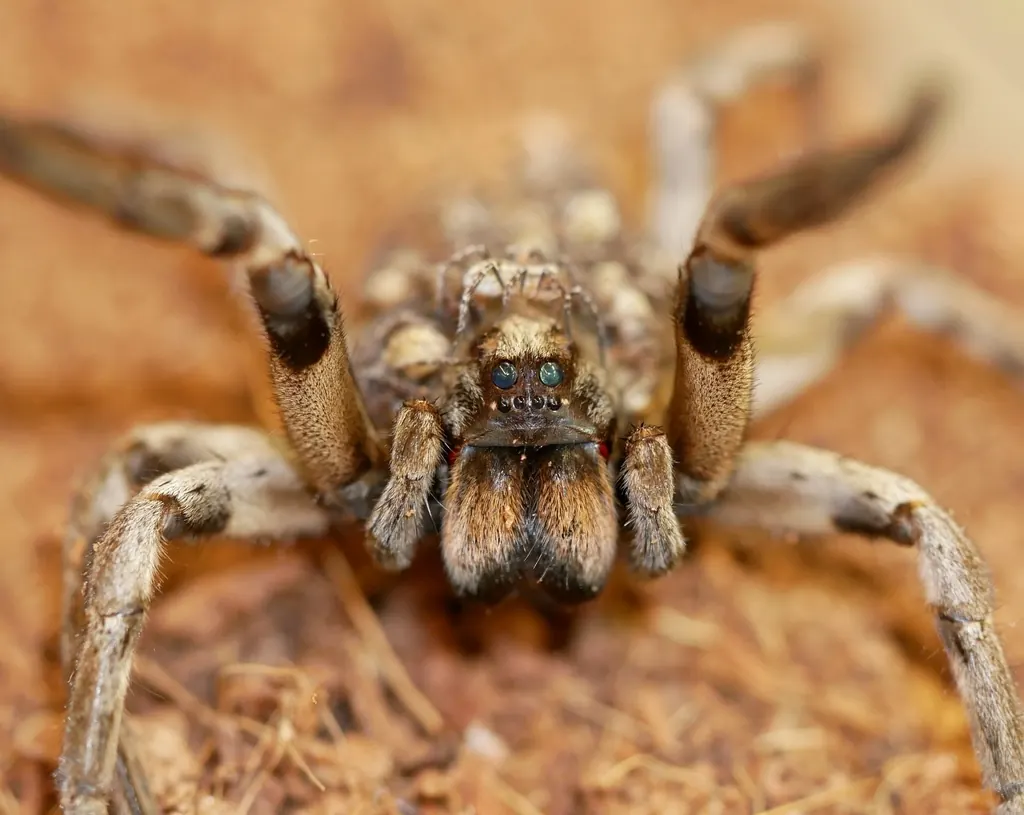
Photo by Toby, CC BY 4.0, via iNaturalist Wolf spider
Lycosidae
- Size
- small to very large
- Look
- brown or tan, striped, with eight eyes
- Where
- Ground level in yards and homes in both states
Eight eyes, and eyes that shine green in a flashlight. A common recluse look-alike in Ohio homes.
The best feature is the eyes. Recluses have six equal-sized eyes in three pairs. Most spiders have eight.1 The violin mark is faint or missing on some recluse species, and harmless spiders are often mistaken for recluses because of it.1 Ohio State's BYGL agrees that the violin shape is subjective.2
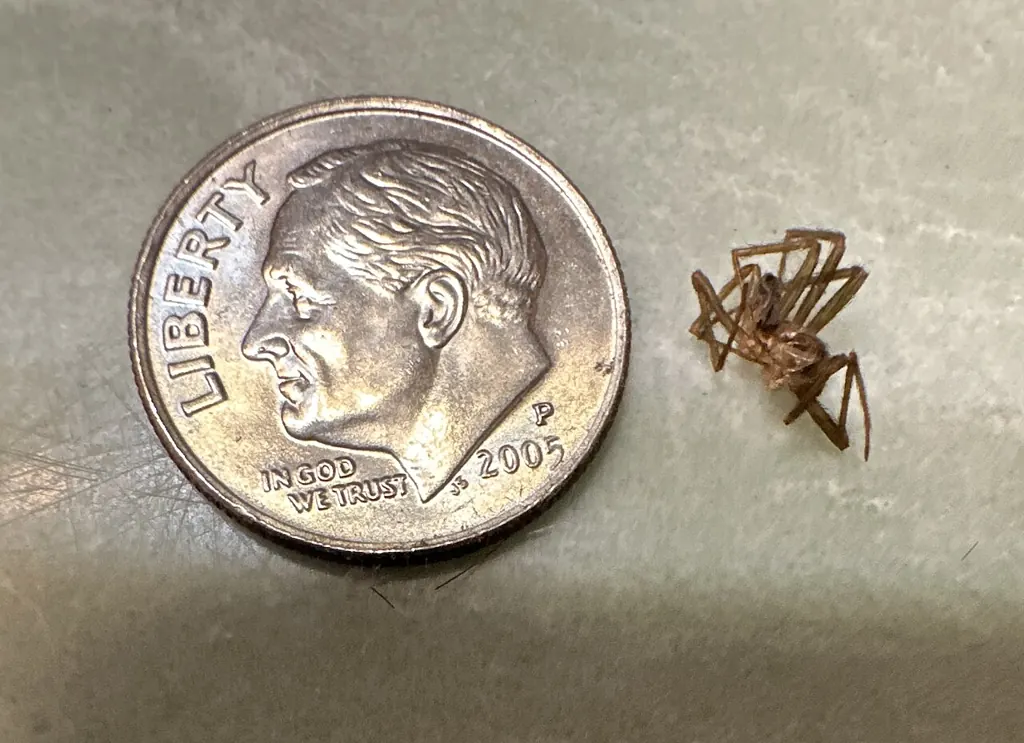
UC IPM says a recluse must have all five traits. Six eyes in pairs, a uniformly colored hairy abdomen, no leg spines, uniformly colored legs, and a body no longer than 3/8 inch.1 With legs spread, it is about quarter size.2
Wolf spiders, funnel weavers and barn spiders are common home invaders mistaken for recluses. Funnel weaver stripes can look like the fiddle shape.2 See the wolf spider guide. Confirming a species takes a microscope and an arachnologist.1
Brown recluse life cycle
Life cycle of brown recluse spiders
- 1MatingApril to early July in the south-central states
- 2Egg sacsup to five a season, about 50 eggs each
- 3Growth to adultslightly less than a year
- 4Adult lifespanlab spiders lived up to 2 1/2 years
This is the south-central picture, from a Texas AgriLife fact sheet. Mating runs from April to early July in Oklahoma, Arkansas and Texas.3
Females make up to five egg sacs a season with about 50 eggs each.3 Development to adulthood takes slightly less than a year, and lab spiders have lived up to two and a half years.3
The spider is named for its shy habits. It is mostly nocturnal and hides in dark, undisturbed places.2,3
The sources give no hatch time or month-by-month growth, so treat these as a rough guide, not a calendar for Ohio.
Signs of brown recluses
- Shed skins and egg sacs near joists, under clutter, in insulation and in stored boxes or clothing.2
- Spiders in garages, attics, basements, crawl spaces and wall voids.2
- Spiders under old boards, in junk piles and in rarely disturbed storage.3
- A spider caught on sticky traps along baseboards. UC IPM uses them to track numbers.1
- A bite from stepping on one in a shoe or putting on stored clothing.2
Confirm before you act. Keep the whole spider and freeze it. Do not mail it in alcohol.1
Bite risk
Recluses bite once, usually when trapped against skin.1 About 10 percent of bites cause moderate or worse tissue damage and scarring. Most cause only inflammation and heal without treatment.1 Deaths are extremely rare, mostly in children.1
The CDC says a bite may sting, with local pain and often a small white blister, and the venom can destroy skin tissue. A skin lesion needs professional care.4
Plenty of sores get wrongly blamed on recluses. A toxicology physician at USC estimated that 60 percent of diagnoses came from areas with no recluses. In a national study, 29 percent of patients with a spider bite diagnosis had MRSA.1 Antibiotics do not affect spider venom.1
Multiple sores, or sores in several people in one house, point away from spiders.1 First aid is rest, ice or cold, compression and elevation, then medical care.1
Treatment. Confirm first, then control
UC IPM says to verify that recluses are present before doing anything.1 Most calls turn out to be harmless spiders.1
If you do have them, clean up. Cut clutter, seal cracks and access holes, tape stored boxes shut, and vacuum around and behind furniture.1,3 Sticky traps along walls, in closets and under furniture help and let you track results.3 Crush a spider you can see, or relocate it with a jar and paper.1
Sprays are weak alone. UC IPM says pesticides are usually ineffective unless you can see and spray the spider.1 Texas AgriLife describes long-residual liquid sprays and dusts in wall voids, attics and crawl spaces. It advises hiring a professional for a household infestation.3
Even professionals find infestations hard to control, so pick a company that will work with you over time.3
What control costs
Price ranges for brown recluse spiders
- Average spider treatment$300 to $500 per job
- Reactive treatment$250 to $800 per job
- One-time visit$125 to $350 per visit
- Quarterly plan$350 to $750 plan
- Monthly plan$600 to $1,250 plan
One national spider guide averages $400, with most jobs at $300 to $500. A single visit runs $125 to $350 in its table.5
The page gives no separate price for brown recluses. It says costs run higher for large venomous spiders, and frequent treatments are likely for recluses.5
Quarterly service runs $350 to $750 and monthly $600 to $1,250. Reactive treatment runs $250 to $800, while preventive runs $100 to $500.5
Garages and basements run $400 to $1,000 per treatment and attics $170 to $500.5
Prices are national. In California, confirm a recluse is even possible where you live before paying for recluse treatment, since they are not established there.1
How to prevent recluses
- Remove or cut back trash, woodpiles, boxes, plywood and tires, especially next to the house.1
- Seal cracks and utility holes, especially around attached garages.1
- Move the bed away from the wall, remove bed skirts and clear what is stored under it.1
- Keep clothing and shoes off the floor.1
- Store seasonal gear in sealed plastic bags or bins.1
- Wear gloves and long sleeves when you unpack stored boxes.2
- Use a bright flashlight to look into dark corners.2
- Reduce clutter in basements, garages and homes.2
When brown recluses show up
When brown recluse spiders are active, by month
- Quiet
- Low
- Active
- Peak
Ohio State's BYGL says brown recluses are not known to survive Ohio winters outdoors but survive well indoors.2
Where they are common, adults are most often seen in spring.3 Mating runs from April to early July in the south-central states.3
UC IPM gives no monthly activity for the desert recluse.1 UC IPM says many skin lesions in California are misdiagnosed as brown recluse bites.1
The grid above shows low activity all year in Ohio, since the few recluses found there live indoors. Bites tend to happen when someone steps on one in a shoe or puts on stored clothing, so unpacking boxes and seasonal gear is the moment to be careful.2
OHOhio notes
Ohio State calls the brown recluse rare in Ohio, citing a spider book that lists two rare recluse species in the state.2 The spiders can be carried into Ohio inside furniture or household goods.2 That fits what Ohio sees, a find now and then.
UC IPM places the brown recluse's range from southeastern Nebraska to southwestern Ohio, south through Texas to north Georgia.1 Ohio State adds that recluses do not survive Ohio winters outdoors but live well indoors.2
Look-alikes are the bigger problem. Wolf spiders, funnel weavers and barn spiders get called recluses all the time. They are beneficial, so keep them.2
An applicator treating a client's property for pay needs a commercial pesticide applicator license from the Ohio Department of Agriculture.6 Category 10a is general pest control.6
CACalifornia notes
UC IPM says there are no populations of the brown recluse in California. Fewer than 20 verified specimens have been collected in the state over several decades.1
The desert recluse, Loxosceles deserta, is the most common recluse in California. It lives mostly in the Sonoran and Mojave deserts and the foothills of the lower San Joaquin Valley. Its venom is similar in potency to the brown recluse's.1 The Chilean recluse lives in a small part of Los Angeles County and is not spreading.1
More than 99 percent of spiders Californians submit are not recluses.1 UC IPM also notes that many skin lesions blamed on recluses have other causes.1 The California Structural Pest Control Board has a Verify a Company or Licensee page for checking a pest company.7
Organic or Extermination for Spiders
Here is what each way of getting rid of spiders looks like, side by side, from university and EPA sources.
Organic and green
Extermination
- Pyrethrin and pyrethroid sprays labeled for spiders. 1
How well each one works. This is one pest where the non chemical plan is the main advice. UC IPM says insecticides will not give long term control and should not generally be used on spiders outdoors. A spray mostly works on the spider it hits. 12
- UC IPM, Pest Notes Spiders
- UC IPM, Pest Notes Widow Spiders and Their Relatives
More Spiders Guides
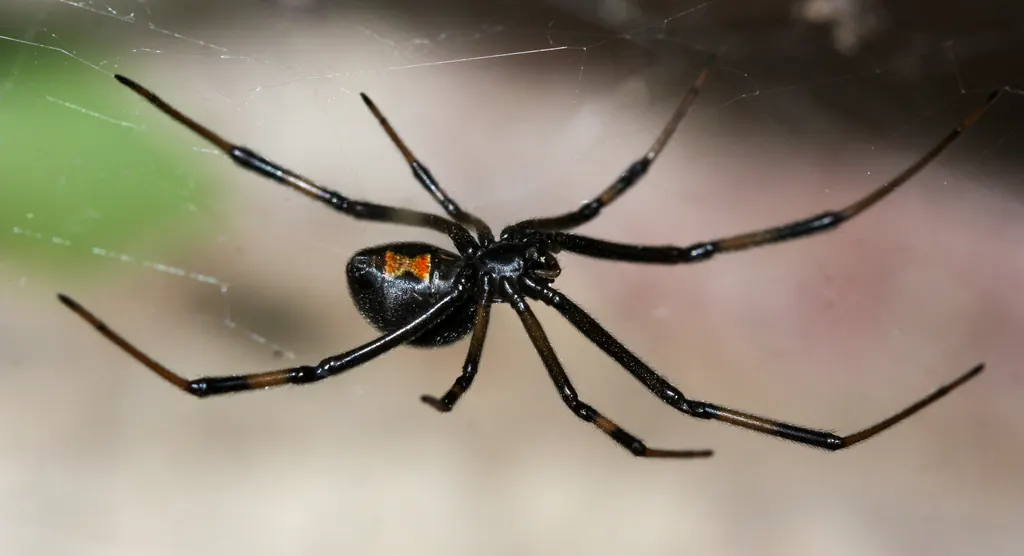 Black Widow SpidersFemale black widows are shiny black with a red hourglass under the abdomen and about 1/2 inch long.
- Wolf SpidersWolf spiders are brown or tan ground hunters with striped bodies and eyes that shine green under a flashlight.
Who Treats Spiders Near You
These companies name spiders on their own website, the top of each state list. See all 688 sorted by region.
Ohio
- Names spiders on its siteOpen 7 days
- Names spiders on its siteSaturdays

- Names spiders on its site
- Names spiders on its siteSaturdays
- Names spiders on its siteSaturdays
- Names spiders on its siteSaturdays
California
- Names spiders on its site

- Names spiders on its siteOpen 7 days
- Names spiders on its siteOpen 7 days
- Names spiders on its siteSaturdays

- Names spiders on its siteOpen 7 days
- Names spiders on its siteOpen 7 days

Questions People Ask About Brown Recluse Spiders
How big is an adult brown recluse?
The body is no longer than 3/8 inch.1 With legs extended, a recluse is about the size of a quarter.2 Texas AgriLife puts the leg span at about a quarter to a half-dollar.3
What is the deadliest spider in the United States?
The CDC names the black widow and brown recluse as the two venomous US spiders and says death is extremely rare.4 UC IPM says recluse deaths are extremely rare, mostly in children, and preventable with proper diagnosis and treatment.1
What kills brown recluse spiders?
Crushing one with a shoe is easier and less toxic than spraying. UC IPM says pesticides are usually ineffective unless you can see and spray the spider.1 Pros use long-residual sprays and dusts in cracks, voids and attics.3
What time of year are brown recluses most active?
Where they are common, adults are most often seen in spring.3 They are mostly nocturnal and hide in dark, undisturbed places during the day.3 Indoors in Ohio they live through the winter.2
What smell do brown recluses hate?
The extension sources do not list a scent that keeps them away. What works is sealing cracks, cutting clutter, taping boxes shut and using sticky traps.1,3
Which state has the most brown recluse spiders?
No source ranks states. UC IPM places their range in the south-central Midwest, from southeastern Nebraska to southwestern Ohio and south through Texas to north Georgia.1
Sources
- UC IPM. Pest Notes Brown Recluse and Other Recluse Spiders
- Ohio State BYGL. You're a Mean One Mr. Recluse
- Texas AgriLife Extension. Control of Brown Recluse Spiders ENT-3003
- CDC NIOSH. Venomous Spiders
- Fixr. Spider Exterminator Cost
- Ohio State CFAES. Ohio Commercial Pesticide Applicator Requirements
- California Structural Pest Control Board. Structural Pest Control Board home page
Photo credits
- Desert recluse. Photo by Benjamin Burgunder, CC BY 4.0, via iNaturalist
- A recluse spider next to a dime for scale. Photo by Xpda, CC BY-SA 4.0, via Wikimedia Commons