Termites field guide
Flying Ants vs Termites. Check the Waist, Antennae and Wings
Pinch one insect and look. Winged ants have a pinched waist, elbowed antennae and front wings longer than the back wings. Winged termites have a thick waist, straight antennae and four wings of equal length that break off easily.1,2 Both can mean a nest in the house, so save one in a jar and call a pro. See the termite hub.
Field guide reviewed October 31, 2026, with 11 cited sources
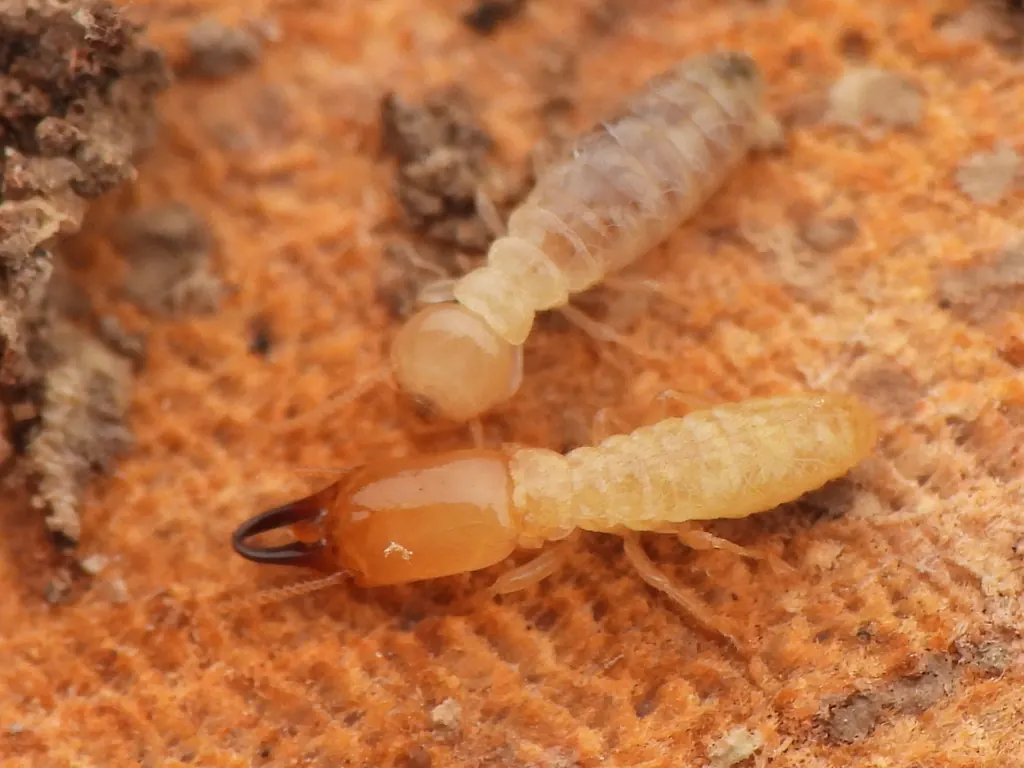
1013 pest companies name termites, 203 in Ohio and 810 in California. 1013 say so on their own website.
See Who Treats TermitesFlying ants vs termites, side by side
Photo by Sam Kieschnick, CC BY 4.0, via iNaturalist 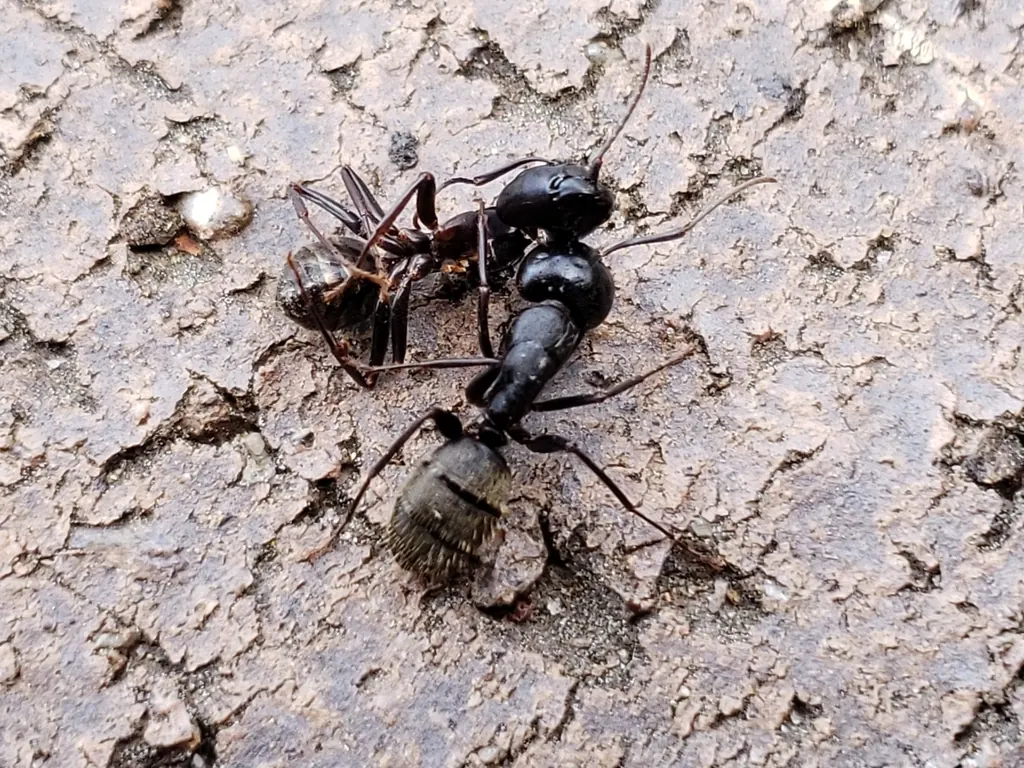
Photo by Tyler Bishop, CC BY 4.0, via iNaturalist 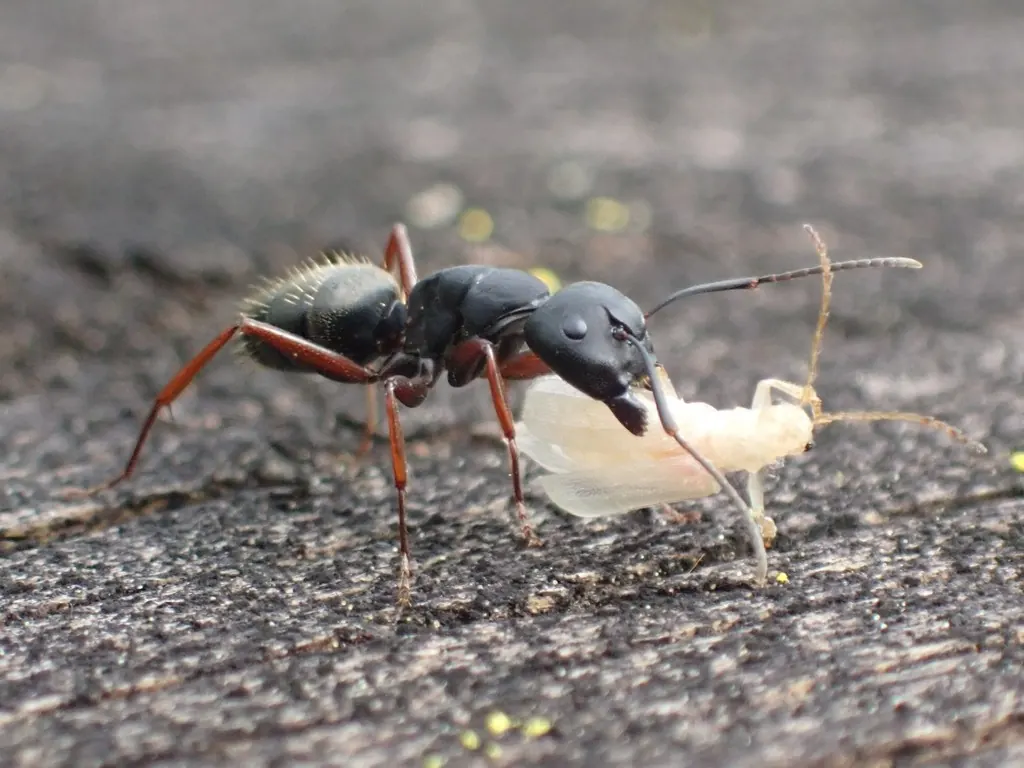
Photo by giantcicada, CC BY 4.0, via iNaturalist Western carpenter ant
Camponotus modoc
- Size
- 1/4 to 1/2 inch workers
- Look
- Large ant with a pinched waist and elbowed antennae
- Where
- California
Swarms in the late afternoon, often after heavy rain.6
Check four things. The first is the waist. Ants have a pinched, figure-8 body. Termites have no waist.1
The second is the antennae. Ants have elbowed antennae. Termites have straight, beaded antennae.1
The third is the wings. Ant forewings are much larger than hindwings. Termite wings match in size and are longer than the body.1,2
The fourth is the color. Ant wings are clear or brownish. Termite wings are milky-white or gray and break off easily. Ant wings stay attached.1
Termites mean a wood problem you cannot see. Read about subterranean termites. Winged ants usually mean carpenter ants in Ohio or Argentine ant trails in California. See carpenter ants too.
Why they swarm
Life cycle of flying ants vs termites
- 1Colony maturesyears
- 2Swarmers flyspring for most ants and termites
- 3Pair lands and sheds wingssame day
- 4New nest startsdays after landing
Both groups swarm to start new colonies. Winged adults leave a mature nest, pair up and shed their wings. Most die in flight to predators.4
Termite swarmers usually fly less than 100 meters from the parent colony.4 A surviving termite pair seals a small chamber and lays eggs.4
Carpenter ants leave on mating flights in spring.6 In Ohio, swarmers usually emerge from mature colonies from March to July.3 A swarm of either kind tells you a mature colony is near.
Signs that tell you which one you have
- Piles of shed wings near windows or doors point to termites. Termite wings break off.1,5
- Mud tubes on the foundation point to subterranean termites.5
- Six-sided pellets point to drywood termites.9
- Fibrous sawdust, like pencil shavings, under small windows in wood points to carpenter ants.3,6
- A dry rustling sound in a wall, like cellophane, points to carpenter ants.3
- Smooth galleries with no soil mean ants. Termite workings often hold soil or mud.3
Risks
Termites eat wood. EPA says they cause billions of dollars in damage each year.2
Carpenter ants do not eat wood. They excavate it to make nests, and they prefer wood already damaged by water.1,3 The damage is real, though. Colonies can expand from wet wood into sound wood.6
The sources we used list no disease threat from either group of winged insects. Treat the cause fast, since both point to a nest or colony close to the house.
What to do
Catch one swarmer in a jar or on sticky tape. Look at the waist, antennae and wings, then take a photo.
If it is a termite, call a licensed pro. UC IPM says there are no reliable over-the-counter termite products in California, and EPA says termiticide work is best done by a trained professional.4,2
If it is a carpenter ant, find the parent and satellite nests, since the queen must die for the colony to end. Spraying around an infestation without treating the nest is generally ineffective. Dusts through drill holes and baits on trails work.3 Use slow-acting baits so workers carry the poison home.6
Cost
Price ranges for flying ants vs termites
- Termite inspection$150 to $350 per visit
- General ant treatment$200 to $300 per visit
- Carpenter ant job$250 to $1,200 per job
- Typical termite job$450 to $2,000 per job
A one-time termite inspection runs $150 to $350. The typical termite job runs $450 to $2,000.7
Fixr puts general ant treatment at $200 to $300, with carpenter ants near $250 for a 1,000 square foot home. Large carpenter ant jobs with repairs can reach $1,200.8
The cheap move is to identify the insect first. A wrong guess leads to the wrong treatment.
Prevention
Season
When flying ants vs termites are active, by month
- Quiet
- Low
- Active
- Peak
In Ohio, carpenter ant swarmers usually emerge from March to July.3 Eastern subterranean termites swarm in spring and early summer.5
In California, subterranean termites swarm in spring or fall on clear days after a soaking rain.4 Drywood swarmers fly in summer and fall by day.9 Winter swarms are uncommon but can happen near heated parts of a building.4,5
OHOhio notes
Ohio's usual winged lookalikes are eastern subterranean termites and black carpenter ants.5,3 Ohio State also warns about field ants that look like carpenter ants but make soil mounds.3
Treatment needs an Ohio Department of Agriculture commercial applicator license. Category 10b covers termite control and category 10a covers general pest control.10 Back to the termite hub.
CACalifornia notes
Subterranean termites swarm in the afternoon in spring or fall, and drywood termites fly in summer and fall.4,9 Carpenter ants Camponotus modoc swarm in the late afternoon, often after heavy rain.6
If it is termites and you are buying a home, a wood destroying pests and organisms inspection is usually required by lenders.11
Organic or Extermination for Termites
Here is what each way of getting rid of termites looks like, side by side, from university and EPA sources.
Organic and green
- Fix leaks and keep wood out of contact with soil, which takes away what subterranean termites need. 1
- Heat treatment can clear drywood termites with no residue, if the core of every infested board gets hot enough. 2
- Borate wood treatments and spot methods like heat, freezing or microwaves work on the wood they reach. 2
- Orange oil and neem have been tried, but university tests question how well d-limonene works. 2
How well each one works. For subterranean termites there is no organic method that replaces a soil treatment or baits. For drywood termites, heat is a real green choice when the infestation is in reach, and fumigation is the most complete when damage is widespread. Neither heat nor fumigation leaves protection behind. 123
More Termites Guides
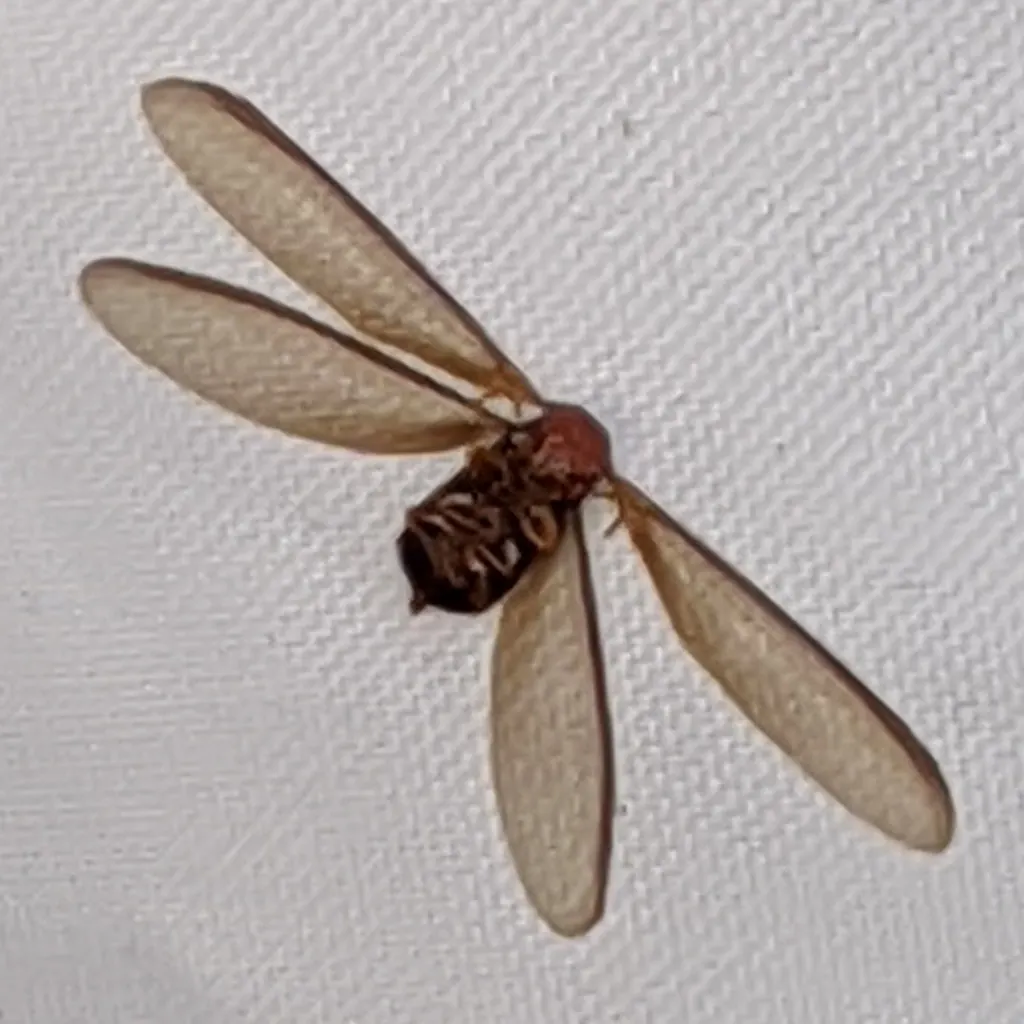 Drywood TermitesDrywood termites live inside dry wood and push out six-sided pellets through tiny kickout holes.
- Subterranean TermitesSubterranean termites nest in the soil and reach your house through mud tubes on the foundation.
Who Treats Termites Near You
These companies name termites on their own website, the top of each state list. See all 1013 sorted by region.
Ohio
- Names termites on its siteOpen 7 days
- Names termites on its siteSaturdays

- Names termites on its site
- Names termites on its siteSaturdays
- Names termites on its siteSaturdays
- Names termites on its siteSaturdays
California
- Names termites on its site

- Names termites on its siteOpen 7 days
- Names termites on its siteOpen 7 days
- Names termites on its siteOpen 7 days
- Names termites on its siteOpen 7 days
- Names termites on its siteSaturdays

Questions People Ask About Flying Ants vs Termites
How do I tell flying ants from termites?
Check the waist, antennae and wings. Ants have a pinched waist, elbowed antennae and large forewings. Termites have a thick waist, straight antennae and wings of equal size that break off easily.1,2
Do carpenter ants have wings?
Yes. Winged carpenter ant queens and males leave on mating flights. In Ohio swarmers usually emerge from March to July, and a winged queen is about 3/4 inch long.3,1
Are flying ants harmful?
Carpenter ants are the risky ones. They excavate wood for nests and prefer water-damaged wood, but they do not eat it. Other winged ants are mostly nuisances.1,3
Why do I suddenly have flying ants?
A mature colony sent out a swarm. Carpenter ants swarm in spring, and indoor nests are often satellites of a parent nest outside. Look for the nest.6,3
How to get rid of winged ants?
Swarmers will not stop until the nest is treated. Find the parent and satellite nests, kill the queen with dust or bait and fix moisture problems.3
Can termites swarm in winter?
Rarely. Ohio State says winter swarms are uncommon but can happen near warm building areas. UC IPM notes California reproductives can fly indoors in winter in heated buildings.5,4
What should I do if I find winged insects indoors?
Save a few in a jar, take a photo and check the waist, antennae and wings. If they are termites, book a licensed inspection. EPA says termite swarms are often how people first learn of a problem.2
Sources
- Ohio State University Extension. Ants In and Around the Home
- US EPA. Termites. How to Identify and Control Them
- Ohio State University Extension. Carpenter Ants HYG-2063
- UC IPM. Pest Notes Subterranean and Other Termites
- Ohio State University. Eastern Subterranean Termite, Reticulitermes flavipes
- UC IPM. Pest Notes Carpenter Ants
- Fixr. Termite Treatment Cost
- Fixr. Ant Exterminator Cost
- UC IPM. Pest Notes Drywood Termites
- Ohio State University Extension. Ohio Commercial Pesticide Applicator Requirements
- California Structural Pest Control Board. Wood Destroying Organism System Search